Search through

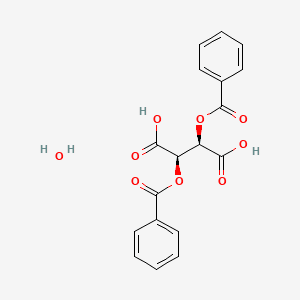
CAS Number: 62708-56-9
Molecular Formula: C18H14O8
Purity: 98.50%
Di-Benzoyl-L-Tartaric Acid Monohydrate, commonly known as (-)-Dibenzoyl-L-tartaric acid monohydrate (L-DBTA), is a chiral auxiliary used in the resolution of racemic mixtures. This compound is highly effective in facilitating the synthesis of enantiomerically pure compounds and is a valuable reagent in pharmaceutical a...

Category : Pharmaceutical Actives & Precursors
Sub-Category : Intermediates & Precursors
Description : Piperazine (CAS No: 110-85-0) is a versatile heterocyclic building block highly valued in the global...
Category : Pharmaceutical Actives & Precursors
Sub-Category : Active Pharmaceutical Ingredients (APIs)
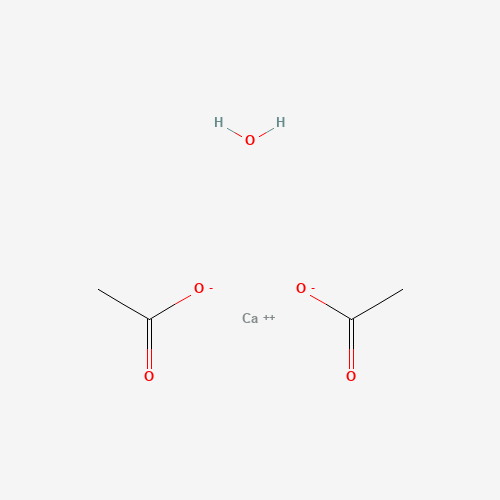
Description : Calcium acetate monohydrate (CAS No: 5743-26-0) occupies a critical position in the global specialit...
Category : Pharmaceutical Actives & Precursors
Sub-Category : Intermediates & Precursors
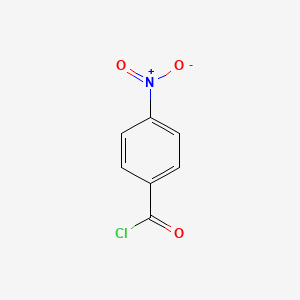
Description : P-Nitrobenzoyl Chloride (CAS 122-04-3) is a critical building block in the API intermediates market,...
![3-Bromo-8-methylimidazo[1,2-a] pyridine-6-carboxylic acid](https://cdn.scimplify.com/products/images/6a4dfeaf3f77e71fa4cd800c/1c4dd82a-667d-4a18-b3b3-a0acc88c780e.png)

![Trilaciclib Intermediate 1 (2-(methylthio)-4-(3-oxo-1,4-diazaspiro[5.5]undec-1-yl)-5-Pyrimidinecarboxylic acid ethyl ester)](https://cdn.scimplify.com/products/images/69b698d466ea274e8c4f42fb/1a5703ff-bdad-45f7-b884-435bb84f6481.png)