Search through


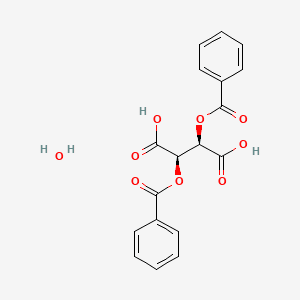
Di-Benzoyl-L-Tartaric Acid Monohydrate, commonly known as (-)-Dibenzoyl-L-tartaric acid monohydrate (L-DBTA), is a chiral auxiliary used in the resolution of racemic mixtures. This compound is highly effective in facilitating the synthesis of enantiomerically pure compounds and is a valuable reagent in pharmaceutical and organic synthesis.
Di-Benzoyl-L-Tartaric Acid Monohydrate, commonly known as (-)-Dibenzoyl-L-tartaric acid monohydrate (L-DBTA), is a chiral auxiliary used in the resolution of racemic mixtures. This compound is highly effective in facilitating the synthesis of enantiomerically pure compounds and is a valuable reagent in pharmaceutical and organic synthesis.

Chemical Properties & Specifications
H319: Causes serious eye irritation.
P264: Wash hands thoroughly after handling. P280: Wear eye protection/face protection. P305+P351+P338: IF IN EYES: Rinse cautiously with water for several minutes. Remove contact lenses if present and easy to do. Continue rinsing.
Used as a chiral resolving agent in the synthesis of enantiomerically pure pharmaceutical compounds such as ramelteon, a sleep aid.
Employed in asymmetric synthesis to induce chirality in a wide range of organic reactions, particularly in the synthesis of complex molecules with high stereoselectivity.
Utilized in the development of chiral compounds for therapeutic applications and other bioactive molecules.
TSCA Registration: Registered under the Toxic Substances Control Act. EINECS Number: 220-374-0, confirming compliance with European chemical inventory standards.
Store in a cool, dry, and well-ventilated place, away from incompatible substances.
Available in various quantities, typically in 50 kg net fiber drums for bulk applications.
Di-Benzoyl-L-Tartaric Acid Monohydrate is primarily used as a chiral resolving agent to produce enantiomerically pure pharmaceutical compounds, ensuring the safety and efficacy of drugs like ramelteon.
It helps in resolving racemic mixtures, promoting the formation of a single, active enantiomer, which is crucial for optimizing the therapeutic effectiveness of various drugs.
Yes, but it should be handled with proper personal protective equipment (PPE) such as gloves, goggles, and lab coats, and used in well-ventilated areas to minimize exposure.
The purity of this compound is typically verified through HPLC (High-Performance Liquid Chromatography) and NMR (Nuclear Magnetic Resonance) spectroscopy to confirm its optical purity and enantiomeric excess.
Category : Pharmaceutical Actives & Precursors
Sub-Category : Intermediates & Precursors
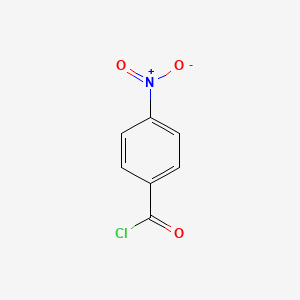
Description : P-Nitrobenzoyl Chloride (CAS 122-04-3) is a critical building block in the API intermediates market,...