Search through


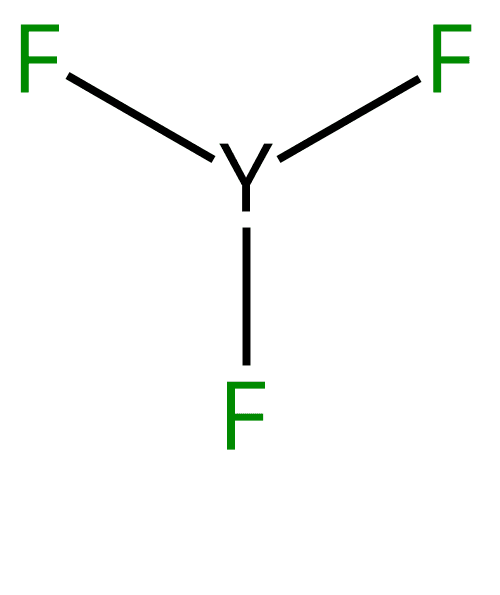
Yttrium Fluoride (YF₃) is a high-purity rare earth inorganic compound used in optical coatings, laser crystals, fluoride glasses, speciality ceramics, and advanced electronic materials due to its excellent thermal stability and chemical resistance. Our high-purity Yttrium Fluoride is an advanced anhydrous rare earth halide engineered to serve as a high-performance material for optical thin films, precision metallurgy and semiconductor manufacturing equipment & research applications requiring controlled purity and consistent particle performance. Operating within a highly reliable global supply network, this strategic compound directly addresses the rigorous technical requirements of multiple advanced manufacturing sectors. We are a premier Yttrium Fluoride manufacturer for high purity Yttrium Fluoride, ensuring consistent melting points and precise assay values. To be Yttrium Fluoride supplier to deliver a comprehensive selection of Yttrium Fluoride grades, We committ with full analytical documentation including batch-specific Oxygen-content verification profiles and supporting quality assurance data Yttrium Fluoride COA and TDS. We also ensure secure supply chains from pilot-lot evaluations to multi-container commercial campaigns worldwide with reliable lead time and global supply capabilities and logistics coordination over 17+ countries.
Yttrium Fluoride (YF₃) is a high-purity rare earth inorganic compound used in optical coatings, laser crystals, fluoride glasses, speciality ceramics, and advanced electronic materials due to its excellent thermal stability and chemical resistance. Our high-purity Yttrium Fluoride is an advanced anhydrous rare earth halide engineered to serve as a high-performance material for optical thin films, precision metallurgy and semiconductor manufacturing equipment & research applications requiring controlled purity and consistent particle performance. Operating within a highly reliable global supply network, this strategic compound directly addresses the rigorous technical requirements of multiple...

Chemical Properties & Specifications
Acute Tox. 4 (19.3%), Acute Tox. 4 (19.3%), Skin Irrit. 2 (95.2%), Eye Irrit. 2 (94.7%), Acute Tox. 4 (19.3%), STOT SE 3 (94.7%)
P261, P264, P264+P265, P270, P271, P280, P301+P317, P302+P352, P304+P340, P305+P351+P338, P317, P319, P321, P330, P332+P317, P337+P317, P362+P364, P403+P233, P405, and P501
Skin Irrit. 2 (95.2%)
Utilised as a durable, low-refractive-index material in multi-layer anti-reflective coatings for high-power infrared (IR), visible, and ultraviolet (UV) laser lenses and spectroscopic optics
Incorporated into specialty advanced ceramic formulations and coatings to drastically enhance resistance against aggressive fluorine-based reactive ion etching (RIE) inside microchip fabrication reactors
Essential raw chemical precursor and electrolyte constituent for the metallothermic reduction and electrowinning of high-purity yttrium metal and advanced rare earth master alloys
Foundational matrix material for growing upconversion luminescent crystals and dopant hosts used in advanced radiation detection and bio-imaging equipment
A material used to form antireflective layers and protective coatings for lenses, mirrors, and filters due to its low refractive index and transparency from UV to MIR spectral ranges
A chemical additive used to facilitate the densification of ceramic powders at lower temperatures, helping to retain fine-grained microstructures and improve mechanical properties
A component in protective coatings for semiconductor manufacturing equipment to resist erosion by corrosive fluorine-based plasmas and minimize particle contamination
A compound used in dentistry as an antibacterial and anticarious preparation, and as a radiopaque filler to make restorative materials visible on X-ray images
A water-insoluble source used as a starting material for the production of metallic yttrium through reduction processes
A constituent in fluorescent materials and upconversion luminescence hosts for solid-state lasers, optical sensors, and bio-imaging probes.
Commercial and operational efficiency of our Yttrium Fluoride formulations depends on absolute phase purity, a low-oxygen baseline, and strict moisture exclusion. In high-power vacuum deposition and plasma-shielding applications, volatile or chemical defects will cause operational failure. The presence of oxide or oxyfluoride (YOF) contamination within the fluoride matrix leads to non-uniform melting kinetics and triggers microscopic "spitting" during electron-beam evaporation. This defect throws macro-particulate clusters onto precision optical substrates, distorting light transmission and reducing coating yields.
Our chemical processing line utilizes advanced hydrofluorination of ultra-pure yttrium precursors under an anhydrous reactive atmosphere, keeping residual oxygen levels to ≤ 0.10%. Our Optical Grade ensures a stable, highly crystalline powder that sublimates evenly in high-vacuum chambers, creating a completely seamless thin film with an unadulterated dielectric profile. Furthermore, we regulate particle size curves and tap density to facilitate smooth pneumatic feeding and uniform solid-state reaction kinetics in engineering ceramic sintering lines, minimizing batch rejections for component manufacturers.
Oxygen impurities indicate the presence of yttrium oxyfluoride (YOF) or unreacted oxides. Because YF3 and YOF possess vastly different thermal vapor pressures and sublimation kinetics, heating a contaminated powder under vacuum causes alternating thermal zones. This triggers localized micro-explosions or "spitting" that ruins lens coatings. To guarantee a clean sublimation baseline, our Optical 4N5 grade undergoes strict anhydrous hydrofluorination, keeping oxygen to ≤ 0.08%. Because this ultra-purification requires meticulous environmental controls and extensive ICP-MS validation, the standard manufacturing lead time for container-scale allocations of this optical grade is 10 to 12 weeks, ensuring a pre-validated, defect-free material stream.
When hot-pressing or sintering advanced yttria-fluoride ceramics for microchip etching reactors, any structural porosity from trapped moisture or non-uniform particle packing can cause mechanical failure under halogen plasma bombardment. Our Semiconductor 4N grade features a narrow, unimodal particle distribution coupled with strict anhydrous packaging that keeps moisture close to zero. This morphological precision enables uniform solid-state sintering with maximum grain boundary density. Sourcing this grade for commercial continuous-process manufacturing lines maintains a reliable lead time of 8 to 10 weeks for standard multi-ton shipments, helping gigafactories schedule preventative maintenance cycles without risking production delays.
For metal reduction and alloy foundries consuming high-volume feedstocks, supply security requires reliable cross-border shipping coordination and predictable transit intervals. We mitigate international shipping risks by operating synchronized processing lines alongside major regional transit networks. For contract agreements covering our Metallurgical Tech grade, we offer a steady, repeatable lead time of 6 to 8 weeks for standard 20 Metric Ton (1 FCL) container loads. Every delivery is supported by a comprehensive technical data package containing lot-specific F3Y COA and SDS records, allowing sourcing managers to bypass long customs quarantine windows and minimise safety stock overhead.
Yttrium Fluoride (YF3) is an inorganic chemical compound used in the production of metallic yttrium, thin films, specialty glasses, and ceramics. It serves as a sintering aid, a component in plasma-resistant coatings, and is used in laser technology and dentistry as an antibacterial and radiopaque agent
This compound is widely utilized in the optics, semiconductor, ceramics, glass, electronics, and dental industries
Yttrium Fluoride is typically used as a high-purity powder, granule, or evaporation material for thin-film coatings and as a dopant or additive in solid-state matrices like glasses and ceramics
Standard specifications include CAS number 13709-49-4, high purity (typically 99.9% to 99.99%), and documentation such as COA, TDS, impurity reports, and regulatory compliance documents
Scimplify has capabilities for global distribution and custom synthesis through an integrated network of manufacturers and logistics partners with reliable lead time
The product is export ready with a standard MOQ starting from 100 kgs, with lead times for international customers depending on the shipping destination and specific grade.
Category : Critical metals & Strategic materials
Sub-Category : Manganese Compounds
Category : Critical metals & Strategic materials
Sub-Category : Tungsten Compounds
Description : Source high-purity Ammonium Paratungstate (CAS 11120-25-5) from Scimplify, one of the trusted global...
Category : Critical metals & Strategic materials
Sub-Category : Tungsten Compounds
Description : Source high-purity Tungsten Metal (CAS 7440-33-7) from Scimplify, one of the trusted global tungsten...
Category : Metal Oxides & Synergists, Critical metals & Strategic materials
Sub-Category : Metal additives, Bismuth Compounds
Description : Bismuth granular (CAS 7440-69-9) is an essential high purity fine chemical utilized in the API inter...