Search through


Azoxystrobin 18.2% + Difenoconazole 11.4% SC is a broad-spectrum systemic fungicide formulation, combining two complementary modes of action: Azoxystrobin (CAS: 131860-33-8): A strobilurin class fungicide, inhibits mitochondrial respiration (QoI activity), providing translaminar and systemic protection. Difenoconazole (CAS: 119446-68-3): A triazole fungicide (DMI), inhibits sterol biosynthesis, offering curative, eradicant, and protective control. This synergy provides preventive and curative control of a wide range of fungal pathogens across crops like rice, wheat, vegetables, fruits, and pulses. It is widely used in integrated pest management (IPM) strategies due to its multi-site resistance management profile. This formulation has two cas 131860-33-8 & 119446-68-3 combination.
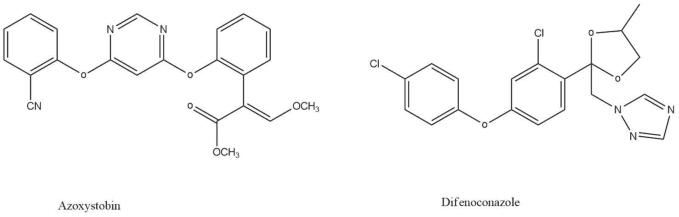
Azoxystrobin 18.2% + Difenoconazole 11.4% SC is a broad-spectrum systemic fungicide formulation, combining two complementary modes of action: Azoxystrobin (CAS: 131860-33-8): A strobilurin class fungicide, inhibits mitochondrial respiration (QoI activity), providing translaminar and systemic protection. Difenoconazole (CAS: 119446-68-3): A triazole fungicide (DMI), inhibits sterol biosynthesis, offering curative, eradicant, and protective control. This synergy provides preventive and curative control of a wide range of fungal pathogens across crops like rice, wheat, vegetables, fruits, and pulses. It is widely used in integrated pest management (IPM) strategies due to its multi-site resis...

Chemical Properties & Specifications
Acute Toxicity: Category 4 Eye Irritation: Category 2A Hazardous to Aquatic Environment: Category 1 (chronic)
H302: Harmful if swallowed H319: Causes serious eye irritation H410: Very toxic to aquatic life with long-lasting effects
P280: Wear protective gloves/eye protection P305+P351+P338: IF IN EYES: Rinse cautiously P391: Collect spillage
Rice, wheat, chili, grapes, mango, tomato, cucurbits, onions, groundnut, pulses
Sheath blight, powdery mildew, early blight, anthracnose, downy mildew, and rusts
Foliar spray using knapsack or power sprayers
300–500 mL/ha (depending on crop stage and infestation)
Store in a cool, well-ventilated area, away from sources of ignition
100 mL, 200 mL, 500 mL, 1 L bottles Bulk packaging on OEM basis
Palletized, stretch-wrapped cartons 2 drums/cases high
2 years from manufacturing under sealed conditions
Controls a wide spectrum including sheath blight, early blight, rust, anthracnose, and downy mildew.
Residual control extends 10–14 days, depending on weather and crop canopy.
No, it's a conventional synthetic fungicide not allowed in certified organic systems.
COA, TDS, MSDS, and CIB/RC license details for formulation batch.
Yes, it combines two different modes of action (QoI and DMI), delaying resistance build-up.
Generally 300–500 mL/ha, adjusted per crop type and fungal pressure.