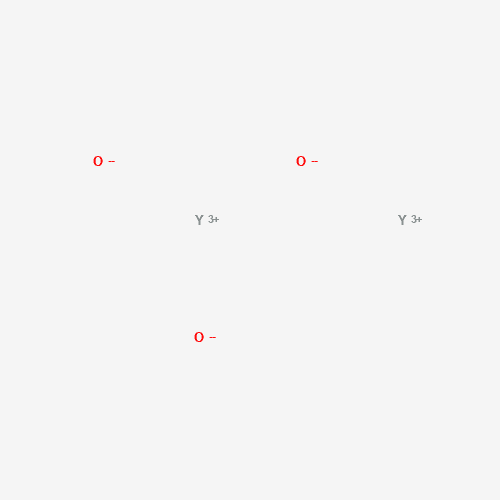

Y₂O₃ is a high-purity rare earth oxide widely recognised for its exceptional thermal stability, water insolubility, and performance across advanced ceramic, optical, and electronic applications. This thermodynamically stable white powder is extensively utilised as a critical additive in phosphor manufacturing, yttria-stabilised zirconia (YSZ) systems, ceramic sintering processes, and precision investment casting applications where superior thermal resistance and structural integrity are required. Our high-purity Yttrium Oxide (Yttria) is a heavy rare earth oxide engineered to serve as an indispensable structural stabiliser, high-performance plasma barrier, and optical host matrix within demanding advanced manufacturing ecosystems. Operating within a highly reliable global supply framework, this strategic compound directly addresses the rigorous engineering specifications of several high-value industrial sectors like YSZ, ODS and others. We are an established Yttrium Oxide manufacturer for high-purity Yttrium Oxide, ensuring consistent melting points and precise assay values. We deliver a comprehensive selection of Yttrium Oxide grades with full analytical documentation, including batch-specific X-ray Diffraction (XRD) phase analysis profiles and supporting quality assurance data, Yttrium Oxide COA and TDS. We ensure secure supply chains from pilot-lot evaluations to multi-container commercial campaigns worldwide with reliable lead times and global supply capabilities and logistics coordination in over 17+ countries.

Y₂O₃ is a high-purity rare earth oxide widely recognised for its exceptional thermal stability, water insolubility, and performance across advanced ceramic, optical, and electronic applications. This thermodynamically stable white powder is extensively utilised as a critical additive in phosphor manufacturing, yttria-stabilised zirconia (YSZ) systems, ceramic sintering processes, and precision investment casting applications where superior thermal resistance and structural integrity are required. Our high-purity Yttrium Oxide (Yttria) is a heavy rare earth oxide engineered to serve as an indispensable structural stabiliser, high-performance plasma barrier, and optical host matrix within dema...

Chemical Properties & Specifications
Skin Irrit. 2 (43.6%), Eye Irrit. 2 (36.7%), STOT SE 3 (43.6%)
P261, P264, P264+P265, P271, P280, P302+P352, P304+P340, P305+P351+P338, P319, P321, P332+P317, P337+P317, P362+P364, P403+P233, P405, and P501
Functions as the primary crystal lattice stabiliser for engineering structural zirconia ceramics, milling media, and oxygen sensors, preventing phase transformations to maximise fracture toughness
Atmospheric plasma spraying or thin-film deposition to protect internal microchip etching chambers from aggressive halogen plasma erosion
Fine oxide dispersion agent in nickel- and cobalt-based superalloys to inhibit grain growth and microstructural creep in aerospace gas turbine blades
Vital host matrix and dopant precursor for growing high-index Nd: YAG laser crystals and manufacturing high-efficiency red phosphors for display screens
High-performance lens formulations to increase mechanical durability, elevate the refractive index, and minimise chromatic aberration.
In the surface treatment and coatings sector, Y₂O₃ serves as an effective additive in cathodic dip coating formulations to enhance corrosion protection performance. The material also plays a significant role in optical coatings, specialty optical glass production, security pigments for banknotes and sensitive documents, and high-performance ceramic grinding media manufacturing. Owing to its excellent chemical and mechanical properties, yttrium oxide is further used in synthetic gemstone production and specialized lighting applications, including incandescent gas mantle coatings for outdoor lamps. As a strategically important rare earth material, Y₂O₃ continues to witness strong demand from advanced materials, electronics, defense, optics, energy, and engineered ceramics industries, making it a highly relevant product for global sourcing, specialty chemical manufacturing, and CDMO-driven material innovation.
Pure zirconium dioxide naturally undergoes a structural phase transformation from a tetragonal geometry to a highly brittle monoclinic geometry when cooling past 1170°C. This transition induces a disruptive localized volume expansion of up to 5%, which creates immediate internal micro-cracking and structural failure in unmanaged refractory components or coatings. By integrating our Ceramic 4N grade yttria into the matrix, the trivalent yttrium ions substitute for quadrivalent zirconium ions in the crystal lattice, generating stable oxygen vacancies. This chemical modification locks the high-strength cubic or tetragonal phase down to room temperature, producing Yttria-Stabilized Zirconia (YSZ) known for its world-class fracture toughness and resistance to severe thermal shock.
Yttrium oxide has a natural affinity for slowly absorbing ambient atmospheric moisture (H2O) and carbon dioxide (CO2) over extended storage periods, converting surface layers into yttrium hydroxides and carbonates. If a powder with a high LOI value is charged into an atmospheric plasma spray gun or high-vacuum electron-beam evaporator, these absorbed volatile gases flash off instantly. This outgassing triggers microscopic "spitting" and introduces gas bubbles into the forming film, creating structural micro-pores and pinholes that expose the underlying metal chamber components to rapid corrosion by aggressive fluorine plasma. We enforce strict low-moisture packing protocols and calcination parameters to keep our LOI to ≤ 0.5%, ensuring a dense, completely seamless protective barrier.
Rare earth derivatives like Yttrium Oxide are classified as critical strategic elements, leaving their enterprise procurement highly vulnerable to shifting international trade regulations, mining export quotas, and volatile spot-market trade desk pricing. Relying on transactional open-market middlemen leaves your continuous-process assembly lines exposed to unexpected batch variations and logistics bottlenecks. Our integrated processing infrastructure solves this risk by securing dedicated multi-ton production allocations paired with strategically positioned regional distribution hubs. A structured volume agreement insulates your enterprise with predictable pricing and dedicated buffer reserves, ensuring complete cross-border supply continuity backed by a fully transparent, auditable compliance trail.
For metal reduction and alloy foundries consuming high-volume feedstocks, supply security requires reliable cross-border shipping coordination and predictable transit intervals. We mitigate international shipping risks by operating synchronized processing lines alongside major regional transit networks. For contract agreements covering our Metallurgical Tech grade, we offer a steady, repeatable lead time of 6 to 8 weeks for standard 20 Metric Ton (1 FCL) container loads. Every delivery is supported by a comprehensive technical data package containing lot-specific F3Y COA and SDS records, allowing sourcing managers to bypass long customs quarantine windows and minimise safety stock overhead.