Search through


Our high-purity Molybdenum Trioxide (MoO3) is a highly functional transition metal oxide serving as a critical cornerstone in heterogeneous catalysis, advanced electronics, energy storage, and industrial metallurgy. Engineered with precise structural and oxidation parameters, this material is indispensable across several high-technology and industrial sectors. Chemical performance and market adaptability of our Molybdenum Trioxide portfolio centres on exceptional phase purity and strict morphological uniformity. MoOz exists primarily in its thermodynamically stable orthorhombic phase (a-MoO₃), a layered structure held together by weak van der Waals forces that allow for high ion diffusivity and exceptional catalytic surface availability. Also known as ‘Molybdic anhydride’ by Molybdenum(VI) oxide manufacturers. We are an established strategic Molybdenum Trioxide supplier of high-purity transition metal oxides, delivering reliable lot-to-lot chemical consistency for global catalyst, electronic, and metallurgic manufacturers. We offer an extensive selection of Molybdenum Trioxide grades with complete analytical verification, including batch-specific Inductively Coupled Plasma Mass Spectrometry (ICP-MS), X-ray Diffraction (XRD), and Brunauer-Emmett-Teller (BET) surface area metrics supported by full quality assurance documentation (Trioxomolybdenum COA/SDS/TDS). We ensure robust supply security from pilot-scale optimisation to high-tonnage industrial supply chains worldwide.
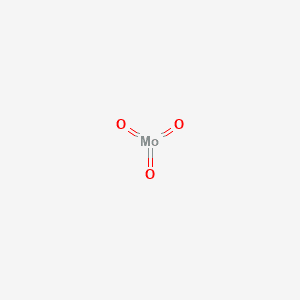
Our high-purity Molybdenum Trioxide (MoO3) is a highly functional transition metal oxide serving as a critical cornerstone in heterogeneous catalysis, advanced electronics, energy storage, and industrial metallurgy. Engineered with precise structural and oxidation parameters, this material is indispensable across several high-technology and industrial sectors. Chemical performance and market adaptability of our Molybdenum Trioxide portfolio centres on exceptional phase purity and strict morphological uniformity. MoOz exists primarily in its thermodynamically stable orthorhombic phase (a-MoO₃), a layered structure held together by weak van der Waals forces that allow for high ion diffusivity ...

Chemical Properties & Specifications
H319, H335, H351
GHS07, GHS08
Xn
P261; P281; P305 + P351 + P338
Highly utilised as a primary catalyst or co-catalyst precursor in hydrodesulfurisation (HDS), hydrodenitrogenation (HDN), and the selective oxidation of methanol to formaldehyde
Functions as a vital thin-film intercalation layer due to its reversible optical properties during ion insertion/extraction cycles
Explored as an advanced high-capacity anode material owing to its distinct layered orthorhombic (α-MoO₃) crystal structure, which accommodates high-density lithium intercalation.
Primary intermediate produced when molybdenum ores (mainly molybdenite, MoS₂) are purified
Precursor: Chemical precursor required to manufacture pure molybdenum metal through hydrogen reduction
Microstructure: Studied for addition of molybdenum (derived from MoO3) affects the phase diagrams, grain growth, and crystal structure (typically BCC) of the resulting alloys
Property Enhancement: Studied for its role in enhancing "red hardness" in high-speed tools and preventing stress corrosion cracking in high-strength environments
Direct Addition: "Technical-grade" or roasted molybdenum trioxide is primarily used directly in steel production
Function: Essential alloying agent that increases steel's strength, hardenability, and corrosion resistance, particularly in stainless and tool steels
Crucial solid lubricant additive and anti-wear agent in heavy-duty extreme pressure (EP) oils and high-temperature greases
Raw material for the production of pure molybdenum metal powder, target materials, and high-performance superalloys required in gas turbine components and rocket nozzles
Incorporated into engineering plastics, polyurethanes, and PVC formulations to promote solid-phase charring and dramatically reduce toxic smoke density.
Avoid dust generation. Use a P2 or P3 respirator as inhalation of molybdenum dust can cause respiratory irritation or moly-bosh
Molybdenum Trioxide (MoO3) is a high-purity inorganic metallurgy compound essential for the production of molybdenum metal and various chemical catalysts. Molybdenum trioxide is primarily obtained by roasting molybdenite (MoS2) concentrate in air in a process called oxidative roasting (Tech grade).
Technical grade is primarily used in steel alloying (Ferromolybdenum production). Pure grade is required for chemical catalysis and electronic applications where trace metal impurities must be minimized.
MoO3 is universally utilised as a precursor for technical-grade molybdenum used in steel allying to increase corrosion resistance and high-temperature strength. Approximately 80-90% of global MoOz consumption is for steel applications. MoO₃ (Molybdenum peroxide) is a critical product of extractive metallurgy & physical metallurgy as it influences the final properties of metal alloys
New extractive methods concentrate using additives like kaolin during roasting to achieve 99.99% purity while reducing dust and harmful emissions.
As it influences the final properties of metal alloys.
In heterogeneous acid catalysts, alkali metals act as severe catalytic poisons. Even trace quantities of Sodium (Na) or Potassium (K) migrate to the active Lewis and Brønsted acid sites on the a-MoO3 lattice, neutralizing them and accelerating catalyst deactivation. Our MoO3-Cat Grade features an advanced chemical purification profile that limits collective alkali metals to < 50 ppm. This meticulous control ensures long- term operational stability, decreases regeneration frequency, and optimizes the overall processing margins for refinery hydrotreating applications.
Solid-state reactions-such as the synthesis of bismuth molybdate catalysts or the reduction of MoO3 to pure molybdenum metal powder-are inherently transport-limited. Broad particle size distributions or low surface areas lead to incomplete reaction conversions and structural inconsistencies. We utilize precision calcination to deliver consistent BET surface areas (up to 6.0 m2/g) and a narrow, unimodal particle size distribution. This consistency eliminates localized thermal variations in your reactors, improves diffusion kinetics, and minimizes structural defects in final compounds.
Molybdenum is classified as a critical strategic metal, meaning its global supply chain is vulnerable to geopolitical risks, shipping choke points, and spot-market pricing volatility. Purchasing through fragmented trade entities exposes procurement teams to massive quality swings and supply shortfalls. We eliminate this vulnerability through long-term volume agreements backed by integrated feedstock tracking. Sourcing managers can secure stable quarterly pricing brackets and pre-reserved production runs, ensuring absolute cross-batch traceability and eliminating the risk of operational downtime due to regulatory or supply delays.
Yes. Modern chemical plants and metal foundries rely heavily on automated pneumatic feeding or vacuum-conveying systems where fine powders can cause fluidization blockages or dusting losses. We can manipulate the bulk density via precision spray granulation or compaction, providing free-flowing micro-spheroidal granules or briquettes. This custom modification ensures clean mechanical feeding, accurate automated stoichiometry dosing, and a substantial drop in plant dust exposure, matching the operational demands of Tier-1 chemical processors.
We deliver comprehensive technical transparency. Every production lot is verified through high-resolution analytical methods, including ICP-MS for trace metal quantification, XRD for phase confirmation, and laser diffraction for particle size analysis. Shipments are accompanied by a lot-specific Molybdenum trioxide COA, GHS-compliant Molybdenum trioxide SDS, and full technical data compliance records. This extensive package simplifies external technical audits, fast-tracks internal quality control release protocols, and ensures immediate compliance with strict aerospace, defense, and semiconductor criteria.
Yes export ready and the price is shared along with MOQ upon on sourcing.