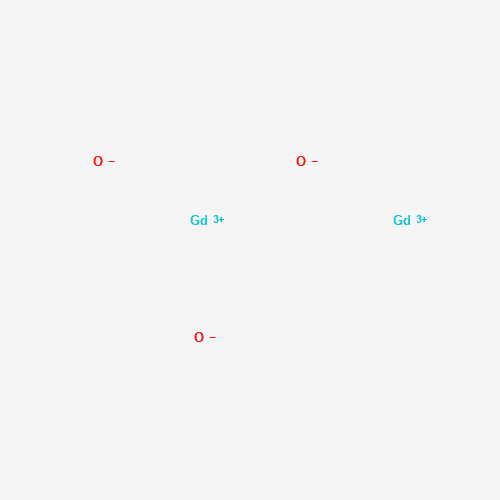

Metallurgical and operational efficiency of our Gadolinium Oxide formulations relies on an exceptionally low trace rare-earth impurity profile and precisely managed physical particle morphology. In nuclear and electronics applications, structural and chemical uniformity is critical. The presence of unauthorised trace rare earths with varying neutron capture or electronic profiles can disrupt nuclear reactor kinetics or alter the dielectric constants of technical ceramic substrates. Our high-purity Gadolinium Oxide (Gadolinia) is a highly specialised rare earth oxide engineered primarily to serve as a high-performance neutron absorber, grain-boundary modifier, and structural dopant within intense pyrometallurgical and nuclear engineering environments. Operating within a vertically integrated refinement framework, this strategic compound directly addresses the demanding processing specifications of several high-value industrial sectors like SOFC. We are a premier Gadolinium Oxide supplier for high-purity Gadolinium Oxide, ensuring consistent melting points and precise assay values. We deliver a comprehensive selection of Gadolinium Oxide grades with full analytical documentation, including batch-specific X-ray Diffraction (XRD) phase analysis profiles and supporting quality assurance data (Gadolinium Oxide COA and TDS). We ensure secure supply chains from pilot-lot evaluations to multi-container commercial campaigns worldwide with reliable lead time and global supply capabilities and logistics coordination.

Metallurgical and operational efficiency of our Gadolinium Oxide formulations relies on an exceptionally low trace rare-earth impurity profile and precisely managed physical particle morphology. In nuclear and electronics applications, structural and chemical uniformity is critical. The presence of unauthorised trace rare earths with varying neutron capture or electronic profiles can disrupt nuclear reactor kinetics or alter the dielectric constants of technical ceramic substrates. Our high-purity Gadolinium Oxide (Gadolinia) is a highly specialised rare earth oxide engineered primarily to serve as a high-performance neutron absorber, grain-boundary modifier, and structural dopant within in...

Chemical Properties & Specifications
Eye Irrit. 2 (23.3%), Aquatic Acute 1 (40.5%), Aquatic Chronic 1 (40.5%)
P264+P265, P273, P280, P305+P351+P338, P337+P317, P391, and P501
Extensively utilised as a burnable neutron absorber in nuclear fuel pellets (UO₂-Gd₂O₃ matrices) and control rod assemblies due to the exceptionally high microscopic neutron capture cross-section of the gadolinium atom
Blended into nickel-, cobalt-, and iron-based superalloys to inhibit grain growth and improve high-temperature creep resistance in gas turbines and aerospace exhaust components
Functions as a vital chemical host matrix and dopant for synthesizing gadolinium gallium garnet (GGG) substrates and magneto-optical thin films
Deployed as an efficient co-dopant in ceria-based electrolytes (Gadolinium-Doped Ceria, or GDC) to drastically elevate oxygen-ion conductivity at reduced operating temperatures. Technical Ceramic Stabilizers: Integrated into advanced engineering ceramics to enhance fracture toughness and structural stability under sustained thermal and mechanical fatigue.
In nuclear engineering, Gadolinium Oxide acts as a burnable poison to manage excess initial reactivity in a reactor core. While gadolinium isotopes (155 Gd and 157 Gd) possess incredibly high thermal neutron absorption cross-sections that burn away predictably during the fuel cycle, europium and samarium isotopes generate daughter isotopes that do not burn away at the same rate. If these elements contaminate the fuel pellet matrix, they cause permanent neutron absorption penalties late in the core's life, reducing fuel efficiency. Our Nuclear/Electronic 5N grade restricts individual rare earth contaminants to ≤ 2 ppm via strict liquid-liquid solvent extraction, ensuring a highly predictable and clean neutron consumption curve for power utility operators.
When synthesising Gadolinium-Doped Ceria (Ce1-xGdx02-x/2) via solid-state calcination, the mixing uniformity of the oxide components dictates the final density of the electrolyte. Coarse grains or broad particle size variations slow down the solid-state diffusion of gadolinium ions into the ceria lattice, leaving behind localized unreacted zones and micro-pores. These structural flaws leak gas and degrade ionic conductivity. We engineer our SOFC Pure 4N powder to maintain a sub-micron primary particle morphology and a tight, unimodal size distribution (D50 1.5-3.5 um). This ensures full, rapid integration during high-temperature sintering, producing a gas-tight electrolyte with excellent low-temperature ionic performance.
Strategic procurement of high-purity rare earth oxides is frequently susceptible to volatile pricing shifts, changing export quotas, and localized transport bottlenecks. Relying on transactional open-market brokers exposes your production lines to inconsistent impurity batches and sudden shipping delays. Our processing framework eliminates this risk by combining dedicated multi-ton manufacturing streams with strategically managed regional distribution hubs. A long-term volume contract secures your enterprise with protected pricing structures and dedicated inventory reserves, guaranteeing a reliable supply with comprehensive regulatory compliance documentation (REACH, TSCA}
We utilize multi-stage ion-exchange chromatography and precise calcination profiles to isolate the gadolinium ions. Our Nuclear/Electronic Grade systematically restricts non-gadolinium rare earth impurities ( Eu, Sm, Tb, Dy) and heavy transition metals (Fe, Ni, Cr) to minimal parts-per-million thresholds. Furthermore, we optimize the powder's specific surface area (BET) and tap density to guarantee homogeneous solid-state diffusion and predictable sintering behavior when blended into nuclear fuel matrices or engineering ceramic composites. By delivering a powder with exceptional lot-to-lot phase stability, our material minimizes structural defects and eliminates processing rejections in continuous automated sintering workflows.