Search through


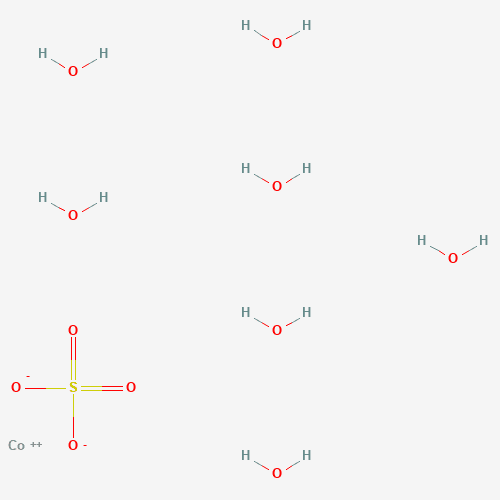
Our high-purity Cobalt Sulfate Heptahydrate (10026-24-1 (Heptahydrate) / 10124-43-3 (Anhydrous), is a cornerstone transition metal salt engineered specifically to support global electrification infrastructure and specialised chemical synthesis. Operating within a tightly integrated supply chain, this product addresses the demanding technical specifications of multiple high-value industries. We are a premier Cobalt (II) Sulfate Heptahydrate supplier for high purity Cobalt (II) Sulfate Heptahydrate, ensuring consistent melting points and precise assay values. We deliver a comprehensive selection of Cobalt (II) Sulfate Heptahydrate grades with full analytical documentation, including batch-specific Inductively Coupled Plasma (ICP) spectroscopy profiles and supporting quality assurance data, Cobalt (II) Sulphate Heptahydrate COA and TDS. We ensure secure supply chains from pilot-lot evaluations to multi-container commercial campaigns worldwide with reliable lead time and global supply capabilities and logistics coordination.
Our high-purity Cobalt Sulfate Heptahydrate (10026-24-1 (Heptahydrate) / 10124-43-3 (Anhydrous), is a cornerstone transition metal salt engineered specifically to support global electrification infrastructure and specialised chemical synthesis. Operating within a tightly integrated supply chain, this product addresses the demanding technical specifications of multiple high-value industries. We are a premier Cobalt (II) Sulfate Heptahydrate supplier for high purity Cobalt (II) Sulfate Heptahydrate, ensuring consistent melting points and precise assay values. We deliver a comprehensive selection of Cobalt (II) Sulfate Heptahydrate grades with full analytical documentation, including batch-spec...

Chemical Properties & Specifications
Acute Tox. 3 (15.3%), Acute Tox. 4 (84.7%), Skin Sens. 1 (100%), Eye Irrit. 2 (11.8%), Resp. Sens. 1 (100%), Muta. 2 (96.5%), Carc. 1B (68.8%), Carc. 1B (31.2%), Repr. 1B (66%), Repr. 1B (31.2%), Aquatic Acute 1 (100%), Aquatic Chronic 1 (84.7%), Aquatic Chronic 4 (15.3%)
P203, P233, P260, P261, P264, P264+P265, P270, P271, P272, P273, P280, P284, P301+P316, P301+P317, P302+P352, P304+P340, P305+P351+P338, P318, P321, P330, P333+P317, P337+P317, P342+P316, P362+P364, P391, P403, P405, and P501
Foundational chemical feedstock for the co-precipitation of precursor Cathode Active Materials (pCAM), vital for high-energy-density Lithium Nickel Manganese Cobalt Oxide (NMC) battery configurations
Extensive for Electrodeposition baths to deliver uniform, hard, and exceptionally corrosion-resistant cobalt and cobalt-alloy coatings on components exposed to severe friction, wear, or extreme environments
Highly efficient oxidation catalyst and paint drier in the compounding of architectural coatings, high-durability printing inks, polymers, and protective varnishes
Precursor for generating premium cobalt-based inorganic pigments and structural stains capable of withstanding high-temperature kiln firing in glass, enamel, and ceramic manufacturing.Agricultural Trace Elements: Deployed in specialized animal feed supplements, mineral blocks, and micronutrient premixes to correct nutritional cobalt deficiencies, facilitating natural vitamin $\text{B}_{12}$ synthesis in ruminants.
Deployed in specialised animal feed supplements, mineral blocks, and micronutrient premixes to correct nutritional cobalt deficiencies, facilitating natural vitamin B12 synthesis in ruminants
Operational efficiency of our Cobalt (II) Sulfate Heptahydrate relies on an exceptionally refined crystalline matrix that achieves rapid, complete dissolution in aqueous media with zero residual turbid insolubles. In the manufacturing of battery precursors, the management of trace elemental impurities is paramount. The presence of even parts-per-million levels of alkali metals (Na, K) or alkaline earth elements (Ca, Mg) introduces structural instability into the layered cathode crystal lattice, severely reducing long-term cycle life and energy retention.
Our advanced chemical purification processes utilize multi-stage solvent extraction and rigorous recrystallization to isolate the cobalt ions, systematically restricting individual iron and sodium levels to ≤ 10 ppm. This technical threshold ensures optimal electrochemical kinetics, prevents internal micro-structural cracking, and eliminates processing variations in continuous automated gigafactory workflows. By providing a chemically stable, highly uniform crystal shape, this grade lowers downstream processing overhead and ensures strict compliance with stringent international quality standards.
During the continuous co-precipitation of lithium nickel manganese cobalt oxide cathodes, any extraneous transition metal ions present in the Cobalt Sulfate solution will get integrated into the alpha-sodium arsenite (R3m) layered structure. Iron ions can easily undergo valence fluctuations during battery charging and discharging, causing local structural stress and creating microscopic metallic precipitates. These precipitates can grow through the porous polyolefin separator over time, causing internal electrical short-circuits and increasing thermal runaway risks. Our EV Battery Pure grade restricts iron to ≤ 5 ppm, providing battery engineers with an exceptionally clean chemical baseline that preserves high discharge capacity and long-term cycle performance.
In automated electroplating operations, the rapid dissolution of metal salts is essential to maintain a stable, uniform concentration of free cobalt ions (Co2+) in the plating bath. Inconsistent particle sizes or partially dehydrated crystals dissolve at unpredictable rates, leading to localized fluctuations in bath density and causing uneven coating thickness or surface pinholes on plated parts. We maintain a strict single-phase heptahydrate crystalline structure with a narrow crystal size distribution. This guarantees near-instantaneous dissolution and predictable mass-balance equations, ensuring a flawless, highly repeatable surface finish.
Cobalt is classified globally as a highly strategic critical metal, meaning its extraction and refining are tightly linked to strict ESG rules, geopolitical trade quotas, and supply chain choke points. Purchasing through fragmented spot-market commodity brokers exposes your business to sudden pricing spikes and unreliable trace impurity profiles that can compromise sensitive catalyst or battery production runs. We eliminate this commercial risk through long-term volume contracts backed by pre-allocated production capacity and transparent, index-linked pricing mechanisms. This strategic relationship reduces your "Total Cost of Quality" by securing a reliable, continuous supply of material accompanied by an unbroken, auditable regulatory and quality documentation trail.