Search through
Hero Background
rounded-bottom

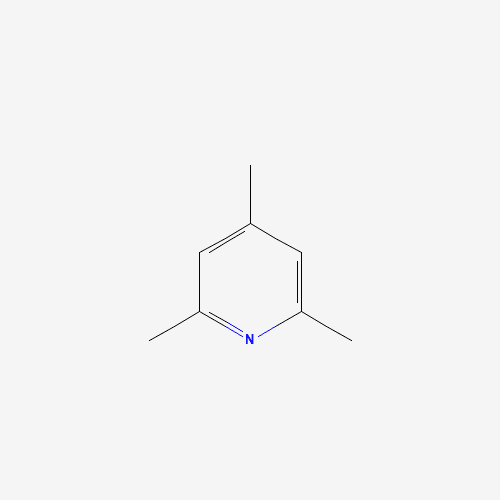
2,4,6-Collidine (CAS NO : 108-75-8)

2,4,6-Collidine, also known as symmetrical trimethylpyridine (S-Collidine), is the premier sterically hindered base used in sophisticated organic transformations. 3 methyl groups provide a unique "shielding" effect around the nitrogen lone pair, making it a powerful, non-nucleophilic base. Our 85% Technical Grade 2,4,6-Collidine purity is specifically optimised for industrial-scale utility, where high-volume processing requires a reliable base that drives sensitive reactions without competing side reactions or product degradation. Our high-performance Pyridine & Pyrimidine derivatives are engineered to serve as critical architectural building blocks in the convergent synthesis of modern pharmaceuticals and high-purity agrochemicals. We are an established 2,4,6-Collidine supplier at >84% purity, ensuring minimal carry-over of impurities and a broad range of various agrochemical intermediates providing comprehensive analytical (HPLC/NMR/MS) and supporting quality assurance documentation (COA/TDS/SDS) across all grades, detailed impurity mapping, and region-specific regulatory support. We ensure reliable lead times from R&D quantities through commercial-scale manufacturing, enabling partners to meet diverse global and regional requirements.

2,4,6-Collidine

2,4,6-Collidine, also known as symmetrical trimethylpyridine (S-Collidine), is the premier sterically hindered base used in sophisticated organic transformations. 3 methyl groups provide a unique "shielding" effect around the nitrogen lone pair, making it a powerful, non-nucleophilic base. Our 85% Technical Grade 2,4,6-Collidine purity is specifically optimised for industrial-scale utility, where high-volume processing requires a reliable base that drives sensitive reactions without competing side reactions or product degradation. Our high-performance Pyridine & Pyrimidine derivatives are engineered to serve as critical architectural building blocks in the convergent synthesis of modern phar...

Get a Quote

Details included in quote

Minimum Order Quantity

Lead Time

Regional Availability

Incoterms

Rounded Top

Chemical Properties & Specifications

Applications of 2,4,6-Collidine

Peptide Synthesis & Coupling

In solid-phase and liquid-phase peptide synthesis, Preferred base for minimising racemisation during the activation of amino acids. Controlled basicity ensures efficient coupling without compromising the chiral integrity of the peptide chain

Sterospecific Silylation (Alcohol Protection)

"Gold Standard" for the preparation of silyl ethers (like TBS, TMS, or TIPS ethers). In the synthesis of complex natural products and APIs, it scavenges protons effectively while its steric bulk prevents it from attacking the sensitive silylating agent itself

Nucleoside & Oligonucleotide Chemistry

Phosphoramidite method for DNA/RNA synthesis. Acid scavenger during the deprotection and oxidation steps, where milder bases like Pyridine might lead to lower yields or side reactions

Dehydrohalogenation Reactions

Highly effective in the elimination of hydrogen halides to form alkenes. Hindered nature promotes the E2 elimination mechanism while preventing competing nucleophilic substitution (SN2) that would occur with less-bulky amines

Total Synthesis of Macrolides & Polyketides

Universally used in the construction of large-ring lactones, where regioselective control of functional groups is essential

Analytical Chemistry & Microscopy

Historically utilized as a buffering agent and a specialized "clearing agent" in tissue processing and electron microscopy due to its unique refractive index and chemical stability

Have Questions About 2,4,6-Collidine?
We've Got Answers.

This grade is offered at a highly competitive somwhere between 1,200 to 1300/- per Kg. Packaging: We provide two robust options: 190 Kg MS (Mild Steel) drums for traditional industrial handling or 200 Kg HM-HDPE Drums for enhanced chemical compatibility and moisture protection.

The key is Steric Hindrance. Because the nitrogen atom is flanked by methyl groups at the 2 and 6 positions, it can easily capture protons (H+) but is too "bulky" to attack electrophilic centers. This prevents unwanted N-alkylation or silylation, which is essential when protecting sensitive alcohol groups (TBS/TMS ethers) or during complex peptide coupling sequences.

We resolve the "Quality-to-Volume" challenge by ensuring that our 84% grade maintains a strictly controlled impurity profile that does not interfere with catalytic cycles. While medicinal chemists require the precision of a hindered base, procurement teams require cost-effective, bulk-available reagents. We provide both by offering a technical-grade product that is batch-tested for process compatibility in large-scale synthesis.

Unlike simpler pyridines, the three methyl groups at the 2, 4, and 6 positions provide significant steric hindrance around the nitrogen lone pair. This makes it a "non-nucleophilic" base—it can accept protons (act as a base) but will not easily attack electrophiles. This is critical in silylation reactions to prevent the formation of unwanted N-silyl side products.

Suggested Products

Humic Based Liquid
top-right-icon

Humic Based Liquid

CAS No. : 1415-93-6

View Product
2-Isopropoxyethylamine (IPAE)
top-right-icon

2-Isopropoxyethylamine (IPAE)

CAS No. : 83495-51-6

View Product
Clothianidin Technical
top-right-icon

Clothianidin Technical

CAS No. : 210880-92-5

View Product
Phosphorous Acid
top-right-icon

Phosphorous Acid

CAS No. : 10294-56-1

View Product

Get a Quote

Get a Quote