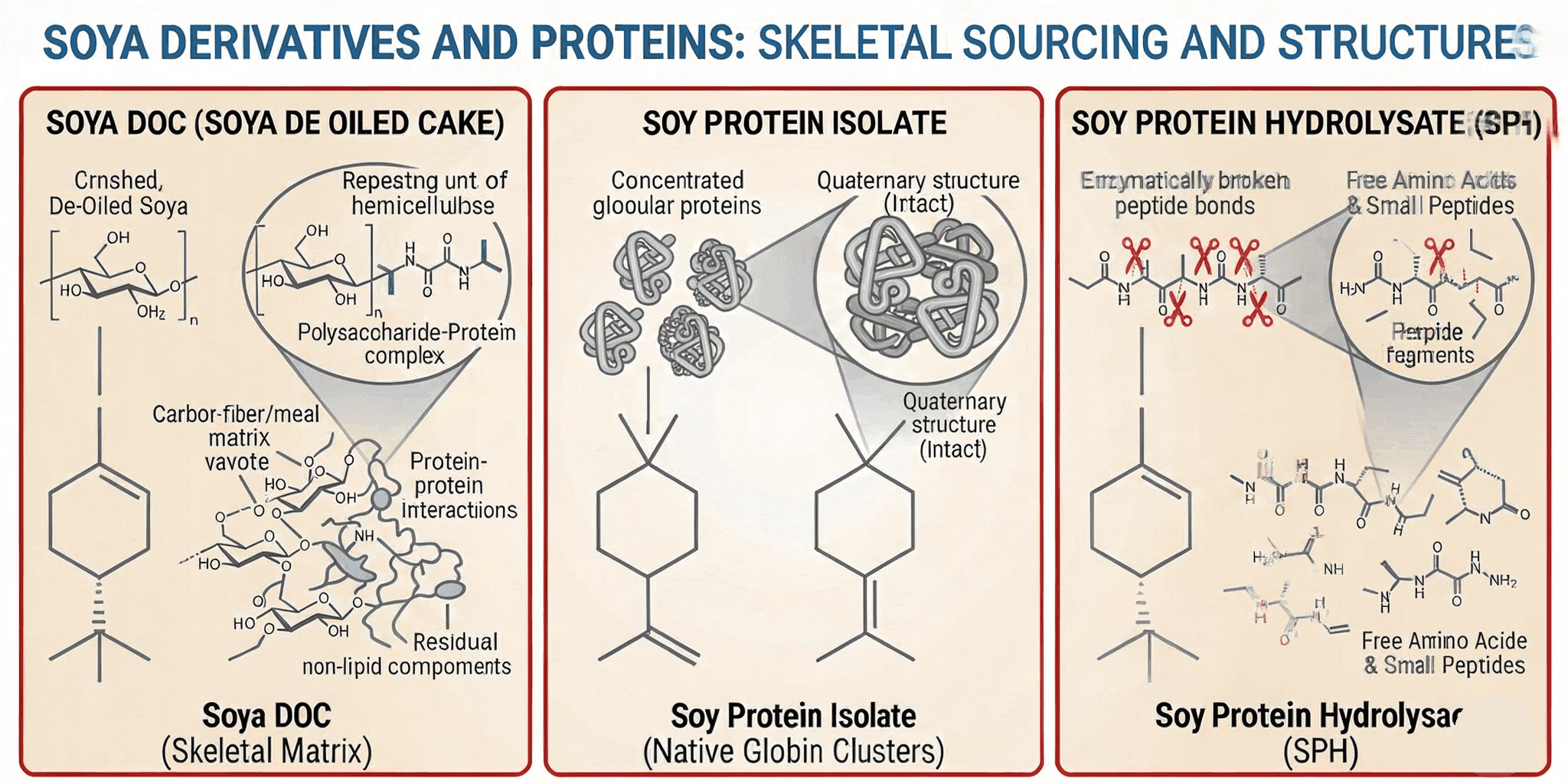

Soy-derived proteins, ranging from the high-volume commodity Soya De Oiled Cake (Soya DOC) to highly refined ingredients like Soy Protein Isolate (SPI) & Soy Protein Hydrolysate (SPH) are a universally significant, plant-based protein source originating from the Glycine max soybean. These products represent a processing value chain starting with solvent extraction of defatted meal (DOC, an animal feed staple at 44-48% protein), which is further processed through aqueous extraction, precipitation, and purification to yield human-grade SPI (minimum 90% protein). Advanced enzymatic hydrolysis converts SPI into SPH (CAS 68607-88-5), a form with improved digestibility suitable for medical and infant nutrition. While Soya DOC is traded globally as an agricultural commodity (HS 2304.00), SPI (CAS 9010-10-0) is a versatile functional ingredient highly valued in the functional food sectors for its emulsification properties, excellent amino acid profile, and role as the foundation for modern plant-based meat alternatives and nutritional supplements. The versatility of these soy fractions provides a sustainable protein solution across the food, feed, and nutraceutical industries globally. Soy protein producers are also called it by Soybean meal, soy meal, soybean oil meal, soybean cake, or simply Soya DOC. We are the leading various Soy-derived proteins supplier worldwide, ensuring comprehensive regulatory support & CoA traceability for various grades with global supply capability with reliable lead time.

Soy-derived proteins, ranging from the high-volume commodity Soya De Oiled Cake (Soya DOC) to highly refined ingredients like Soy Protein Isolate (SPI) & Soy Protein Hydrolysate (SPH) are a universally significant, plant-based protein source originating from the Glycine max soybean. These products represent a processing value chain starting with solvent extraction of defatted meal (DOC, an animal feed staple at 44-48% protein), which is further processed through aqueous extraction, precipitation, and purification to yield human-grade SPI (minimum 90% protein). Advanced enzymatic hydrolysis converts SPI into SPH (CAS 68607-88-5), a form with improved digestibility suitable for medical and infant nutrition. While Soya DOC is traded globally as an agricultural commodity (HS 2304.00), SPI (CAS 9010-10-0) is a versatile functional ingredient highly valued in the functional food sectors for its emulsification properties, excellent amino acid profile, and role as the foundation for modern plant-based meat alternatives and nutritional supplements. The versatility of these soy fractions provides a sustainable protein solution across the food, feed, and nutraceutical industries globally. Soy protein producers are also called it by Soybean meal, soy meal, soybean oil meal, soybean cake, or simply Soya DOC. We are the leading various Soy-derived proteins supplier worldwide, ensuring comprehensive regulatory support & CoA traceability for various grades with global supply capability with reliable lead time.
Food & Nutrition
Feed Additives
Oilseed Meal & By-products, Fermentation By-products

Chemical Properties & Specifications
Risk of Aflatoxin or DON contamination if MC is high or temperature is elevated, requiring strict supplier testing COA and continuous storage monitoring
Fine powder/dust is combustible and poses an explosion risk at specific concentrations; it requires ATEX-compliant handling systems (explosion-proof equipment, dust extraction)
Foundational, cost-effective protein and energy source in commercial feed formulation
Crucial essential amino acids, particularly Lysine, in monogastric diets (poultry and swine)
Balance the energy-to-protein ratio in livestock diets
Moisture to remain lower to 12%- DRY
Avoid direct sunlight & peak, harsh temperatures
Required to prevents condensation & mould growth
Regular monitoring for insects and rodents
Aerated environment
Moisture Content: must be ≤ 12.0% for long-term storage (≥ 6 months)
≤ 13.0% for short-term
Aeration should maintain the temperature below 20°C to suppress insect activity and mold proliferation