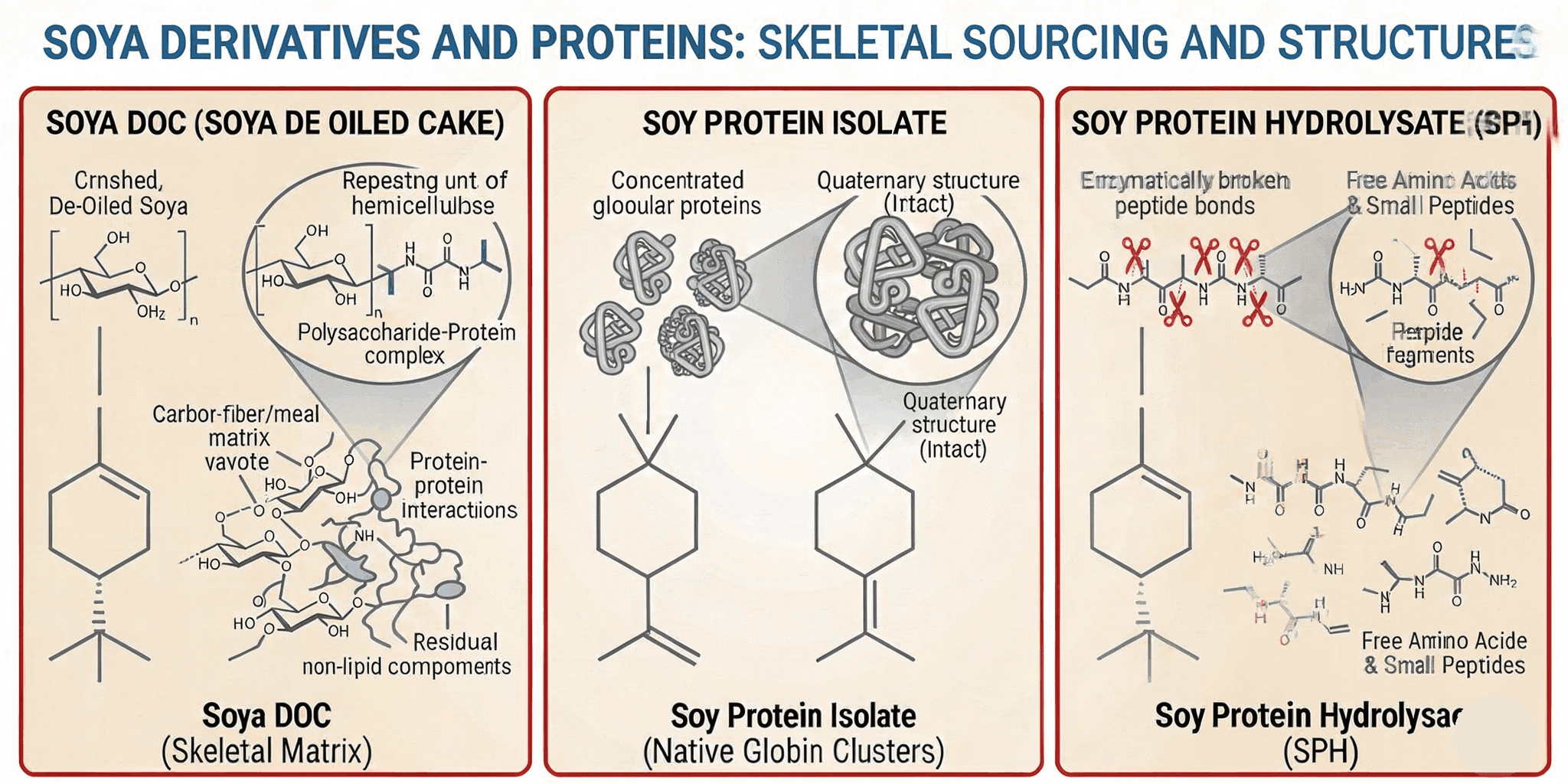

Soy-derived proteins, ranging from the high-volume commodity Soya De Oiled Cake (Soya DOC) to highly refined ingredients like Soy Protein Isolate (SPI) & Soy Protein Hydrolysate (SPH) are a universally significant, plant-based protein source originating from the Glycine max soybean. These products represent a processing value chain starting with solvent extraction of defatted meal (DOC, an animal feed staple at 44-48% protein), which is further processed through aqueous extraction, precipitation, and purification to yield human-grade SPI (minimum 90% protein). Advanced enzymatic hydrolysis converts SPI into SPH (CAS 68607-88-5), a form with improved digestibility suitable for medical and infant nutrition. While Soya DOC is traded globally as an agricultural commodity (HS 2304.00), SPI (CAS 9010-10-0) is a versatile functional ingredient highly valued in the functional food sectors for its emulsification properties, excellent amino acid profile, and role as the foundation for modern plant-based meat alternatives and nutritional supplements. The versatility of these soy fractions provides a sustainable protein solution across the food, feed, and nutraceutical industries globally. We are the leading various Soy-derived proteins supplier worldwide, ensuring comprehensive regulatory support & CoA traceability for various grades with global supply capability with reliable lead time.

Soy-derived proteins, ranging from the high-volume commodity Soya De Oiled Cake (Soya DOC) to highly refined ingredients like Soy Protein Isolate (SPI) & Soy Protein Hydrolysate (SPH) are a universally significant, plant-based protein source originating from the Glycine max soybean. These products represent a processing value chain starting with solvent extraction of defatted meal (DOC, an animal feed staple at 44-48% protein), which is further processed through aqueous extraction, precipitation, and purification to yield human-grade SPI (minimum 90% protein). Advanced enzymatic hydrolysis converts SPI into SPH (CAS 68607-88-5), a form with improved digestibility suitable for medical and in...

Chemical Properties & Specifications
High Degree of Hydrolysis (DH) often results in a pronounced bitter taste due to exposed hydrophobic peptides, requiring careful formulation (masking agents) for consumer acceptance
Although safer than intact protein, rapid ingestion of highly concentrated free amino acids/peptides can sometimes lead to transient gastrointestinal discomfort (osmotic effect)
Enhanced bioavailability and reduced allergenicity are required
Formulas for individuals with GI distress or malabsorption
Peptides (low molecular weight) are less antigenic than intact proteins
Rapid absorption post-exercise due to high concentration of di- and tri-peptides
Used for its savory (Umami) profile in meat analogs, broths, and seasonings.
Store in a hermetically sealed container under low humidity conditions (RH ≤ 50% is highly recommended) and controlled temperature
Highly hydroscopic (moisture-absorbing), which leads to accelerated clumping, reduced flowability, and can encourage non-enzymatic browning (Maillard reaction) over time, degrading quality.
(Bioavailability & Absorption Rate) Pre-digested mix of di- and tri-peptides, which are absorbed intact via the Peptide Transporter 1 (PepT1) system in the small intestine. This absorption route is significantly faster than the digestion and absorption of the large, intact protein molecules of SPI, ensuring rapid delivery of amino acids to muscle tissue.
(Hypoallergenic Infant Formula) For true hypoallergenic status, SPH must have a high egree of Hydrolysis (DH), resulting in a protein action where the mean molecular weight is typically below 1,500 Daltons (e.g., < 5, 000 Da maximum), hich significantly reduces immunogenicity.
(Flavor Masking Challenge) High DH exposes internal, hydrophobic amino acids, resulting in a pronounced bitter taste. This is primarily managed via flavor masking systems (e.g., specific combinations of sweeteners and flavor modifiers) and careful formulation limits to maintain palatability for the end-user.
(3-MCPD / Chemical Hydrolysis) Acid hydrolysis can lead to the unintended creation of process contaminants like 3-monochloropropane-1,2-diol (3-MCPD). Enzymatic hydrolysis uses mild conditions and specific proteases, avoiding this chemical reaction and resulting in a cleaner, safer ingredient profile preferred for nutritional and clinical applications.