Search through


Pivaloyl Chloride (CAS 3282-30-2) is a high-reactivity branched-chain acyl chloride. Within your Elemental Derivatives hierarchy, it is categorised as a "Bulky Acylating Reagent." Its unique tert-butyl structure provides significant steric hindrance, making it the premier choice for selective acylation in complex organic synthesis. Beyond its foundational roles in Pharmaceuticals and Agrochemicals, it is a vital "aroma-tuning" intermediate in the aroma chemical industry for Trimethylacetyl chloride manufacturers, used to synthesize specialty pivalate esters that define high-end floral and fruity olfactory profiles and in Flame Retardants as a precursor for high-efficiency polymerization initiators. We are a globally established trimethylacetyl chloride supplier and various fragrance intermediates from sourcing, r&d to manufacturing scaling through comprehensive regulatory documentation (CoA), manufacturing compliances, traceability, and consistent worldwide supply capabilities, ensuring reliable lead times and quality assurance across all grades.
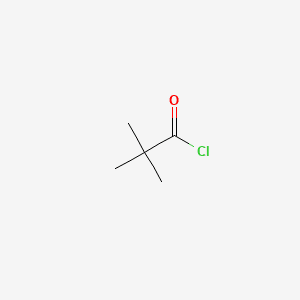
Pivaloyl Chloride (CAS 3282-30-2) is a high-reactivity branched-chain acyl chloride. Within your Elemental Derivatives hierarchy, it is categorised as a "Bulky Acylating Reagent." Its unique tert-butyl structure provides significant steric hindrance, making it the premier choice for selective acylation in complex organic synthesis. Beyond its foundational roles in Pharmaceuticals and Agrochemicals, it is a vital "aroma-tuning" intermediate in the aroma chemical industry for Trimethylacetyl chloride manufacturers, used to synthesize specialty pivalate esters that define high-end floral and fruity olfactory profiles and in Flame Retardants as a precursor for high-efficiency polymerization init...

Chemical Properties & Specifications
Flam. Liq. 2 (81.8%), Met. Corr. 1 (58.6%), Acute Tox. 4 (81.8%), Skin Corr. 1B (82.2%), Eye Dam. 1 (59.9%), Acute Tox. 2 (75.7%)
P210, P233, P234, P240, P241, P242, P243, P260, P264, P264+P265, P270, P271, P280, P284, P301+P317, P301+P330+P331, P302+P361+P354, P303+P361+P353, P304+P340, P305+P354+P338, P316, P317, P320, P321, P330, P363, P370+P378, P390, P403+P233, P403+P235, P405, P406, and P501
Flammable Liquid (Cat 2); Corrosive to Metals (Cat 1).
Esters derived from pivalic acid (Pivalates) typically develop pleasant, diffuse floral-fruity notes reminiscent of Bergamot, Rose, Pear, and Lily of the Valley.
Synthesises Pivalate Esters (e.g., Linalyl Pivalate), which offer higher stability in alkaline detergents compared to standard acetates
Synthesises high-stability esters (e.g., Phenyl Alkanol Pivalates) that are more resistant to hydrolysis and oxidation than standard acetates
Polymers & Flame Retardants: Radical Initiators The primary precursor for tert-butyl peroxypivalate, an essential organic peroxide initiator used in the industrial polymerisation of PVC and LDPE
Essential for creating Pivaloyloxymethyl (POM) esters, enhancing the oral bioavailability of antibiotics like Ampicillin and Cefditoren
Pharmaceutical Category: Acylating Agent / Prodrug Precursor
Mechanism: Pivaloyloxymethyl (POM) group to mask polar functionalities, increasing drug lipophilicity and oral absorption
Target Indication: Production of Ampicillin, Amoxicillin, and Dipivefrin (for Glaucoma).
Herbicides: Critical for synthesizing Isoxazolone-type herbicides
Metabolic Stability: The bulky tert-butyl group provides environmental stability, ensuring the active ingredient remains effective under varying field conditions.
Storage under a Dry Nitrogen or Argon Blanket is mandatory to prevent hydrolysis
Store in a cool, dry, fireproof area (+2°C' to +30°C)
Original glass-lined or high-density fluorinated polyethylene (HDPE) containers. Avoid metal containers due to HCI corrosion risk
Keep strictly away from water, alcohols, strong bases, amines, and oxidizing agents