Search through


Ethylhexyl Triazone (EHT) is an oil-soluble UV filter used primarily in sunscreens and skincare products. It provides high-efficiency broad-spectrum protection by absorbing UVB radiation. EHT offers excellent photostability, making it ideal for long-lasting sun protection, even under harsh sunlight conditions. It is commonly used in sunscreen formulations for effective sun shielding. The structure contains a 1,3,4-oxadiazole ring, which is a heterocyclic compound with nitrogen and oxygen atoms, and a 2-ethylhexyl group attached to it.
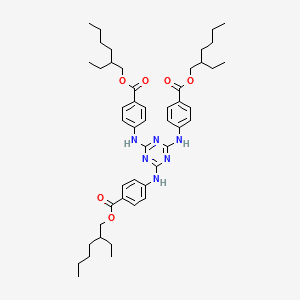
Ethylhexyl Triazone (EHT) is an oil-soluble UV filter used primarily in sunscreens and skincare products. It provides high-efficiency broad-spectrum protection by absorbing UVB radiation. EHT offers excellent photostability, making it ideal for long-lasting sun protection, even under harsh sunlight conditions. It is commonly used in sunscreen formulations for effective sun shielding. The structure contains a 1,3,4-oxadiazole ring, which is a heterocyclic compound with nitrogen and oxygen atoms, and a 2-ethylhexyl group attached to it.

Chemical Properties & Specifications
H302: Harmful if swallowed H315: Causes skin irritation H319: Causes serious eye irritation H332: Harmful if inhaled
P261: Avoid breathing dust/fume/gas/mist/vapors/spray P280: Wear protective gloves/protective clothing/eye protection/face protection P304 + P340: IF INHALED: Remove person to fresh air and keep comfortable for breathing
Inhalation: Remove to fresh air. Seek medical attention if symptoms persist. Skin Contact: Wash with soap and water. Seek medical advice if irritation persists. Eye Contact: Rinse immediately with water for at least 15 minutes. Seek medical advice if symptoms persist. Ingestion: Do not induce vomiting. Seek immediate medical attention.
Acute toxicity, oral (Category 4) Skin irritation (Category 2) Eye irritation (Category 2A)
Used in sunscreen formulations to provide broad-spectrum UV protection for skin.
Incorporated into skincare products, especially those designed for sun protection.
Can be included in topical formulations aimed at preventing sunburn and associated skin damage.
Store at 20–25°C (68–77°F).
Keep in a cool, dry place away from light and moisture.
Use airtight containers to prevent contamination and degradation.
Available in sealed glass bottles, aluminum containers, or high-density polyethylene (HDPE) drums.
Small-scale: 10 g, 25 g, and 50 g containers for personal care product formulation. Bulk-scale: 100 g, 500 g, and 1 kg drums for commercial and industrial use.