Search through


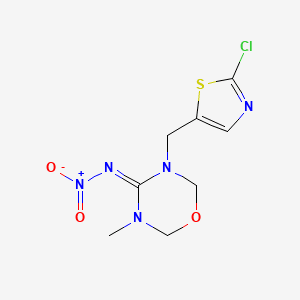
Thiamethoxam (CAS 153719-23-4) functions as a premier second-generation neonicotinoid in the global agrochemicals market, where custom synthesis services focus on its high-precision systemic action for seed and soil treatments across major row crops like corn and soybeans. 3-(2-chloro-1,3-thiazol-5-ylmethyl)-5-methyl-1,3,5-oxadiazinan-4-ylidene(nitro)amine remains a critical high purity fine chemicals component for the Agrochemical industry 98% purity, reflecting a strategic global sourcing shift as bulk chemical supplier procurement adapts to tightening environmental regulations and the rising demand for efficient pest management in turf and ornamental nurseries. The active ingredient 3-[(2-chloro-5-thiazolyl)methyl]tetrahydro-5-methyl-N-nitro-4H-1,3,5-oxadiazin-4-imine continues to drive the API intermediates market for specialized biocides, with CDMOs increasingly prioritizing rigorous impurity profiling to maintain technical superiority amidst evolving safety standards for pollinators. As globally established Thiamethoxam Technical supplier, we ensure dependable supply, consistent quality, and complete regulatory documentation, including CoA and TDS across all grades. Beyond supply, we support partners through the entire product lifecycle from route scouting, process and formulation development, and analytical method development to scale-up, process optimisation, and pilot-to-commercial manufacturing. Our teams also assist with GMP-compliant quality assurance, regulatory documentation, and global supply chain and logistics coordination.
Thiamethoxam 12.6% + Lambda-Cyhalothrin 9.5% ZC
Thiamethoxam 75% SG
Thiamethoxam 17.5% + Chlorantraniliprole 8.8% SC
Thiamethoxam 1% + Chlorantraniliprole 0.5% GR
Thiamethoxam 0.9% + Fipronil 0.2% GR
Thiamethoxam 30% FS
Thiamethoxam 25% WG
Thiamethoxam 35% WG
Azoxystrobin 2.5% + Thiophanate methyl 11.25% + Thiamethoxam 25% FS
Thiamethoxam (CAS 153719-23-4) functions as a premier second-generation neonicotinoid in the global agrochemicals market, where custom synthesis services focus on its high-precision systemic action for seed and soil treatments across major row crops like corn and soybeans. 3-(2-chloro-1,3-thiazol-5-ylmethyl)-5-methyl-1,3,5-oxadiazinan-4-ylidene(nitro)amine remains a critical high purity fine chemicals component for the Agrochemical industry 98% purity, reflecting a strategic global sourcing shift as bulk chemical supplier procurement adapts to tightening environmental regulations and the rising demand for efficient pest management in turf and ornamental nurseries. The active ingredient 3-[(2...

.3d8f8f41.svg)
Agrochemicals
.3556d45a.svg)

Crop Protection & Pest Control


Insecticides
.7767eb0f.png)

Chemical Properties & Specifications
• Flash Point: 208°F (98°C) • Fire Hazards: May release toxic gases (HCl, NOx, CO) upon decomposition. • Extinguishing Media: Dry chemical, foam, CO2. • Protective Equipment: SCBA (Self-Contained Breathing Apparatus) and full protective gear. • Environmental Protection: Prevent water runoff from entering water bodies.
• Eye and Skin Contact: Causes mild irritation. • Thermal Decomposition: Can form toxic gases at high temperatures.
(Parameter & Result) • Oral LD50 (Rat) >5000 mg/kg • Dermal LD50 (Rabbit) >2000 mg/kg • Inhalation LC50 (Rat, 4h) >2.67 mg/L air • Eye Irritation (Rabbit) Minimally irritating • Skin Irritation (Rabbit) Slightly irritating • Skin Sensitization (Guinea Pig) Not a sensitizer
Protects wide range of crops such as corn, soybeans, and cotton from insect pests like aphids, whiteflies, and root weevils.
Effective in managing insect infestations on ornamental plants and flowers.
Applied to maintain healthy lawns and golf courses by controlling insect pests.
o Store in a well-ventilated, secure area. o Keep away from food, beverages, and tobacco. o Wash hands and exposed skin after handling.
HDPE bags with LDPE liner
25.0 Kg Net Weight
Thiamethoxam is a neonicotinoid insecticide used for crop protection to control pests like aphids, whiteflies, and root weevils. It is applied to a variety of crops such as corn, soybeans, and cotton to protect them from insect damage.
Thiamethoxam is absorbed by plants and transported throughout their tissues. It works by interfering with the nicotinic acetylcholine receptors in the insect nervous system, leading to paralysis and death, which ultimately protects the plant.
While Thiamethoxam is effective against pests, it poses significant risks to non-target species like bees and other pollinators. It is important to follow proper safety precautions when handling the insecticide, and its use is restricted in some regions due to environmental concerns.
Thiamethoxam provides long-lasting protection, typically for several weeks to months, depending on the application method, environmental conditions, and pest species. It ensures that crops are protected early in the growing season from damaging pests.