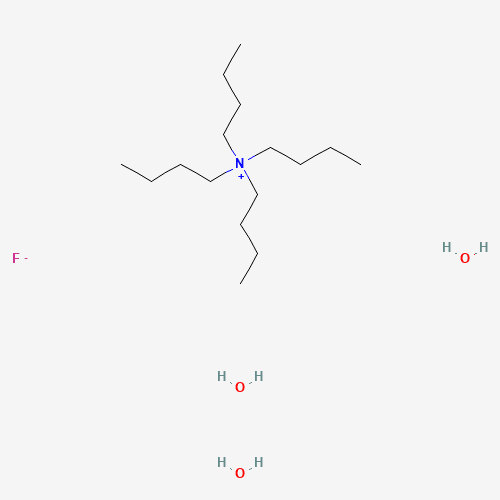

Tetrabutylammonium Fluoride Trihydrate (CAS No: 87749-50-6) serves as a premier, versatile reagent in sophisticated organic synthesis, primarily valued by American laboratories for its exceptional solubility in polar organic solvents and its role as a highly efficient source of nucleophilic fluoride ions for the critical deprotection of silyl ethers. The reagent's utility extends significantly into the domestic pharmaceutical and semiconductor industries, where its mild basicity and non-nucleophilic properties facilitate complex transformations such as aldol-type condensations, Michael additions, and Hiyama cross-coupling reactions without requiring the harsh, anhydrous conditions typically associated with traditional strong bases. With the global market projected to reach $6.12 billion by 2025, driven by a 16.49% CAGR, high-purity 98% and 99% grades are increasingly essential for sensitive U.S. applications in novel drug development and advanced electronic cleaning processes, particularly as CDMOs and specialty chemical manufacturers scale up production capabilities. As a globally established Tetrabutylammonium Fluoride Trihydrate (TBAF) supplier with a consistent purity of 99%, we ensure dependable supply, consistent quality, and complete regulatory documentation, including TBAF CoA and TDS across all grades for the American market. Beyond supply, we support partners through the entire product lifecycle from route scouting, process and formulation development, and analytical method development to scale-up, process optimization, and pilot-to-commercial manufacturing. Our teams also assist with GMP-compliant quality assurance, regulatory documentation, and global supply chain and logistics coordination.


Tetrabutylammonium Fluoride Trihydrate (CAS No: 87749-50-6) serves as a premier, versatile reagent in sophisticated organic synthesis, primarily valued by American laboratories for its exceptional solubility in polar organic solvents and its role as a highly efficient source of nucleophilic fluoride ions for the critical deprotection of silyl ethers. The reagent's utility extends significantly into the domestic pharmaceutical and semiconductor industries, where its mild basicity and non-nucleophilic properties facilitate complex transformations such as aldol-type condensations, Michael additions, and Hiyama cross-coupling reactions without requiring the harsh, anhydrous conditions typically ...
Elemental Derivatives
Nitrogen
Ammonium Compounds (Quaternary)
.7767eb0f.png)

Chemical Properties & Specifications
Skin Corr. 1B (94.5%), Eye Dam. 1 (71.3%)
H314 (94.5%): Causes severe skin burns and eye damage
H318 (71.3%): Causes serious eye damage
P260, P264, P264+P265, P280, P301+P330+P331, P302+P361+P354, P304+P340, P305+P354+P338, P316, P317, P321, P363, P405, and P501
A powerful reagent for facilitating deprotection and nucleophilic substitutions to synthesize complex molecules
A reagent used for the cleavage of silyl ethers and other silyl protecting groups in organic synthesis
A source of nucleophilic fluoride ions for the preparation of various organic compounds, including pharmaceuticals and agrochemicals
A versatile base for base-catalyzed reactions such as aldol-type condensations, Michael-type reactions, and ring-opening reactions
A catalyst that facilitates reactions between reactants in different phases
An electrolyte used in lithium-ion batteries to improve conductivity and performance for energy storage solutions
A catalyst used in the production of fluorinated polymers with unique chemical resistance and thermal stability
A compound employed in ion chromatography for the accurate measurement of fluoride ions in environmental monitoring
Tetrabutylammonium fluoride trihydrate, also known as TBAF, is a quaternary ammonium salt used as a source of nucleophilic fluoride, a mild base, and a phase-transfer catalyst. It is widely used in organic synthesis for deprotection of silyl ethers, fluorination, and various cyclization or cross-coupling reactions
This compound is frequently used in the pharmaceutical, agrochemical, polymer, and metallurgical industries, as well as in battery technology and analytical chemistry
It is often used in organic solvents like tetrahydrofuran or dimethyl sulfoxide (DMSO) and is typically handled as a white crystalline solid
Provided specifications include CAS number 87749-50-6, purity of 98% to 99%, and documentation such as COA, TDS, impurity reports, and regulatory compliance documents
Scimplify has capabilities for global distribution and custom synthesis through an integrated network of manufacturers and logistics partners with reliable lead time
The product is export ready with a standard MOQ starting from 100 kgs, and lead times for international customers depend on the specific shipping destination and grade.
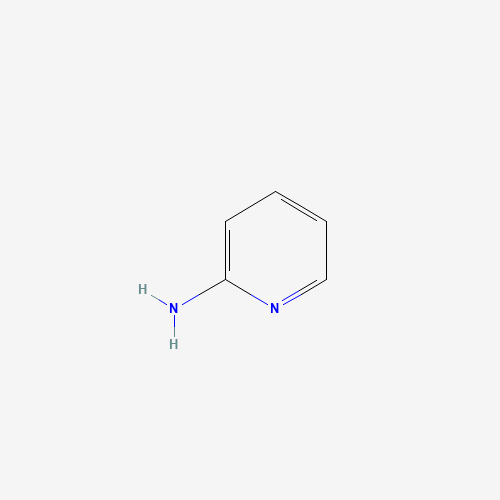
Category : Pyridine
Sub-Category : Aminopyridines & Functionalized Pyridines
Description : Pyridine-2-amine CAS 504-29-0 is a fundamental building block in the API intermediates market, prima...
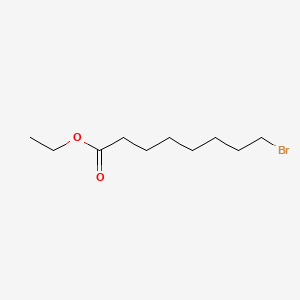
Category : Bromine
Sub-Category : Bromo-Functional Acids & Esters
Description : Ethyl 8-bromooctanoate (CAS No: 29823-21-0) serves as a sophisticated bifunctional building block in...
Category : Halogen Derivatives
Sub-Category : Iodo/Fluoro-Functional Intermediates
Description : 2-Chloro-5-iodobenzoic acid (CAS No: 19094-56-5) serves as a critical bifunctional aromatic building...
Category : Pyridine
Sub-Category : Halogenated Pyridines
Description : 2-Chloropyridine CAS 109-09-1 serves as a high-purity fine chemical with 99% purity essential for th...