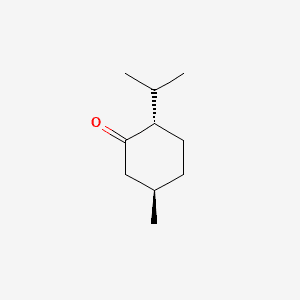

Menthone is a minty monoterpenoid ketone naturally occurring in mint oils (peppermint, cornmint). Menthone provides a minty-camphoraceous facet and a crisp cooling lift in flavors (where permitted) and fragrance accords. Supply is available as trans-menthone (racemic)-89-80-5 & (−)-menthone (L-menthone)-14073-97-3 depending on application and sensory target. Also known by synonyms: p-Menthan-3-one; trans-menthone; (−)-menthone; 2-isopropyl-5-methylcyclohexanone by menthone manufacturers. We are the leading, trusted menthone supplier worldwide and in the United States, with reliable lead times and global supply capability.


Menthone is a minty monoterpenoid ketone naturally occurring in mint oils (peppermint, cornmint). Menthone provides a minty-camphoraceous facet and a crisp cooling lift in flavors (where permitted) and fragrance accords. Supply is available as trans-menthone (racemic)-89-80-5 & (−)-menthone (L-menthone)-14073-97-3 depending on application and sensory target. Also known by synonyms: p-Menthan-3-one; trans-menthone; (−)-menthone; 2-isopropyl-5-methylcyclohexanone by menthone manufacturers. We are the leading, trusted menthone supplier worldwide and in the United States, with reliable lead times and global supply capability.
Flavors & Fragrances
Fragrance Ingredients
Aroma Compounds
.7767eb0f.png)

Chemical Properties & Specifications
S26-S36/37-S61, Typical CLP hazards
R22; R36; R43; R52/53
H226 (74.2%): Flammable liquids
H315 (14.6%): Skin corrosion/irritation
H317 (14.2%): Sensitization, Skin
H412 (88.8%): Hazardous to the aquatic environment, long-term hazard
Mint Complexes: Essential component for building, fortifying, or standardizing synthetic peppermint oils and other mint flavor bases
Flavor Enhancement: Trace amounts to impart a cooling, fresh, and "lift" characteristic, particularly in chewing gum & candies, Oral care & Beverages
Fruity Blends: Incorporated at very low concentrations (∼5 to 50 ppm) to add freshness in fruit flavours, notably imitation raspberry
Aroma Profile: Cooling, minty, and refreshing aroma for various fine and functional fragrance compositions
Composition Use: Perfumes, colognes, and air fresheners
Olfactive Role: Traces to give freshness and lift to compositions, including notes like geranium and lavender.
Product Categories: Soaps, detergents (good stability in most pH ranges), and toiletry applications
Intermediate: Synthesis of agrochemicals and dyestuffs
Reduction to Menthol: Precursor that can be converted to corresponding menthols (e.g., L-Menthone is hydrogenated to yield a mixture of (+)-neomenthol and (−)-menthol)
R&d lab: Biological activities for antimicrobial research like antibacterial and antifungal properties, including activity against Methicillin-Resistant Staphylococcus aureus (MRSA)
Cool, dry, light-protected conditions; keep sealed
25 kg drums; 180 kg drums for bulk
>12 <24 if unopened
Menthone typically refers to trans-menthone (can be racemic). L-menthone is the (−)-enantiomer, offering a slightly different odor and sensory profile.
Minty profiles in fragrances, oral care, and confectionery/beverages (where permitted), typically as a balancing ketone to menthol/menthyl acetate.
Naturally occurring in essential oils of Mentha species (e.g., peppermint, corn mint) and other plants, or produced synthetically.
Exists as four stereoisomers due to the two chiral centers in the cyclohexanone ring. Commercially significant forms are typically L-Menthone ((−)-Menthone) structure: (2S,5R) stereoisomer (trans); Menthone (Mixture of Isomers & Racemic): L-Menthone (predominant, trans) and D-Isomenthone (cis).
Primarily an intermediate in the synthesis of certain agrochemicals, dyestuffs, and various menthol/neomenthol derivatives via hydrogenation.