
Indoxacarb 30 g/L EC
Category
Crop Protection & Pest Control
Sub-Category
Insecticides
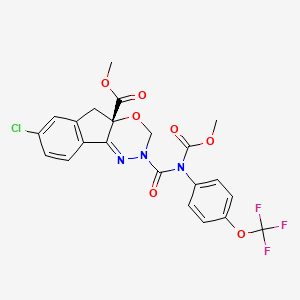
Description : Our premium Indoxacarb 30 g/L EC is a high-potency, emulsifiable concentrate insecticide masterfully engineered to deliver robust contact and stomach-poison action against a broad spectrum of destructive pests. Extensively deployed within the global crop protection sector, this fast-acting, oxadiazine-class solution is applied via uniform foliar spraying to eliminate highly resilient Lepidopteran larvae—including cotton bollworms, beet armyworms, and diamondback moths—across high-value vegetable, fruit, and grain crops. Responding to the urgent modern agricultural industry shift toward integrated pest management (IPM) and resistance mitigation, our advanced 30 g/L EC formulation disrupts insect voltage-dependent sodium channels to rapidly halt target pest feeding within hours while remaining uniquely soft on key beneficial predatory insects and parasitic mites. To facilitate flawless international shipping documentation, guarantee strict safety compliance, and ensure absolute active-constituent authenticity, this commercial pesticide is formally validated and cataloged under the global chemical registry framework using CAS Number 144171-61-9 (and active S-isomer variant CAS Number 173584-44-6). we are premier Indoxacarb 30 g/L EC supplier for agricultural insecticide Indoxacarb EC for the wholesale Indoxacarb 30 g/L EC needs and ensuring clients for commercial pest control Indoxacarb EC capabilities.