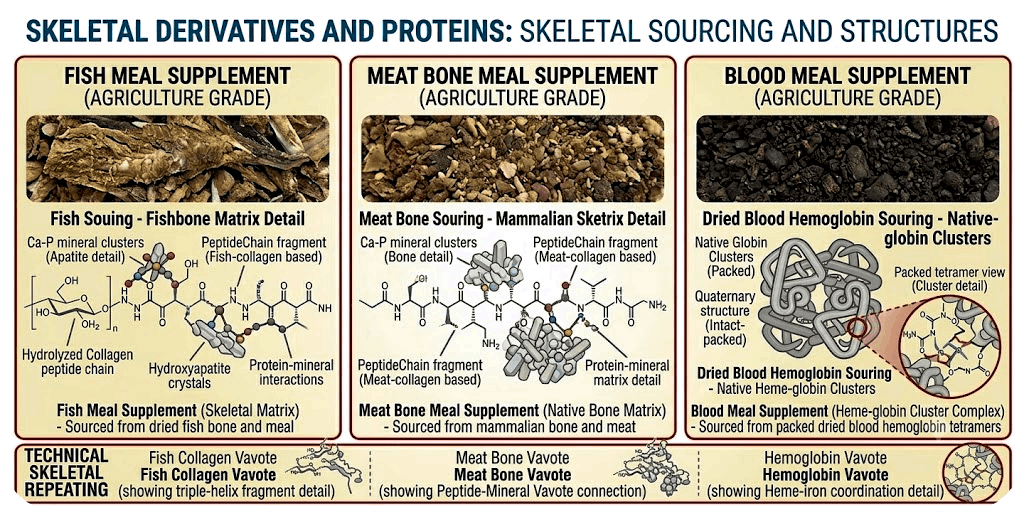
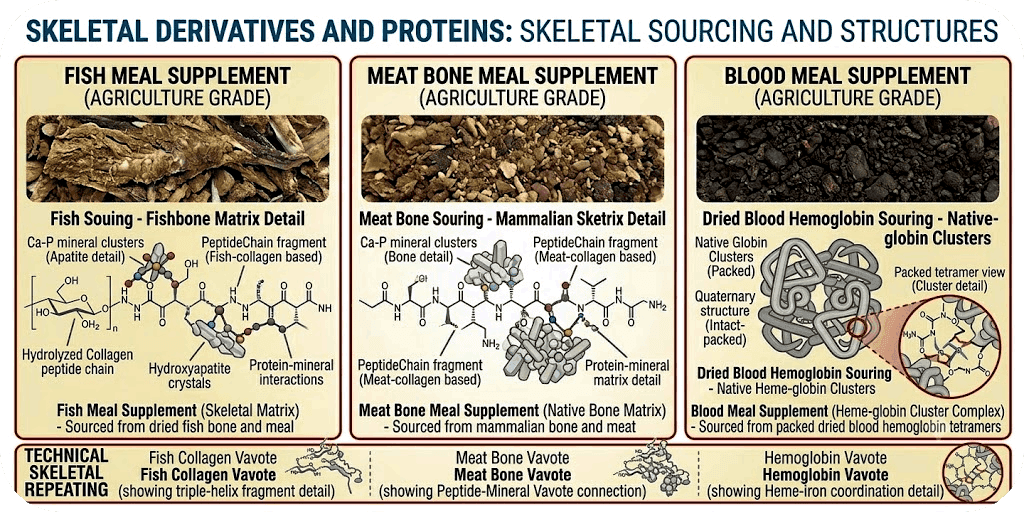

Meat Bone Meal (MBM) is a nutrient-dense organic fertilizer derived from rendered animal bones and tissues. It is sterilized via heat and pressure and ground into a fine meal. Used primarily for phosphorus and calcium enrichment, it supports flowering, fruiting, and root development in soil health programs.


Meat Bone Meal (MBM) is a nutrient-dense organic fertilizer derived from rendered animal bones and tissues. It is sterilized via heat and pressure and ground into a fine meal. Used primarily for phosphorus and calcium enrichment, it supports flowering, fruiting, and root development in soil health programs.
Agrochemicals
Plant Health, Nutrients & Soil Management
Animal-Origin Fertilizer Bases
.7767eb0f.png)

Chemical Properties & Specifications
Not classified as hazardous
P280: Use gloves, mask, and goggles during application P261: Avoid inhalation of dust P264: Wash thoroughly after handling P305+P351+P338: In case of contact with eyes, rinse cautiously
Supplies long-lasting phosphorus and calcium to support flowering, rooting, and fruit development.
Enhances microbial decomposition and nutrient retention in organic compost formulations.
Applied before or at planting to improve nutrient balance and early plant establishment.
Used in horticulture and agroforestry for phosphorus-deficient soils.
Widely in organic farming, greenhouse vegetable cultivation, and orchard systems
Store in cool, shaded, dry areas
6–12 months (sealed)
Rendered, defatted, steam-treated animal meal (bone + soft tissue)
25 kg HDPE bags or 1000 kg jumbo sacks; inner liner available
2 bags high (on pallets)
Palletized, stretch-wrapped, containerized
It contains 4–6% nitrogen, 12–15% phosphorus (P₂O₅), and 15–25% calcium—ideal for flowering crops and fruiting trees.
MBM includes both bone and soft tissue, making it richer in nitrogen and slightly faster acting.
Yes, with appropriate documentation, MBM qualifies under USDA-NOP, OMRI, and EU organic frameworks.
Applied at 200–500 kg/ha depending on soil test results, either as a basal fertilizer or mixed into compost.
Yes, it pairs well with composts, manures, and microbial formulations without degrading activity.
2–4 weeks standard, depending on volume.
COA, MSDS, COO Organic Input Certificate (on request).
Yes, it undergoes high-pressure sterilization to ensure biosecurity compliance.