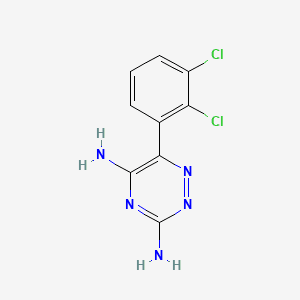

Lamotrigine (CAS 84057-84-1) continues to be a cornerstone in the American neurological market, where high purity fine chemicals are essential for maintaining the stringent therapeutic index required for its efficacy in treating epilepsy and bipolar I disorder. 6-(2,3-Dichlorophenyl)-1,2,4-triazine-3,5-diamine has seen a significant shift toward onshore procurement by domestic CDMOs, as US-based bulk chemical supplier networks prioritize supply chain resilience to mitigate the risks associated with global logistics volatility. The 3,5-diamino-6-(2,3-dichlorophenyl)-1,2,4-triazine molecule remains a primary focus for custom synthesis services specialized in anticonvulsant chemistry, driven by the demand for precise particle size distribution and polymorphism control to satisfy evolving FDA cGMP manufacturing standards and USP monograph requirements. We are an established Lamotrigine api supplier with Lamotrigine >= 99% purity for semi-finished formulators in the american region, providing comprehensive analytical (HPLC/NMR/MS) and supporting Lamotrigine COA/TDS/SDS region-specific regulatory support, reliable lead times, United states nationwide supply chain capabilities.


Lamotrigine (CAS 84057-84-1) continues to be a cornerstone in the American neurological market, where high purity fine chemicals are essential for maintaining the stringent therapeutic index required for its efficacy in treating epilepsy and bipolar I disorder. 6-(2,3-Dichlorophenyl)-1,2,4-triazine-3,5-diamine has seen a significant shift toward onshore procurement by domestic CDMOs, as US-based bulk chemical supplier networks prioritize supply chain resilience to mitigate the risks associated with global logistics volatility. The 3,5-diamino-6-(2,3-dichlorophenyl)-1,2,4-triazine molecule remains a primary focus for custom synthesis services specialized in anticonvulsant chemistry, driven by...
Pharmaceutical
Pharmaceutical Actives & Precursors
Active Pharmaceutical Ingredients (APIs)
.7767eb0f.png)

Chemical Properties & Specifications
Acute oral toxicity (Category 3), Irritant (skin/eye)
P201, P260, P264, P280, P301+P310, and P321
Acute Tox. 3 (100%)
Skin Sens. 1 (100%)
Used in the manufacture of oral dosage forms to treat focal seizures, generalized tonic-clonic seizures, and Lennox–Gastaut syndrome. Also utilized as a long-term mood stabilizer in bipolar I disorder.
Effective across multiple seizure types and bipolar disorder
≥98% absorption with minimal first-pass metabolism
24–35 hours, supporting once-daily dosing in many cases
Not a CYP inducer or inhibitor
Resistant to hydrolysis and oxidation under standard conditions
A primary medication used as monotherapy or adjunctive therapy for the management of partial seizures, primary generalized tonic-clonic seizures, and seizures associated with Lennox-Gastaut syndrome in both adult and pediatric populations
A critical therapeutic agent utilized for maintenance treatment of bipolar I disorder to delay the occurrence of mood episodes, such as depression, mania, or hypomania, by stabilizing neuronal membranes
A specialized research tool employed in electrophysiological studies to investigate the inhibition of voltage-gated sodium channels and the subsequent reduction of excitatory neurotransmitter release like glutamate and aspartate
A functionalized triazine derivative used as a building block in the synthesis of complex medicinal compounds and active pharmaceutical ingredients within academic and industrial drug development.
Store at 2–8 °C in tightly sealed, light-resistant containers
Stable at 2–8 °C; shelf life ≥ 2 years under recommended condition
Available in HDPE drums or fiberboard containers with double PE liners; sampling in 100 g – 1 kg aluminum bottles
Non-hazardous; not regulated under IMDG/IATA
It inhibits voltage-gated sodium channels, reducing presynaptic glutamate and aspartate release, thus stabilizing neuronal activity.
Lamotrigine has a bioavailability of ~98%, a half-life of 24–35 hours, and protein binding of approximately 55%.
Not scheduled.
Compliant with Q3A (impurities), Q6A (specifications)
Yes, especially in Lennox–Gastaut syndrome and partial seizures, with dose adjustments based on age and weight.
Typically supplied as an API for use in immediate and extended-release tablets; dispersible forms are also common.
Avoid skin contact and inhalation. Use PPE during compounding. Risk of skin rash necessitates safe handling procedures.
FDA: Approved and listed on the WHO Essential Medicines List.
EMA, MHRA, Health Canada: Globally registered for epilepsy and bipolar disorder.
Lamotrigine is an antiepileptic drug in the phenyltriazine class used to treat epilepsy, specifically partial seizures, primary generalized tonic-clonic seizures, and Lennox-Gastaut syndrome, as well as serving as a mood stabilizer for bipolar I disorder
This compound is primarily used in the pharmaceutical and healthcare industries for neurology and psychiatry applications
Lamotrigine is available in various solid oral dosage forms including standard tablets, chewable/dispersible tablets, and orally disintegrating tablets (ODT)
Standard specifications include CAS RN 84057-84-1, purity ≥98.0%, and documentation such as COA, TDS, impurity reports, and regulatory compliance documents
Scimplify has capabilities for global distribution and custom synthesis through an integrated network of manufacturers and logistics partners with reliable lead time
The product is export ready with a standard MOQ starting from 100 kgs, with lead times for international customers depending on the shipping destination and specific grade.
Category : Pharmaceutical Actives & Precursors
Sub-Category : Active Pharmaceutical Ingredients (APIs)
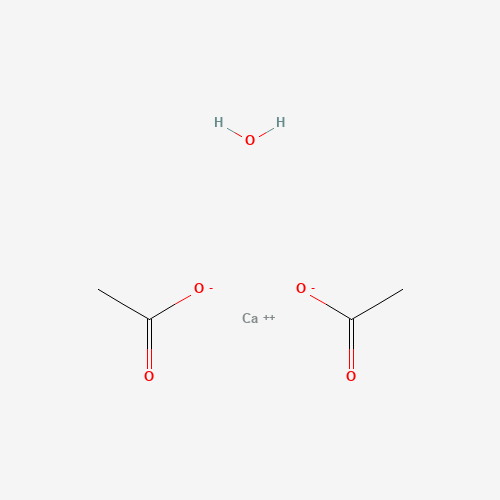
Description : Calcium acetate monohydrate (CAS No: 5743-26-0) occupies a critical position in the global specialit...
Category : Pharmaceutical Actives & Precursors
Sub-Category : Intermediates & Precursors
Description : P-Nitrobenzoyl Chloride (CAS 122-04-3) is a critical building block in the API intermediates market,...