Search through


Antimony Trisulfide or Antimony (III) Sulfide (Sb2S3) is an inorganic flame retardant synergist preferably used in halogenated polymer systems such as PVC and ABS needs. Antimony sulfide (Sb2S3) strengthens the thermal stability of plastics and reduces flammability by promoting char formation and slowing combustion. Also referred to as (Antimony vermilion, Antimony trisulfide, or Diantimony trisulfide) by Antimony Trisulfide manufacturers, it is supplied in technical grade for polymer additive applications. Stibnite is a mineral with formula of Sb3+2S2-3 or Sb2S3 and being a additive or catalyst, anti-blushing agent and heat stabiliser, and also as the flame-retardant synergist replacing antimony oxide. The IMA symbol is Sbn. We are the trusted Antimony suppliers worldwide, with reliable lead times and global supply capability.
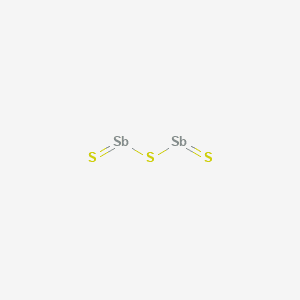
Antimony Trisulfide or Antimony (III) Sulfide (Sb2S3) is an inorganic flame retardant synergist preferably used in halogenated polymer systems such as PVC and ABS needs. Antimony sulfide (Sb2S3) strengthens the thermal stability of plastics and reduces flammability by promoting char formation and slowing combustion. Also referred to as (Antimony vermilion, Antimony trisulfide, or Diantimony trisulfide) by Antimony Trisulfide manufacturers, it is supplied in technical grade for polymer additive applications. Stibnite is a mineral with formula of Sb3+2S2-3 or Sb2S3 and being a additive or catalyst, anti-blushing agent and heat stabiliser, and also as the flame-retardant synergist replacing ant...

.3d8f8f41.svg)
Flame Retardants
.3556d45a.svg)

Synergists & Smoke Suppressants


Antimony derivatives
.7767eb0f.png)

Chemical Properties & Specifications
H302 (70.5%): Acute toxicity, oral
H332 (70.5%): Acute toxicity, inhalation
H351 (27.3%): Carcinogenicity
H373 (27.3%): Specific target organ toxicity, repeated exposure
H411 (63.8%): Hazardous to the aquatic environment, long-term hazard
Fire resistance in PVC, ABS, and other halogenated plastics
Works with halogenated FRs to improve thermal stability and reduce smoke emission
Ideal for wire & cable insulation, molded plastics, and thermoplastics
Preferred in matches, fireworks, percussion caps, primers Provides fuel and enhances ignition sensitivity
Decolorizer and opacifier in specialty glass. Preferred in enamels and glazes
Component of red pigments (antimony vermilion
Brake linings, clutches, friction pads for stability under heat
Infrared detectors, photoconductors, and as a semiconductor material
Store in cool, dry, ventilated areas
Avoid heat, sparks, and open flames (powder may ignite) and in sealed containers to prevent contamination
Handle with gloves, protective clothing, and dust mask
Shelf life: 24 months under proper storage conditions
It is primarily used as a flame retardant synergist in halogenated polymer systems such as PVC, ABS, and thermoplastics.
Acts as a synergist with halogenated flame retardants, promoting char formation and improving thermal stability, which reduces flammability and smoke emission.
Reacts with oxidizing agent, forms antimony oxides and SO₂ Combustible in fine powder form, burns with blue flame Acts as a semiconductor in certain applications Incompatible with strong oxidizers and acids. Combustible in fine powder form, burns with blue flame. Incompatible with strong oxidizers and acids
Wire & cable manufacturing, plastics compounding, polymer molding, and material science research laboratories.
Supplied as technical grade, suitable for industrial polymer formulations and additive blending.
Halogenated polymers such as PVC, ABS, and other thermoplastics with FR additives.
Enhances fire retardancy, smoke suppression, and thermal stability of polymeric materials. Ideal for industrial B2B polymer compounding.