Search through
Bismuth oxide (Bi2O3)

Bismuth oxide (Bi2O3)

CAS Number: 1304-76-3

Molecular Formula: Bi2O3

Flame Retardant synergistIndustrial Grade (≥ 99%)High-Purity Grade (≥ 99.9%)

About Bismuth oxide (Bi2O3)

Bismuth trioxide (CAS No: 1304-76-3) is increasingly utilized by the North American metallurgical sector as a high-performance additive in the production of lead-free brass and free-machining steels, aligning with domestic sourcing shifts toward RoHS-compliant materials for the plumbing and automotive industries. Dibis...

Bismuth oxide (Bi2O3) Specifications

CAS Number
1304-76-3
Molecular Formula
Bi2O3
Molecular Weight
465.959 g/mol
IUPAC Name
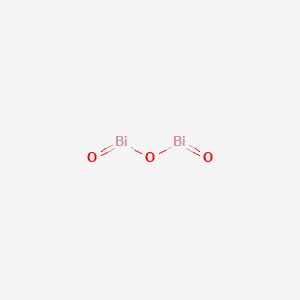
oxo(oxobismuthanyloxy)bismuthane
Canonical SMILES
O=[Bi]O[Bi]=O
InChI Key
WMWLMWRWZQELOS-UHFFFAOYSA-N
InChI
InChI=1S/2Bi.3O
PubChem CID
14776
EINECS Number
215-134-7
HSN No
28259090
Molecular Weight
465.959 g/mol
Appearance
Yellow to orange crystalline powder
Density
8.9 – 9.3 g/cm³
Melting Point
~817 °C
Boiling Point
~1890 °C
Solubility
soluble in acids (HCl, HNO₃)
Bi₂O₃ Content
≥ 99.9%
Pb
≤ 0.01%
As
≤ 0.002%
Cu
≤ 0.002%
Fe
≤ 0.002%
Moisture
≤ 0.1%
Particle Size (d50)
1 – 10 µm (custom grades available)
Monoclinic (α-Bi₂O₃)
stable at room temperature
Tetragonal (β-Bi₂O₃)
stable at 645–730 °C
Cubic (δ-Bi₂O₃)
stable above 730 °C
Refractive Index
2.5 – 2.6
Bi (Bismuth) Content
Bi (Bismuth) (%) 89.57
Physical appearance
Yellow monoclinic crystalline powder
GHS Hazard Statements
An irritant, But Not Classified. Reported as not meeting GHS hazard criteria.
Precautionary Statement Codes
P261, P280, and P305+P351+P338
Hazard Classes and Categories
Skin Irrit. 2 (9.3%) Eye Irrit. 2 (9.3%)

Polymer Flame Retardancy

Bismuth Trioxide acts as a synergist for halogenated polymers (PVC, ABS), enhancing flame resistance.

Glass & Ceramics

Replaces toxic lead oxides in optical glass, radiation shielding glass, and glazes Used in ceramic glazes for brilliance and color development

Electronics & Catalysts

Used in varistors, ferrites, oxygen sensors, and solid oxide fuel cells (SOFCs) Catalyst in oxidation and polymerization reactions

Pigments & Coatings

Component of yellow, orange, and red pigments Enhances optical and protective coatings

Metallurgy

Fluxing agent in metallurgical processes Used in manufacture of bismuth alloys

Pharmaceuticals & Cosmetics

Limited use in specialized formulations as a non-toxic alternative to lead compounds

Electronic Ceramic Additive

An additive used in the production of zinc oxide varistors, ceramic capacitors, and ferrite magnetic materials to improve performance and reduce costs

Photocatalyst

A material utilized for water purification and hydrogen production through photocatalytic water splitting

Electrolyte Material

A component used in the fabrication of electrolytes or cathodes for solid oxide fuel cells (SOFC)

Radiosensitizer

A chemical agent that increases the radiation effect on cell viability for medical treatments

Diagnostic Agent

A contrast agent used in X-ray computed tomography (CT) and fluorescence imaging

Pyrotechnic Colorant

A compound used to produce the dragon's eggs effect in fireworks as a non-toxic replacement for lead

Electrode Material

A high-capacity material used for rechargeable aqueous metal-ion batteries and supercapacitors

Optical Coating

A high refractive index material used for enhancing the efficiency of solar cells and in thin-film coatings for optoelectronic devices

Dental Cement Component

A material used in dental repairing applications to provide bone-like X-ray opacity

Catalyst

A catalytic material used for chemical processes such as propylene oxidation and methane conversion

Safe storage

Store in cool, dry, well-ventilated area. Keep containers tightly closed to prevent contamination and moisture uptake

Shelf life

24 months under recommended conditions

Bismuth oxide (Bi2O3) FAQs

Minimum Order Quantity

25 kg (evaluation) · 1 MT (commercial)

Lead Time

3 – 5 weeks estimated

Delivery Terms

FOB*

Packaging

20 L pails, 200 L HDPE drums, 1000 L IBC

US Availability

US Facility Inventory

Documentation

US SDS · COA · TDS · Specification sheet

US Regulatory & Quality Information

TSCA status*

US SDS / HazCom*

GHS classification*

ISO 9001:2015 site*

DOT shipping classification*

FDA status*

EPA status*

California Prop 65*

Reliable US supply chain

Regulatory compliance

On-time delivery

Technical expert support

Rounded Top

Explore Flame Retardants Portfolio

Zinc Borate (Hydrated / Commercial Grade)

CAS No : 10361-94-1

Category : Synergists & Smoke Suppressants

Sub-Category : Zinc Borate

Description : Zinc Borate is a high-performance, white crystalline mineral additive universally used as a halogen-...

View Product
Bismuth metal

CAS No : 7440-69-9

Bismuth metal

Category : Metal Oxides & Synergists, Critical metals & Strategic materials

Sub-Category : Metal additives, Bismuth Compounds

Description : Bismuth granular (CAS 7440-69-9) is an essential high purity fine chemical utilized in the API inter...

View Product
Barium Chloride Anhydrous

CAS No : 10361-37-2

Barium Chloride Anhydrous

Category : Processing Aids, Other Inorganic Salts (Adjuncts)

Sub-Category : Processing salts, Water Treatment - Sulfate Removal Agents

Description : Barium Chloride (BaCl2) is an inorganic salt universally used in chemical manufacturing, water treat...

View Product
Antimony Powder

CAS No : 7440-36-0

Antimony Powder

Category : Synergists & Smoke Suppressants, Electronic & Specialty Grade Materials

Sub-Category : Antimony-based synergists, High Purity Metals, Compounds & Powders
View Product