Search through


Antimony Trichloride is an inorganic compound universally used as a synergist in flame retardant formulations, particularly in halogenated plastics such as PVC and ABS. The Cl3Sb enhances the flame retardancy of polymers by interacting with halogenated compounds, improving thermal stability and smoke suppression. Also referred to as (Trichlorostibine, Antimontrichlorid, Caustic antimony, it is supplied in technical grade for industrial polymer applications. And particularly used as a reactant in many organic reactions. We are among the trusted Antimony Trichloride manufacturers and suppliers worldwide, with reliable lead times and global supply capability.
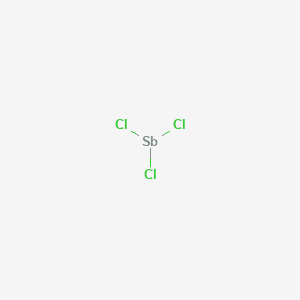
Antimony Trichloride is an inorganic compound universally used as a synergist in flame retardant formulations, particularly in halogenated plastics such as PVC and ABS. The Cl3Sb enhances the flame retardancy of polymers by interacting with halogenated compounds, improving thermal stability and smoke suppression. Also referred to as (Trichlorostibine, Antimontrichlorid, Caustic antimony, it is supplied in technical grade for industrial polymer applications. And particularly used as a reactant in many organic reactions. We are among the trusted Antimony Trichloride manufacturers and suppliers worldwide, with reliable lead times and global supply capability.

.3d8f8f41.svg)
Flame Retardants
.3556d45a.svg)

Synergists & Smoke Suppressants


Antimony halide precursors
.7767eb0f.png)

Chemical Properties & Specifications
H314: Danger Skin corrosion/irritation
H411: Hazardous to the aquatic environment, long-term hazard
Used as a synergist with halogenated polymers in PVC, ABS, and other thermoplastics.
Enhances thermal stability and reduces smoke emission.
Precursor for other antimony compounds (oxides, sulfides, halides)
Used in the preparation of schlippe’s salt (Na₃SbS₄·9H₂O)
Used as a decolorizing and opacifying agent
Once used in certain drug formulations and hair dyeing chemicals (historical/limited use due to toxicity)
Reagent for detection of vitamin A and certain aldehydes
Used in polymer chemistry and flame retardant development studies.
Catalyst in polymerization reactions (especially polyesters)
Lewis acid catalyst in organic synthesis (chlorinations, Friedel-Crafts reactions)
Store in cool, dry, well-ventilated area.
Use corrosion-resistant containers (glass, PTFE, or coated steel)
Protect from moisture (highly hygroscopic and hydrolyzes rapidly)
12–24 months (if stored in sealed containers under dry conditions)
Highly toxic and corrosive. Handle with gloves, goggles, and fume hood
Antimony Trichloride is primarily used as a flame retardant synergist in halogenated polymers such as PVC, ABS, and other thermoplastics. It enhances fire resistance, reduces smoke generation, and improves thermal stability in plastic and polymer applications.
Cl3Sb acts as a synergist with halogenated compounds, facilitating char formation during combustion. This reduces flammability and slows down the spread of fire in polymers.
Universally used in wire & cable manufacturing, polymer compounding, thermoplastic production, coatings, and industrial R&D labs for material testing and flame retardant formulation development.
Compatible with halogenated polymers including PVC, ABS, and other thermoplastics that incorporate halogenated flame retardants.
Provides enhanced fire resistance, improved smoke suppression, and thermal stability. It is a reliable synergist in industrial B2B polymer compounding and plastic production.
Yes. Used with halogenated flame retardants and in polymer additive systems to achieve optimized flame retardancy and smoke suppression.A10: Yes. It is commonly used with halogenated flame retardants and in polymer additive systems to achieve optimized flame retardancy and smoke suppression.