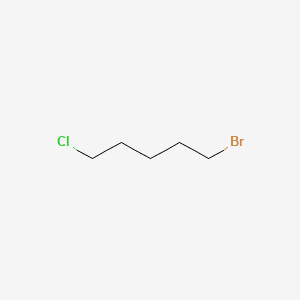

1-Bromo-5-chloropentane (54512-75-3 and 5451-27-5) is a high-purity, bifunctional halogenated alkane that serves as a flexible "carbon-5" linker in advanced chemical synthesis. Much like its shorter-chain analogs, this molecule features a terminal bromine and a terminal chlorine on a pentane backbone, offering differential reactivity. The bromine atom is significantly more labile, allowing for selective nucleophilic substitution at one end of the chain while keeping the chlorine end available for subsequent functionalisation. This specific chain length is critical in the pharmaceutical industry for the synthesis of long-chain aliphatic spacers in APIs and in agrochemicals for creating targeted heterocyclic frameworks. By ensuring high isomeric purity and minimal moisture content, 1-Bromo-5-chloropentane provides a reliable path for high-yield, complex molecular assembly. We are a globally established 1-Bromo-5-chloropentane manufacturer & 3-Bromopropylamine hydrobromide manufacturer and various other fine chemical intermediate suppliers worldwide through comprehensive regulatory documentation (CoA), traceability, and consistent global supply capabilities, ensuring reliable lead times and quality assurance across all grades.


1-Bromo-5-chloropentane (54512-75-3 and 5451-27-5) is a high-purity, bifunctional halogenated alkane that serves as a flexible "carbon-5" linker in advanced chemical synthesis. Much like its shorter-chain analogs, this molecule features a terminal bromine and a terminal chlorine on a pentane backbone, offering differential reactivity. The bromine atom is significantly more labile, allowing for selective nucleophilic substitution at one end of the chain while keeping the chlorine end available for subsequent functionalisation. This specific chain length is critical in the pharmaceutical industry for the synthesis of long-chain aliphatic spacers in APIs and in agrochemicals for creating target...
Pharmaceutical
Pharmaceutical Actives & Precursors
Intermediates & Precursors
.7767eb0f.png)

Chemical Properties & Specifications
Acute Tox. 4 (28.6%)
Skin Irrit. 2 (85.7%)
Skin Mild Irrit. 3 (14.3%)
Eye Irrit. 2A (85.7%)
STOT SE 3 (57.1%)
Aquatic Chronic 2 (28.6%)
P261, P264, P264+P265, P270, P271, P273, P280, P301+P317, P302+P352, P304+P340, P305+P351+P338, P319, P321, P330, P332+P317, P337+P317, P362+P364, P391, P403+P233, P405, and P501
Extensively used to introduce a 5-carbon spacer into drug molecules. Essential for modulating the lipophilicity and bioavailability of various central nervous system (CNS) and cardiovascular agents
Key precursor for the synthesis of Piperidine and Azepane derivatives through cyclization reactions with primary amines
Utilised in the functionalisation of polymers and lipids for controlled-release drug delivery platforms
Building block for the synthesis of various insect pheromones and semiochemicals used in (IPM)
Specialized chlorinated precursors that enhance the soil penetration and systemic uptake of active ingredients
Employed to graft functional groups onto polymer surfaces or silica beads for chromatography and ion-exchange applications
Synthesize long-chain cationic surfactants with specific hydrophobic-hydrophilic balances
Store in a cool, dry area (15-25°C)
Keep the container hermetically sealed
Hygroscopic-material readily absorbs moisture from the air, which can cause caking and potential hydrolysis of the C-Br bond over long periods
Avoid contact with strong oxidizing agents and strong bases
Strong bases will liberate the free amine, which may lead to polymerization (self-alkylation)
The chain length significantly affects the spatial orientation and flexibility of the resulting molecule. In pharmaceuticals, a 5-carbon bridge often provides the optimal distance for an active molecule to bind simultaneously to two different receptor sites.
While Bromine is much more reactive, selectivity depends on the reaction conditions. Using lower temperatures and specific polar aprotic solvents (like DMF or MeCN) typically ensures that the bromine atom reacts first, leaving the chlorine end untouched for a second step.
Yes, when stored in amber glass under an inert atmosphere (Nitrogen) and away from heat, it remains stable for up to 24 months.
No. Unlike CFCs or certain shorter-chain halons, 1-Bromo-5-chloropentane is a liquid with a high boiling point and is not categorized as an ODS under the Montreal Protocol.
54512-75-3 is the primary CAS used by major industrial suppliers (like TCI and Sigma) for the linear 1,5-isomer. 5451-27-5 is sometimes cited in older academic databases, but for B2B supply and procurement, 54512-75-3 is the standard.
They represent your "Linker Portfolio." 3-Bromopropylamine (C3) provides a 3-carbon bridge with an amine functional group, while 1-Bromo-5-chloropentane (C5) provides a 5-carbon bridge with two different halogens. This allows customers to choose the exact chain length and terminal reactivity they need for their specific molecule.
Yes, export ready with 1-Bromo-5-chloropentane coa, 1-Bromo-5-chloropentane sds and with other export compliances adhering country specific regulations.
Category : Pharmaceutical Actives & Precursors
Sub-Category : Intermediates & Precursors
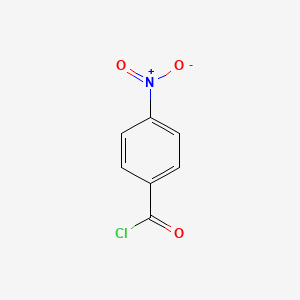
Description : P-Nitrobenzoyl Chloride (CAS 122-04-3) is a critical building block in the API intermediates market,...