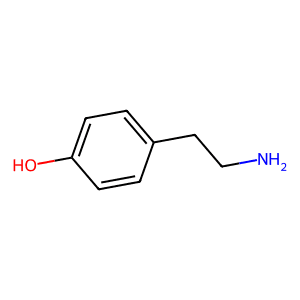

4-Hydroxyphenethylamine (CAS 51-67-2) serves as a critical building block in the API intermediates market, primarily for the synthesis of sympathomimetic agents and diverse neurological medications. As a high-purity fine chemical essential for neuroscience research, it is increasingly being sourced via advanced custom synthesis services to meet the precise requirements of CDMOs involved in the development of treatments for depression and anxiety. For these pharmaceutical applications, a purity of 99% is required to ensure consistent efficacy in complex multi-step organic synthesis. Tyrosamine (CAS 51-67-2) is gaining traction as a sustainable monomer in the industrial production of high-performance thermoplastics and alginate-based hydrogels for articular cartilage engineering. Global sourcing shifts have seen a move toward biocatalytic and fermentation-derived production methods, reducing the environmental footprint compared to traditional chemical synthesis. As a bulk chemical supplier, maintaining a standard general industry purity of 98% is vital for ensuring material stability and uniform mechanical properties in industrial-scale polymer manufacturing. 2-(4-Hydroxyphenyl)ethylamine (CAS 51-67-2) is an indispensable reagent in biochemical assays and clinical research for investigating cardiovascular health and vascular function. Recent regulatory compliance trends emphasize the rigorous monitoring of biogenic amine levels in the food industry, where it is utilized as a flavor enhancer and natural preservative in fermented products. Partnering with a bulk chemical supplier that offers custom synthesis services ensures that the product meets the specific analytical benchmarks required for both food-grade additives (98% purity) and sensitive pharmaceutical research (99% purity). We are an established global intermediates supplier with >= 99% purity, ensuring minimal carry-over of impurities in the final API. We offer a broad range of pharmaceutical intermediates for API manufacturers and finished formulators, providing comprehensive analytical support (HPLC/NMR/MS), Tyramine Base COA/TDS/SDS, region-specific regulatory support, reliable lead times, and worldwide supply chain capabilities.

4-Hydroxyphenethylamine (CAS 51-67-2) serves as a critical building block in the API intermediates market, primarily for the synthesis of sympathomimetic agents and diverse neurological medications. As a high-purity fine chemical essential for neuroscience research, it is increasingly being sourced via advanced custom synthesis services to meet the precise requirements of CDMOs involved in the development of treatments for depression and anxiety. For these pharmaceutical applications, a purity of 99% is required to ensure consistent efficacy in complex multi-step organic synthesis. Tyrosamine (CAS 51-67-2) is gaining traction as a sustainable monomer in the industrial production of high-perf...

Chemical Properties & Specifications
P319, P321, P330, P361+P364, P391, P403+P233, P405, and P501
Acute Tox. 3 (98.1%)
Eye Dam. 1 (61.9%)
Tyramine Base serves as a trace amine and neurochemical probe to study catecholamine release, synaptic function, and neurotransmitter displacement in central and peripheral nervous system models
This compound is utilized as a specific substrate for monoamine oxidase (MAO) and catechol-O-methyltransferase (COMT) to measure enzyme kinetics, inhibition potency, and metabolic degradation pathways
It is a critical component in "cheese reaction" studies to evaluate the safety and hypertensive risk of monoamine oxidase inhibitors (MAOIs) used in treating depression and Parkinson’s disease
Tyramine Base is a naturally occurring monoamine compound and trace amine derived from the amino acid tyrosine that helps regulate blood pressure and is used in research for enzyme assays and synthesizing pharmaceuticals like galanthamine
This chemical is primarily used in the pharmaceutical, biotechnology, and academic research industries
It is compatible with organic solvents like ethanol, DMSO, and DMF, and can be formulated into hydrogels for biomedical applications
Standard specifications include CAS number 51-67-2, high purity (typically ≥98%), and documentation such as COA, TDS, impurity reports, and regulatory compliance documents
Scimplify has capabilities for global distribution and custom synthesis through an integrated network of manufacturers and logistics partners with reliable lead time
The product is export ready with a standard MOQ starting from 100 kgs, with lead times for international customers depending on the shipping destination.