
Sodium amide (CAS No: 7782-92-5), often termed sodamide, represents a pivotal high-performance inorganic reagent in the global fine chemicals market, particularly valued for its role as a powerful deprotonation agent and strong base in complex organic syntheses. The market is currently experiencing significant valuation growth, projected to reach approximately USD 1,528.6 million by 2033 at a CAGR of 6.2%, driven by its indispensable utility in the production of indigo dyes for the textile sector and critical pharmaceutical intermediates. This growth is further propelled by technical advancements in chemical manufacturing and expanding applications in specialised sectors, such as its use as a catalyst in sodium cyanide production for gold extraction and its emerging role in hydrogen storage systems. As a globally established Sodium amide supplier with 98% purity, we ensure dependable supply, consistent quality, and complete regulatory documentation, including Sodium amide CoA and Sodium amide TDS across all grades. Beyond supply, we support partners through the entire product lifecycle from route scouting, process and formulation development, and analytical method development to scale-up, process optimisation, and pilot-to-commercial manufacturing. Our teams also assist with GMP-compliant quality assurance, regulatory documentation, and global supply chain and logistics coordination.

Sodium amide (CAS No: 7782-92-5), often termed sodamide, represents a pivotal high-performance inorganic reagent in the global fine chemicals market, particularly valued for its role as a powerful deprotonation agent and strong base in complex organic syntheses. The market is currently experiencing significant valuation growth, projected to reach approximately USD 1,528.6 million by 2033 at a CAGR of 6.2%, driven by its indispensable utility in the production of indigo dyes for the textile sector and critical pharmaceutical intermediates. This growth is further propelled by technical advancements in chemical manufacturing and expanding applications in specialised sectors, such as its use as ...

Chemical Properties & Specifications
Water-react. 1 (42.1%)
Water-react. 3 (57.9%)
Skin Corr. 1 (100%)
Eye Dam. 1 (52.9%)
Aquatic Acute 1 (74.1%)
H260 (42.1%): In contact with water, releases flammable gases which may ignite spontaneously
H261 (57.9%): In contact with water, releases flammable gas
H314 (100%): Causes severe skin burns and eye damage
H318 (52.9%): Causes serious eye damage
H400 (74.1%): Very toxic to aquatic life
P223, P231+P232, P260, P264, P264+P265, P273, P280, P301+P330+P331, P302+P335+P334, P302+P361+P354, P304+P340, P305+P354+P338, P316, P317, P321, P363, P370+P378, P391, P402+P404, P405, and P501
A strong base used in organic chemistry for deprotonation of carbon and nitrogen acids, often in liquid ammonia solution
A reagent for the synthesis of allylic amines, amides, antibacterials, and for aggregative activation
A component used in the industrial production of indigo, hydrazine, and sodium cyanide
A standard base for dehydrohalogenations to convert vicinal dibromoalkanes into alkynes
A reagent of choice for the drying of liquid or gaseous ammonia
A strong basic condensing agent used for Claisen condensations and the promotion of other condensation reactions
A nucleophilic aminating agent used in the Chichibabin reaction for the direct amination of nitrogen-containing heterocycles like pyridine
A material used for the production of hydrogen storage systems to support cleaner energy
A substance used for the adsorption of CO2
An inorganic salt that serves as a catalyst in various chemical reactions
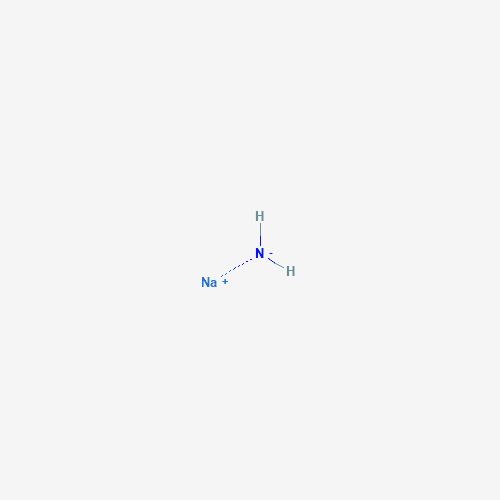
Sodium amide, also known as sodamide, is an inorganic compound with the formula NaNH2 that serves as a powerful strong base and nucleophilic reagent in organic synthesis, including the production of indigo dye, hydrazine, and sodium cyanide
This compound is widely used in the pharmaceutical, dye, agrochemical, textile, and chemical manufacturing industries
It is most effectively used in liquid ammonia solutions, as it is poorly soluble in many organic solvents and reacts violently with protic solvents like water and alcohols
Available specifications typically include a CAS number of 7782-92-5, high purity grades (≥97%), and documentation such as COA, TDS, impurity reports, and regulatory compliance documents
Scimplify has capabilities for global distribution and custom synthesis through an integrated network of manufacturers and logistics partners with reliable lead time
The product is export ready with a standard MOQ starting from 100 kgs, with lead times for international customers depending on the shipping destination and specific grade.
Category : Pyridine
Sub-Category : Aminopyridines & Functionalized Pyridines
Description : Pyridine-2-amine CAS 504-29-0 is a fundamental building block in the API intermediates market, prima...
Category : Bromine
Sub-Category : Bromo-Functional Acids & Esters
Description : Ethyl 8-bromooctanoate (CAS No: 29823-21-0) serves as a sophisticated bifunctional building block in...
Category : Halogen Derivatives
Sub-Category : Iodo/Fluoro-Functional Intermediates
Description : 2-Chloro-5-iodobenzoic acid (CAS No: 19094-56-5) serves as a critical bifunctional aromatic building...
Category : Pyridine
Sub-Category : Halogenated Pyridines
Description : 2-Chloropyridine CAS 109-09-1 serves as a high-purity fine chemical with 99% purity essential for th...