
Butyl Chloride

Butyl Chloride

CAS Number
109-69 3
Molecular Formula
C4H9Cl
Alkylating AgentSolventButylation ReagentAlkyl Haliden-BuLi PrecursorOrganic SynthesisFine Chemical Intermediate

About Butyl Chloride

n-Butyl Chloride (1-Chlorobutane, CAS: 109-69-3), highly volatile liquid classified as a primary Alkyl Halide. As a versatile Organic Intermediate, primary function is as a powerful Alkylating Agent (specifically, a Butylation Reagent) in high-value chemical manufacturing. It is a critical building block in Organic Syn...

Butyl Chloride Specifications

CAS Number
109-69 3
Molecular Formula
C4H9Cl
IUPAC NameORBotanical Name
1-chlorobutane
Canonical SMILES
CCCCCl
InChI Key
VFWCMGCRMGJXDK-UHFFFAOYSA-N
InChI
1S/C4H9Cl/c1-2-3-4-5/h2-4H2,1H3
EINECS Number
203-696-6
MDL Number
MFCD00001009
HSN No
2903299090
Molecular Weight
92.5673
LogP
2.02530
Physical State
water white liquid with a sharp odor
Density
0.886
Boiling Point
77-78ºC
Melting Point
-123ºC
Flash Point
-12ºC
Refractive Index
1.4014-1.4034
Solubility in water
g/l @ 25°C: 0.87 (practically insoluble)
Vapor pressure
kPa @ 20Â °C: 11
Autoignition Temperature
860 °F (460 °C)
GHS symbol
GHS02, GHS08
Safety Statements Code
S16-S29-S9
Precautionary Statements Code
P210; P301 + P310; P331; P370 + P378; P403 + P235
Hazard Declaration Code
H225; H304; H412
Transport Hazard Class
3 (Flammable Liquid)
Incompatibilities
Strong oxidizing agents, strong bases, aluminum, magnesium, sodium, potassium (Risk of fire/explosion)

Industrial Solvents

Effective halogenated solvent in various industrial processes due to its ability to dissolve a wide range of organic materials in the plastics and adhesives industries

n-Butyllithium (n-BuLi) Precursor

Essential raw material for the Grignard-analogous synthesis of n-BuLi, a strong base used in Anionic Chain Polymerization (e.g., synthetic rubber)

Drug Intermediates

Fine Chemicals Synthesis in nucleophilic substitution reactions to synthesize pharmaceutical intermediates for antiseptics, local anesthetics, and antispasmodic drugs

Herbicide & Fungicide Manufacturing

Alkylating intermediate for synthesizing n-butylated agrochemicals, contributing to compound stability and penetration

Plasticizers & Resin Modification

Intermediate for producing plasticisers (e.g., butyl phthalates) and Butylated Resins, modifying the polymer chain length and improving flexibility.

Solvent & Extractant

Industrial solvent due to its capacity to dissolve both polar and non-polar substances (e.g., waxes, fats, oils)

Chemical Manufacturing / Organic Synthesis

General-purpose intermediate and starting material for creating other industrial chemicals Precursors for organometallic compounds (e.g., organotin compounds) Ingredients for synthetic resins, specialty polymers, and coatings Components for certain dyes, flavorings, and fragrances

Veterinary Medicine

Active ingredient (historical) in some deworming medications for animals (an anthelmintic agent)

Detail 1

UN 1127

Detail 2

Packing Group II (Medium Danger)

Detail 3

Ground and bond all transfer equipment

Detail 4

Fireproof. Separated from incompatible materials. Well closed

Detail 5

Keep in a well-ventilated room. Area without drain or sewer access

Detail 6

Store in an area designed for flammable liquids, away from heat, sparks, open flames, and strong oxidizers

Butyl Chloride FAQs

Minimum Order Quantity

25 kg (pilot) · 1 MT (commercial)

Lead Time

3 – 5 weeks ex-works

Incoterms

FOB · CIF

Packaging

20 L pails, 200 L HDPE drums, 1000 L IBC

Regional Availability

India · EU · Middle East · Southeast Asia

Documentation

SDS · COA · TDS available on request

Compliance & Quality

REACH registered*

GHS/SDS available

ISO 9001:2015 site*

RoHS compliant*

Global sourcing network

Consistent quality & reliability

End-to-end technical support

Rounded Top

Explore Industrial Chemicals Portfolio

Rosin Modified Phenolic resins

CAS No 68082-96-2

Rosin Modified Phenolic resins

Category

Industrial Polymers

Sub-Category

Rosin-Based Resins & Binders

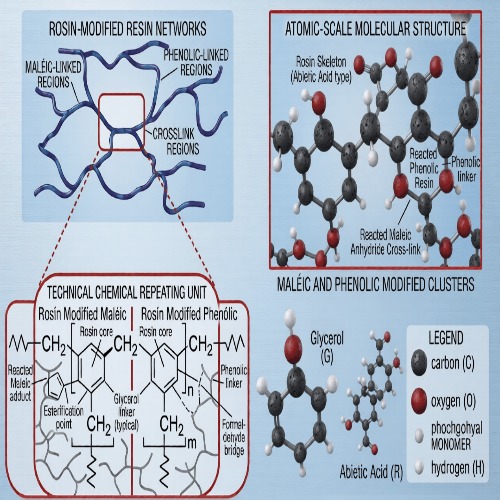
Description : Our Rosin Modified Phenolic Resins are high-performance complex polymers engineered through the condensation of gum rosin with phenol and formaldehyde, followed by esterification with polyhydric alcohols for high-performance printing inks and industrial coatings, offering superior lustre and rapid hardness development. Dropol series is architected to provide the technical precision required for high-concentration pigment dispersions and demanding coating environments. Characterised by high melting points and sophisticated solubility profiles ranging from high tolerance in Mineral Turpentine Oil (MTO) to total solubility in aromatic hydrocarbons, and these resins offer superior film-forming properties. Chemical incorporation of phenolic structures into the rosin backbone particularly raises the resin's molecular weight and glass transition temperature (Tg), resulting in faster "set" times and increased film hardness compared to standard rosin esters. Total Cost of Quality is minimised by reducing pigment grinding cycles, enhancing colour development, and ensuring the long-term integrity of the polymer matrix against environmental degradation. We are established Rosin Modified Phenolic & Maleic supplier for grade-specific resins, ensuring consistent melting points and viscosity profiles across the Dropol series. We provide a comprehensive range of synthetic resins with full technical documentation (Acid Value/Melting Point/Solubility) and supporting quality assurance (Phenolic and Maleic resin COA/TDS/SDS). We ensure reliable lead times from R&D sampling to 10MT+ commercial supply, enabling partners to lead in high-efficiency ink and coating manufacturing.

View Product
Rosin Modified Maleic Resins

CAS No 94581-16-5

Rosin Modified Maleic Resins

Category

Industrial Polymers

Sub-Category

Rosin-Based Resins & Binders

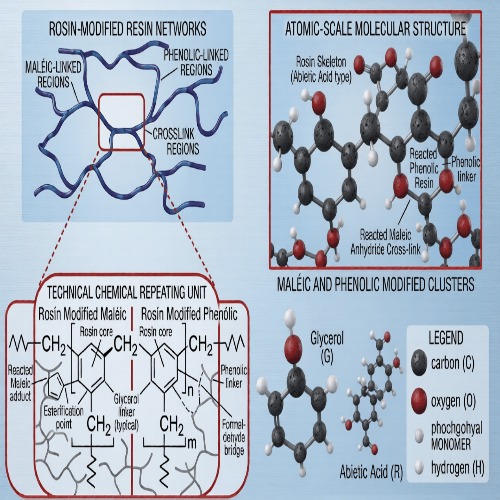
Description : Our Rosin Modified Maleic Resins are high-melting thermoplastic resins engineered through the precise esterification of gum rosin with maleic anhydride and polyhydric alcohols. These resins serve as high-performance binders and film-formers across a variety of solvent-based ink and coating systems. Dromal Rosin Modified Maleic Resins series is meticulously developed to meet the technical benchmarks of the ink and coating industry, characterised by superior solubility profiles right from total solubility in alcohols (IMS) to high compatibility with hydrocarbon solvents (MTO/Toluene). Chemical structure of Rosin Modified Maleic Resin, formed by the Diels-Alder reaction of maleic anhydride with rosin acids, provides a significantly higher melting point and harder film compared to natural rosins. This technical modification facilitates rapid solvent evaporation and fast tack-free times, critical for high-throughput manufacturing environments. The low acid-value grades are specifically designed for use in moisture-sensitive systems, while high acid-value variants offer the necessary functionality for water-reducible and high-polar solvent formulations, ensuring Total Cost of Quality is minimised through optimised pigment loading, reduced solvent consumption, and consistent film performance. We are the leading Rosin Modified Maleic Resins series suppliers, ensuring consistent melting points and viscosity profiles across the Dromal series. We provide a comprehensive range of synthetic resins with full technical (Acid Value/Melting Point/Solubility) and supporting quality assurance documentation (COA/TDS/SDS). Our products are optimised for high-performance printing inks and industrial lacquers, offering superior gloss and adhesion. We ensure reliable lead times upto 10MT+ commercial supply, enabling partners to lead the market in high-efficiency coating manufacturing.

View Product
Phenol Formaldehyde Resins (Can Coatings)

CAS No 68002-19-7

Category

Industrial Polymers

Sub-Category

Metal Packaging & Can Coatings

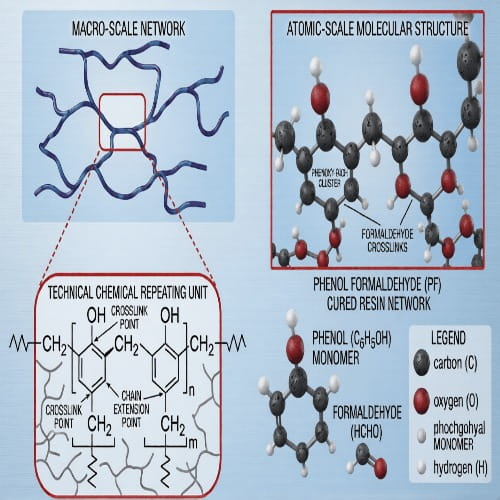
Description : Our Phenol Formaldehyde Resins are high-performance thermosetting polymers specifically engineered for the high-precision requirements of the metal packaging and industrial coating sectors. These butylated and epoxy-phenolic resins provide the critical chemical inertness and mechanical adhesion necessary to protect the integrity of contents in aggressive storage environments. Dropol portfolio Phenol Formaldehyde Resin is defined by its superior cross-linking density and chemical stability. By utilising butylated resole technology, these resins exhibit excellent compatibility with epoxy resins and polyvinyl butyral, allowing formulators to engineer coatings with a precise balance of flexibility and chemical resistance. Characterised by their ability to withstand the extreme thermal stress of sterilisation cycles while maintaining a non-tainting, non-toxic barrier between the metal substrate and the contents. Whether you are formulating a gold lacquer for food cans using Dropol 9012 or a high-solids insulating varnish with Dropol 9009, our series provides the reactive consistency required for automated coating lines. This technical edge minimises the "Total Cost of Quality" by preventing corrosion-related packaging failure and ensuring long-term shelf stability for consumer goods. We are one of the trusted Butylated Phenolic Resins supplier, ensuring consistent solids and viscosity ranges across the Dropol series. We provide a comprehensive range of binders with full technical documentation (Type/Solids/Solvent Compatibility) and supporting quality assurance (Phenol Formaldehyde Resins COA/SDS). Our products include FDA-approved grades and ready-to-use pre-condensates for the global packaging industry. We ensure reliable lead times from pilot evaluation to commercial-scale supply, enabling partners to satisfy the stringent requirements of the global food and industrial coating sectors.

View Product
Hard Ketone Aldehyde Resins (Pigment paste)

CAS No 25054-06-2

Category

Industrial Polymers

Sub-Category

Specialty Pigment Binders & Synthetic Resins

Description : Our Hard Ketone Aldehyde Resins are condensation polymers specifically developed for the ink, coating, and pigment processing industries. These neutral, non-saponifiable synthetic resins function as versatile grind vehicles and additive binders, enhancing the performance of complex chemical formulations. The Drotone portfolio Hard Ketone Aldehyde Resins are engineered to meet the stringent demands of high-concentration pigment dispersions and technical inks. These resins are characterised by their broad solubility in various organic solvents ranging from simple alcohols to complex hydrocarbon blends and their excellent compatibility with a wide array of binder systems, including Alkyds, Nitrocellulose, and Epoxy resins. By selecting grades with specific melting points and hydroxyl values, aldehyde resin manufacturers can precisely control the final film's hardness and chemical reactivity. We are one of the leading high-purity Ketone Aldehyde Resins suppliers with global footprint, ensuring consistent hydroxyl and acid values across the Drotone series. We provide a comprehensive range of synthetic resins with full technical (Melting Point/OH Value/Viscosity) and supporting quality assurance documentation (COA/TDS/SDS). Our products are optimised for universal colourants and speciality ink systems, offering superior solubility and adhesion. We ensure reliable lead times upto 10MT+ commercial supply, enabling partners to optimise their pigment processing and ink manufacturing workflows.

View Product