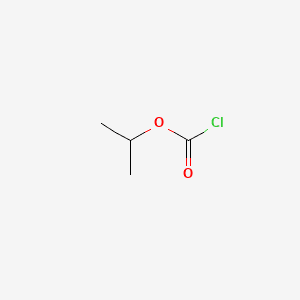

Isopropyl Chloroformate (CAS 108-23-6) is a highly reactive, moisture-sensitive organochlorine compound that serves as a cornerstone reagent in modern organic synthesis. In Elemental Derivatives as (Chlorine/Oxygenated Organics), IPCF is a primary "Acylating Agent." ISOPROPYL CHLOROCARBONATE is indispensable for the introduction of the isopropyl carbonate functional group and for the activation of carboxylic acids. In pharmaceutical sector, a critical building block for the synthesis of Carbonate and Carbamate prodrugs, which are essential for enhancing the bioavailability of oral medications. CDMOs rely on IPCF for the production of specialised peroxydicarbonates used as initiators in polymer science. Given its reactivity, our "Exclusive Grade" is manufactured and stabilised to ensure low acidity and consistent molarity, providing B2B partners with the reliability needed for large-scale regulated manufacturing. We are a globally established bulk IPCF supplier and various other pharmaceutical API, intermediates, and finished dosages-formulations worldwide through comprehensive regulatory documentation (CoA), traceability, and consistent global supply capabilities, ensuring reliable lead times and quality assurance across all grades.

Isopropyl Chloroformate (CAS 108-23-6) is a highly reactive, moisture-sensitive organochlorine compound that serves as a cornerstone reagent in modern organic synthesis. In Elemental Derivatives as (Chlorine/Oxygenated Organics), IPCF is a primary "Acylating Agent." ISOPROPYL CHLOROCARBONATE is indispensable for the introduction of the isopropyl carbonate functional group and for the activation of carboxylic acids. In pharmaceutical sector, a critical building block for the synthesis of Carbonate and Carbamate prodrugs, which are essential for enhancing the bioavailability of oral medications. CDMOs rely on IPCF for the production of specialised peroxydicarbonates used as initiators in polym...

Chemical Properties & Specifications
Flam. Liq. 2 (100%), Acute Tox. 4 (99.5%), Skin Corr. 1B (50%), Skin Irrit. 2 (50%), Skin Sens. 1 (18.8%), Eye Dam. 1 (68.8%), Acute Tox. 2 (90.4%)
P210, P233, P240, P241, P242, P243, P260, P261, P264, P264+P265, P270, P271, P272, P280, P284, P301+P317, P301+P330+P331, P302+P352, P302+P361+P354, P303+P361+P353, P304+P340, P305+P354+P338, P316, P317, P320, P321, P330, P332+P317, P333+P317, P362+P364, P363, P370+P378, P403+P233, P403+P235, P405, and P501
Activates carboxylic acids to form mixed anhydrides, a key step in peptide bond formation
Essential for creating isopropoxycarbonyloxy (POC) groups, which improve the lipophilicity of polar drug molecules
Protects amino and hydroxyl groups during multi-step synthesis, easily removed under mild acidic or basic conditions
Precursor for Diisopropyl Peroxydicarbonate (IPP), a vital free-radical initiator used in the polymerization of PVC and optical resins
Precursor for various carbamate-based active ingredients that regulate plant growth and manage resistant weed species