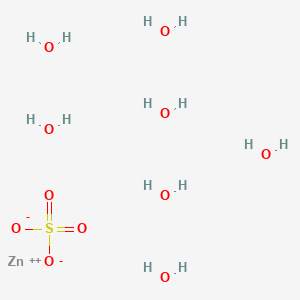
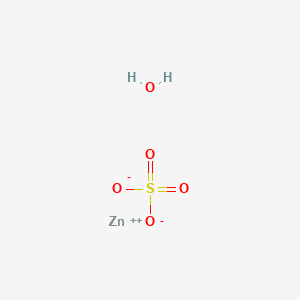

Zinc Sulphate Monohydrate (CAS 7446-19-7) serves as a critical micronutrient and additive in the high purity fine chemicals sector, where American agricultural and industrial manufacturers increasingly rely on its highly soluble crystalline structure to correct zinc deficiencies in crop formulations and optimize animal feed premixes. Zinc sulfate monohydrate has seen a surge in demand as a bulk chemical supplier priority in the United States, driven by a strategic shift toward domestic supply chain resilience and the need for rigorous agrochemical industry specific purity standards that satisfy EPA and AAPFCO regulatory frameworks. Sulfuric acid zinc salt (1:1) monohydrate remains an essential component for custom synthesis services and industrial applications, providing a versatile platform for the development of micronutrient fertilizers, electroplating baths, and chemical precipitants where maintaining stringent analytical profiles through ICP-OES is vital for ensuring consistent performance in complex blenders. As an established Zinc Sulphate Mono-hydrate (Zn-33%) supplier with Zinc Sulphate Mono-hydrate (Zn-33%) >= 99% purity in the united states of america, we ensure dependable supply, consistent quality, and complete regulatory documentation, including Zinc Sulphate Mono-hydrate (Zn-33%) CoA and TDS across all grades. Beyond supply, we support partners through the entire product lifecycle from route scouting, process and formulation development, and analytical method development to scale-up, process optimisation, and pilot-to-commercial manufacturing. Our teams also assist with GMP-compliant quality assurance, regulatory documentation, and nationwide supply chain capabilities and logsitics coordination on all the 50 united states
Zinc Sulphate Monohydrate (CAS 7446-19-7) serves as a critical micronutrient and additive in the high purity fine chemicals sector, where American agricultural and industrial manufacturers increasingly rely on its highly soluble crystalline structure to correct zinc deficiencies in crop formulations and optimize animal feed premixes. Zinc sulfate monohydrate has seen a surge in demand as a bulk chemical supplier priority in the United States, driven by a strategic shift toward domestic supply chain resilience and the need for rigorous agrochemical industry specific purity standards that satisfy EPA and AAPFCO regulatory frameworks. Sulfuric acid zinc salt (1:1) monohydrate remains an essenti...
Agrochemicals
Plant Health, Nutrients & Soil Management
Fertilizers & Nutrients
.7767eb0f.png)

Chemical Properties & Specifications
H302: Harmful if swallowed
H318: Causes serious eye damage
H400: Very toxic to aquatic life
H410: Very toxic to aquatic life with long lasting effects
P264, P264+P265, P270, P273, P280, P301+P317, P305+P354+P338, P317, P330, P391, and P501
Correcting Zinc deficiency in crops globally, often applied via soil broadcasting (Monohydrate) or foliar spray (Heptahydrate)
Nutritional supplement to ensure adequate Zinc intake in livestock and poultry
Used as a depressant in the flotation separation of lead/zinc ores to prevent Sphalerite (Zinc sulfide) from floating
Production of Lithopone (a white pigment), in the rayon industry, and as a raw material for other Zinc compounds
Stable
Keep container tightly closed
Monohydrate is more cost-effective. While the initial price per kg might be higher, it contains ~ 35% Zn compared to ~ 22% in Heptahydrate. This results in lower transportation and handling costs per unit of active Zinc, which is preferred by bulk blenders.
Primary difference is dissolution rate. Heptahydrate (7446-20-0) is more soluble and dissolves faster, making it ideal for immediate foliar spray uptake. Monohydrate (7446-19-7) is preferred for long-term soil application due to its stability and higher elemental concentration.
For feed grade, purity is paramount. Buyers check for very low levels of heavy metals, especially Lead (Pb), Cadmium (Cd), and Arsenic (As). Product must meet national feed additive standards to ensure animal safety, as the Zinc is continuously consumed.
Mining industry (Metallurgy Chemicals), Zinc Sulphate is used to selectively depress the flotation of Sphalerite (ZnS) when separating it from other minerals like Galena (PbS). It works by modifying the Sphalerite surface chemistry, preventing collector molecules from attaching.
Yes, but it's challenging. While the Monohydrate has a high Zn concentration, it is often more difficult to dissolve than the Heptahydrate and requires careful mixing and heating to produce a stable liquid concentrate without crystallisation issues. For ease of mixing, the Heptahydrate is usually chosen.
Category : Plant Health, Nutrients & Soil Management
Sub-Category : Fertilizers & Nutrients
Category : Agrochemical Intermediates
Sub-Category : Specialty & Advanced Intermediates
Description : 2-Isopropoxyethylamine (CAS 81731-43-3), often used interchangeably with CAS 83495-51-6, is a specia...
Category : Crop Protection & Pest Control
Sub-Category : Insecticides
Description : Clothianidin is a systemic broad-spectrum, neonicotinoid insecticide used to control sap-sucking ins...
Category : Plant Health, Nutrients & Soil Management
Sub-Category : Plant Growth Regulators & Harvest Aids
Description : Phosphorous acid (CAS 13598-36-2) serves as a vital reducing agent and intermediate in the API inter...