Search through


Triethylbenzylammonium Chloride (TEBAC) (CAS 56-37-1) is a premier quaternary ammonium salt that functions as a highly efficient Phase Transfer Catalyst (PTC). TEBAC serves as a vital molecular bridge in biphasic reaction systems, enabling the transport of ionic reagents from an aqueous phase into an organic phase where the substrate resides. This capability allows for complex chemical transformations - such as alkylations, nucleophilic substitutions, and dehydrohalogenations - to occur under milder conditions, with higher yields and reduced solvent waste. In the pharmaceutical and agrochemical sectors, BTEAC is an indispensable processing aid for the synthesis of complex active ingredients, while in industrial polymer science, it acts as a curing accelerator and stabiliser. By providing superior catalytic activity and high thermal stability, TEBAC empowers manufacturers to optimise green chemistry protocols and improve overall process throughput. We are a globally established elemental derivatives supplier, along with a broad portfolio of other speciality chemicals worldwide through comprehensive regulatory documentation (CoA), traceability, and consistent global supply capabilities, ensuring reliable lead times and quality assurance across all grades.
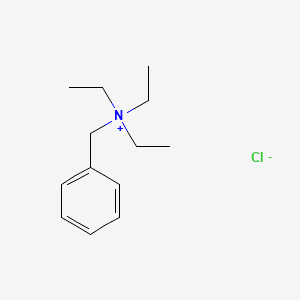
Triethylbenzylammonium Chloride (TEBAC) (CAS 56-37-1) is a premier quaternary ammonium salt that functions as a highly efficient Phase Transfer Catalyst (PTC). TEBAC serves as a vital molecular bridge in biphasic reaction systems, enabling the transport of ionic reagents from an aqueous phase into an organic phase where the substrate resides. This capability allows for complex chemical transformations - such as alkylations, nucleophilic substitutions, and dehydrohalogenations - to occur under milder conditions, with higher yields and reduced solvent waste. In the pharmaceutical and agrochemical sectors, BTEAC is an indispensable processing aid for the synthesis of complex active ingredients,...

.3d8f8f41.svg)
Elemental Derivatives
.3556d45a.svg)

Nitrogen


Ammonium Compounds (Quaternary)
.7767eb0f.png)

Chemical Properties & Specifications
H302 (82.7%): Harmful if swallowed
H315 (19.7%): Causes skin irritation
H317 (79.2%): May cause an allergic skin reaction
H319 (19.2%): Causes serious eye irritation
H335 (18.1%): May cause respiratory irritation
H412 (78.9%): Harmful to aquatic life with long lasting effects
P261, P264, P264+P265, P270, P271, P272, P273, P280, P301+P317, P302+P352, P304+P340, P305+P351+P338, P319, P321, P330, P332+P317, P333+P317, P337+P317, P362+P364, P403+P233, P405, and P501
Catalyst in the synthesis of diverse drug classes, particularly in the formation of ethers, esters, and nitriles where reactant solubility is a barrier
Enables N-alkylation and O-alkylation of sensitive pharmaceutical intermediates without the need for expensive, anhydrous solvents
Reduces reaction times and byproduct formation, leading to cleaner API profiles and easier downstream purification
Catalyst in the manufacture of pyrethroid insecticides and various systemic herbicides
Facilitates reactions in aqueous media, reducing the reliance on volatile organic compounds (VOCs) and aligning with sustainable agricultural manufacturing
Curing agent and accelerator for epoxy-powder coatings and thermosetting resins
Within the Metallurgy Chemicals framework, it is utilised in specialised extraction processes and as a surface-active agent in plating baths
Store in a cool, dry area (15-25°C)
Keep containers tightly closed
Highly Hygroscopic, absorbs moisture from the air, which can cause caking and reduce its catalytic potency
Avoid dust inhalation and contact with skin or eyes
In a reaction where one reactant is in water and the other is in oil (organic solvent), they normally cannot meet to react. TEBAC acts as a shuttle, "grabbing" the water-soluble ion and carrying it into the organic phase so the reaction can happen.
While theoretically possible in some aqueous-recycle systems, in most industrial batch processes, TEBAC is removed during the washing phase. Its high efficiency at low loading (often 1–5 mol%) makes it cost-effective even for single-use applications.
Moisture doesn't necessarily destroy the molecule, but because TEBAC is sold by weight, moisture absorption (caking) means you are adding less active catalyst than intended, which can slow down your reaction rate.
Yes, TEBA (Triethylbenzylammonium) is often used interchangeably with TEBAC (the chloride salt), though the "C" explicitly denotes the chloride anion.