Search through


Terephthaloyl Chloride (also known as 1,4-Benzenedicarbonyl Dichloride, CAS No. 100-20-9) is a high-purity aromatic diacid chloride used extensively in the manufacture of high-performance polymers, engineering resins, and advanced materials across the United States. As a critical reactive intermediate in the production of polyesters, polyamides, and aramid fibers, Terephthaloyl Chloride facilitates key polymerization and cross-linking reactions that define mechanical strength, thermal stability, and chemical resistance in engineered materials. Our manufacturing and quality systems are aligned with U.S. regulatory and industrial standards, supported by comprehensive documentation including Certificates of Analysis (CoA), Safety Data Sheets (SDS), specification sheets, and full batch traceability. As one of the reliable Terephthaloyl Chloride manufacturers and suppliers to polymer manufacturers, material science companies, and research organizations across the USA, we ensure consistent quality, scalable supply, and competitive pricing (USD), and dependable lead times.
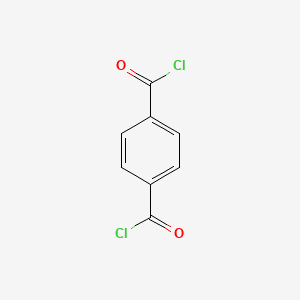
Terephthaloyl Chloride (also known as 1,4-Benzenedicarbonyl Dichloride, CAS No. 100-20-9) is a high-purity aromatic diacid chloride used extensively in the manufacture of high-performance polymers, engineering resins, and advanced materials across the United States. As a critical reactive intermediate in the production of polyesters, polyamides, and aramid fibers, Terephthaloyl Chloride facilitates key polymerization and cross-linking reactions that define mechanical strength, thermal stability, and chemical resistance in engineered materials. Our manufacturing and quality systems are aligned with U.S. regulatory and industrial standards, supported by comprehensive documentation including Ce...

.3d8f8f41.svg)
Agrochemicals
.3556d45a.svg)

Agrochemical Intermediates


Specialty & Advanced Intermediates
.7767eb0f.png)

Chemical Properties & Specifications
Corrosive to Metals (Cat 1)
Skin Corrosion (Cat 1B); Serious Eye Damage (Cat 1); STOT SE (Cat3) (Respiratory Irritation)
P260, P261, P264, P271, P280, P301+P330+P331, P302+P361+P354, P304+P340, P305+P354+P338, P316, P321, P363, P403+P233, P405, and P501
Terephthaloyl Chloride is widely used by U.S. polymer and materials manufacturers in the production of high-performance polyamides, polyesters, and specialty resins. These materials are essential in aerospace, automotive, and industrial equipment manufacturing, where high thermal resistance, dimensional stability, and mechanical strength are required.
TCL is a key reactive intermediate in the manufacturing of thin-film composite (TFC) membranes used for reverse osmosis (RO) and nanofiltration. It facilitates the interfacial polymerization process that creates the ultra-thin, selective salt-rejection layer of the membrane.
Beyond bulk polymers, Terephthaloyl Chloride is used in the synthesis of specialty coatings, adhesives, and high-performance pigments. Its dual-functional acid chloride groups allow for precise cross-linking, enhancing the durability and weather resistance of industrial coatings.
Terephthaloyl Chloride-derived polymers are used in electrical insulation films, circuit protection materials, and high-temperature components in electronics manufacturing. These materials meet stringent performance and reliability requirements for U.S.-based electronics and semiconductor applications.
Storage under a Dry Nitrogen Blanket is mandatory to prevent moisture-induced degradation and pressure buildup from HCl gas release
Store in a cool, dry area (< 30°C). If supplied as a fused solid, heating for discharge must be controlled to prevent thermal decomposition
Use moisture-proof, polyethylene-lined steel drums or specialized ISO tanks for bulk liquid (molten) transport
Keep away from water, alcohols, strong bases, and amines (with which it reacts violently to form polyamides)
TCL is primarily used in Step-Growth Polymerization. Even a 0.1% impurity acts as a "chain terminator," preventing the polymer from reaching the high molecular weight required for strength. For Agrochemical use, high purity ensures no meta-isomer contamination, which could lead to off-target bioactivity in the final pesticide.
In industrial settings, TCL is often handled in a Molten State (heated above 85°C) or dissolved in anhydrous solvents like THF or Dichloromethane. Our flake form is designed for rapid dissolution in solvent-based batches to avoid localized overheating.
TPA is the hydrolysis product of TCL. Its presence indicates moisture ingress. In your manufacturing process, residual TPA can cause precipitation and clogging in filters and may result in incomplete acylation, significantly reducing the yield of your active agro-ingredient.
Yes, as under theses identification UN 3261 MSDS, REACH registered monomers with TPA coa. TPA tds.