Search through


Our high-purity Sodium Molybdate is a highly soluble crystalline transition metal salt engineered to deliver bioavailable molybdenum and precise anodic inhibition across diverse technical and agricultural sectors. Characterised by exceptional water solubility and predictable chemical reactivity, this material serves as a foundational component in several critical industries. Similarly, in high-end agricultural blends, trace heavy metal contaminants are restricted to meet international eco-toxicological standards. By offering both high-purity crystalline dihydrate and anhydrous modifications, we ensure optimised solid-state blending, predictable dissolved ion concentrations, and zero processing interruptions under demanding industrial workflows. We are a premier integrated producer of high-purity molybdate salts, providing exceptional lot-to-lot reliability for global agricultural, water-treatment, and chemical manufacturing sectors. As we positioned ourselves as reiable Sodium Molybdate supplier to deliver a comprehensive range of Sodium Molybdate grades with complete technical transparency, including batch-specific Inductively Coupled Plasma (ICP) spectroscopy and ion chromatography testing - supported by complete quality documentation (Sodium Molybdate COA&SDS), We maintain strict supply chain custody from raw material selection to large-scale commercial distribution, supporting our partners' high-efficiency production standards with assured lead times and global supply capability.
Our high-purity Sodium Molybdate is a highly soluble crystalline transition metal salt engineered to deliver bioavailable molybdenum and precise anodic inhibition across diverse technical and agricultural sectors. Characterised by exceptional water solubility and predictable chemical reactivity, this material serves as a foundational component in several critical industries. Similarly, in high-end agricultural blends, trace heavy metal contaminants are restricted to meet international eco-toxicological standards. By offering both high-purity crystalline dihydrate and anhydrous modifications, we ensure optimised solid-state blending, predictable dissolved ion concentrations, and zero processi...

.3d8f8f41.svg)
Critical Metals
.3556d45a.svg)

Critical metals & Rare earth elements


Molybdenum Compounds
.7767eb0f.png)

Chemical Properties & Specifications
Skin Irrit. 2 (33.1%), Eye Irrit. 2 (33.2%), Acute Tox. 4 (33.2%), STOT SE 3 (33.1%)
P261, P264, P264+P265, P271, P280, P302+P352, P304+P340, P305+P351+P338, P317, P319, P321, P332+P317, P337+P317, P362+P364, P403+P233, P405, and P501
Provides an immediate, bioavailable source of molybdenum essential for the synthesis and activation of the nitrate reductase and nitrogenase enzymes in crops, particularly legumes, optimising nitrogen fixation and protein synthesis
Functions as a non-toxic, highly effective anodic corrosion inhibitor in closed-loop cooling towers, central heating systems, and industrial refrigeration units, protecting carbon steel and multi-metal systems from oxidative degradation
Key chemical precursor in the manufacturing of molybdate orange pigments and the stabilization of basic organic dyes and complex lakes
Applied in the surface-treatment industry to produce protective, corrosion-resistant conversion coatings on zinc, aluminum, and steel substrates as an eco-friendly alternative to chromate-based processes
Acts as a soluble molybdenum precursor for the preparation of heterogeneous catalysts used in petrochemical cracking and selective organic oxidations
High-purity grades are used in laboratory diagnostics for the determination of phosphorus, alkaloids, and other complex chemical species
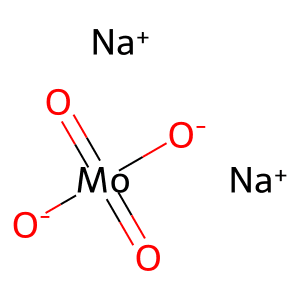
Sodium Molybdate portfolio is centered on absolute crystal purity and low-moisture consistency. Commercially supplied primarily in its stable dihydrate form (NazMoO4 • 2H,O), this product features a completely homogeneous crystalline matrix that dissolves rapidly in aqueous media without leaving insoluble residues.
Purification processes are tightly regulated to govern the presence of heavy metals and detrimental anions such as Chloride (CI) and Sulfate (SO²⁻). Controlling these impurities is critical; for instance, in water-treatment closed loops, elevated chloride levels accelerate pitting corrosion, countering the protective action of the molybdate film.
Sodium Molybdate acts as a highly effective anodic corrosion inhibitor. When dissolved in water, the molybdate ions (MoO2-4 ) react with divalent metal ions (such as Fe2+) generated at the anode to form a non-porous, chemically passive ferric-molybdate complex film along the metal surface. This molecular barrier stops further iron dissolution. However, if aggressive anions like Chloride (CI_) are present above threshold values, they can physically penetrate this passive film, leading to severe localized pitting corrosion. Our NaMo-Agro/Water Pure grade restricts chlorides to ≤ 0.01%, providing water treatment formulators with a clean chemical baseline that maintains full protective film integrity.
In high-analysis liquid fertilizer formulations, any trace of water-insoluble matter will lead to nozzle blockages in automated drip irrigation or foliar spray equipment. Furthermore, inconsistent particle distribution slows down dissolution kinetics during batch mixing, leading to concentration gradients. We maintain our water insolubles to ≤ 0.02% for our liquid-application grades and control the crystal size distribution. This guarantees near-instantaneous dissolution and homogeneous micro-dosing, which prevents localized crop phytotoxicity while ensuring uniform enzyme activation across the field.
Molybdenum is a critical metal subject to structural market deficits and geopolitical trading restrictions. Relying on spot-market commodity traders exposes procurement teams to wild price swings and cross-batch quality variances that can ruin sensitive chemical formulations. We insulate our partners from this volatility through long-term volume contracts paired with integrated supply chain tracking. Sourcing from us guarantees a pre-allocated production capacity and stable quarterly pricing mechanisms, reducing the "Total Cost of Quality" by removing supply chain uncertainty and ensuring a continuous, GMP-aligned documentation trail.
Yes. Fine crystalline dihydrate salts can suffer from compaction and moisture-release (efflorescence) when mixed into highly hygroscopic dry-NPK fertilizer blocks or dry polymer masterbatches, resulting in caking during storage. To address this operational issue, we offer NaMo-Anhydrous Tech, a specialized powder with all chemically bound water removed. This anhydrous modification avoids moisture transfer within dry matrices, flows freely in automatic powder-dosing hoppers, and dramatically minimises cake-formation risks in industrial blending plants.
Every single production lot of our Sodium Molybdate goes through strict testing via ICP-OES and ion chromatography to verify elemental and anionic purity profiles. Shipments are accompanied by a lot-specific Sodium Molybdate Certificate of Analysis, fully detailed GHS-compliant SDS, and full technical validation sheets. Our production chains operate in strict accordance with international standards, easing the technical burden on your QA/QC departments and accelerating incoming-material approval for defense, agricultural, and industrial processing audits.