Search through


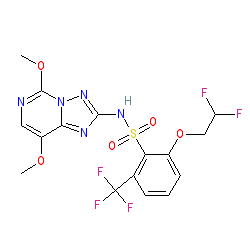
Penoxsulam is a selective, systemic herbicide belonging to the triazolopyrimidine sulfonamide chemical class. Formulated as a 2.67% Oil Dispersion (OD), it is designed for effective post-emergence control of a broad spectrum of weeds in rice cultivation. Penoxsulam inhibits the acetolactate synthase (ALS) enzyme, crucial for the biosynthesis of branched-chain amino acids in plants, leading to growth cessation and eventual plant death.
Penoxsulam is a selective, systemic herbicide belonging to the triazolopyrimidine sulfonamide chemical class. Formulated as a 2.67% Oil Dispersion (OD), it is designed for effective post-emergence control of a broad spectrum of weeds in rice cultivation. Penoxsulam inhibits the acetolactate synthase (ALS) enzyme, crucial for the biosynthesis of branched-chain amino acids in plants, leading to growth cessation and eventual plant death.

.3d8f8f41.svg)
Agrochemicals
.3556d45a.svg)

Crop Protection & Pest Control


Herbicides
.7767eb0f.png)

Chemical Properties & Specifications
Hazardous to the Aquatic Environment (Acute): Category 1 Hazardous to the Aquatic Environment (Chronic): Category 1
H410: Very toxic to aquatic life with long-lasting effects.
Effectively controls a broad spectrum of weeds, including barnyardgrass, annual sedges, and many broadleaf weeds in rice fields.
Store in a cool, dry place at temperatures between 0–10°C (32–50°F).
Keep away from direct sunlight, moisture, and incompatible materials.
Store under inert gas in original, tightly sealed containers to prevent contamination and degradation.
Available in various packaging sizes, including 500 mL, 1 L, and 5 L containers.
It inhibits the acetolactate synthase (ALS) enzyme in plants, disrupting the biosynthesis of essential amino acids, leading to growth inhibition and weed death.
It is effective against grasses, sedges, and broadleaf weeds commonly found in rice fields, including barnyardgrass (Echinochloa spp.) and Monochoria.
Yes, it is selectively designed for use in rice paddies and does not harm the crop when applied at the recommended dosage.
It should be applied post-emergence when weeds are actively growing, ensuring thorough coverage for optimal control.
The recommended application rate varies based on weed species and crop growth stage; consult the product label or agronomic guidelines for precise dosage.
Yes, it exhibits rainfast properties within a few hours of application, maintaining efficacy under variable weather conditions.
It acts as an ALS inhibitor, disrupting amino acid biosynthesis and leading to weed suppression.
It has moderate persistence and degrades over time, reducing long-term environmental impact.
Users should wear gloves, protective clothing, and eye protection to minimize exposure risks.