Search through


Methyl 2-Iodo Benzoate (CAS 610-97-9) is a premium Organo-Iodine building block that serves as a critical pivot point in advanced organic synthesis and medicinal chemistry. Characterised by the high reactivity of the iodine atom in the ortho position relative to the methyl ester group, this compound is a preferred substrate for transition-metal-catalysed cross-coupling reactions, including Suzuki, Heck, and Sonogashira couplings. In the pharmaceutical industry, it is a key intermediate for the construction of complex heterocyclic frameworks and biaryl systems found in high-value APIs. Its utility extends to the development of specialised agrochemicals and functional materials, where the iodine atom facilitates precise molecular tailoring that is often unattainable with chlorinated or brominated analogues. By ensuring ultra-low metallic impurities and high isomeric purity, Methyl 2-iodobenzoate provides researchers and Methyl 2-lodo Benzoate manufacturer with a reliable foundation for achieving high-yield, high-selectivity chemical transformations. We are a globally established Bulk CAS 610-97-9 supplier, along with a broad portfolio of other speciality chemicals, life science, crop science, and elemental derivatives supplier worldwide through comprehensive regulatory documentation (CoA), traceability, and consistent global supply capabilities, ensuring reliable lead times and quality assurance across all grades.
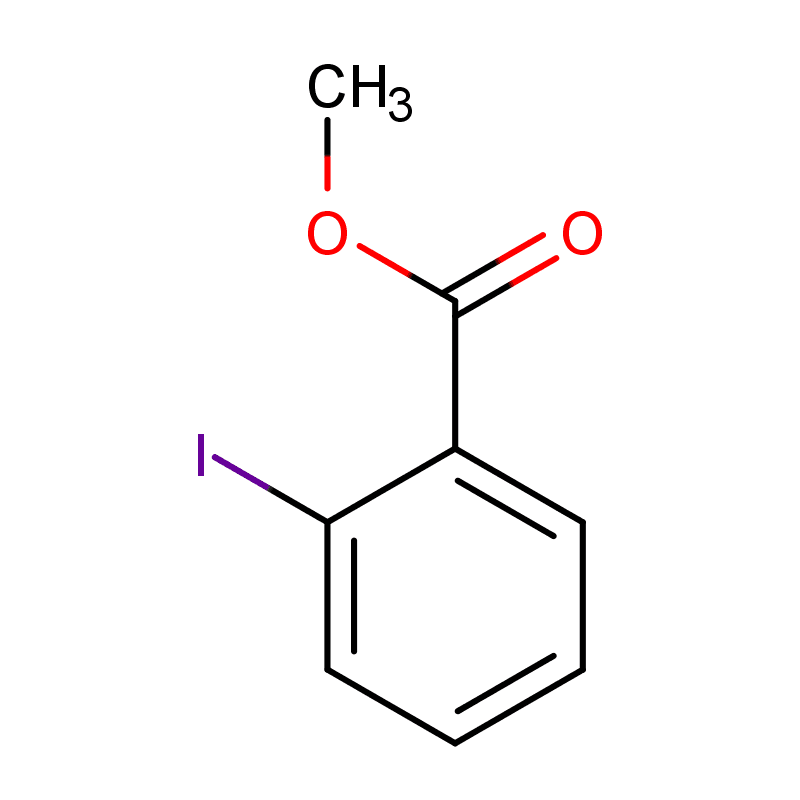
Methyl 2-Iodo Benzoate (CAS 610-97-9) is a premium Organo-Iodine building block that serves as a critical pivot point in advanced organic synthesis and medicinal chemistry. Characterised by the high reactivity of the iodine atom in the ortho position relative to the methyl ester group, this compound is a preferred substrate for transition-metal-catalysed cross-coupling reactions, including Suzuki, Heck, and Sonogashira couplings. In the pharmaceutical industry, it is a key intermediate for the construction of complex heterocyclic frameworks and biaryl systems found in high-value APIs. Its utility extends to the development of specialised agrochemicals and functional materials, where the iodi...

.3d8f8f41.svg)
Elemental Derivatives
.3556d45a.svg)

Halogen Derivatives


Iodo/Fluoro-Functional Intermediates
.7767eb0f.png)

Chemical Properties & Specifications
H315 (98.8%), H319 (98.8%), H335 (97.6%)
P261, P264, P264+P265, P271, P280, P302+P352, P304+P340, P305+P351+P338, P319, P321, P332+P317, P337+P317, P362+P364, P403+P233, P405, and P501
Extensively in the synthesis of Sartans (Angiotensin II receptor blockers) and other biaryl-based antihypertensive drugs
Acts as a precursor for various nitrogen-containing heterocycles (like Indoles or Quinofuranones) through cyclization reactions following initial coupling
Utilised as a starting material for the synthesis of iodinated contrast media and radiopharmaceuticals
Developing active ingredients that require specific ortho-substitutions to achieve targeted biological activity
Serves as a scaffold for novel aromatic derivatives that modulate plant physiological responses
Employed in the creation of specialized phosphine or carbene ligands used in homogeneous catalysis
Functional monomer to introduce high-refractive-index properties or heavy-atom effects into specialized resin systems
Store in a cool, dark place (2-8°C or 15-25°C based on stability)
Sensitive-Exposure to light can cause the liberation of free lodine, resulting in a dark pink or brown discoloration
Store in amber glass containers. Avoid contact with skin and eyes. Handle in a well-ventilated area or under a fume hood. Use nitrile gloves and safety goggles. Incompatible with strong oxidizing agents, strong bases, and direct sunlight.
Aryl iodides are significantly more reactive in cross-coupling reactions than aryl bromides or chlorides. This allows for milder reaction temperatures and lower catalyst loadings, which is essential when working with sensitive pharmaceutical functional groups.
A slight pink or yellowish tint is common in organo-iodine compounds due to trace amounts of liberated iodine. For most synthetic applications, this does not affect performance, but for high-precision pharmaceutical steps, it can be removed by washing with a dilute sodium thiosulfate solution.
Yes, the methyl ester can be easily hydrolyzed under mild basic conditions (e.g., LiOH or NaOH in MeOH / HzO) to yield high-purity 2-iodobenzoic acid.
Generally, it is not regulated as a dangerous good for transport (non-hazardous), but always check the specific SDS of the batch to ensure compliance with IATA/IMDG regulations.