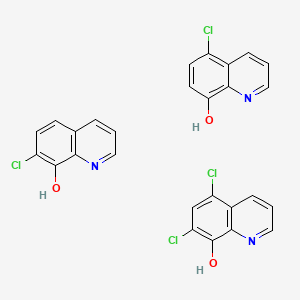
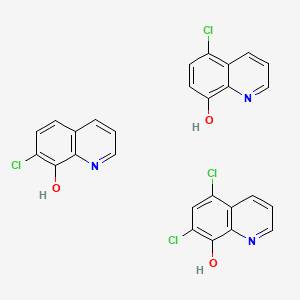

Halquinol consists of a mixture of chlorinated derivatives of quinoline-8-ol, mainly including 5,7-dichloro-8-hydroxyquinoline, 5-chloro-8-hydroxyquinoline, and 7-chloro-8-hydroxyquinoline. Halquinol is commonly a livestock broad-spectrum antimicrobial agent in animal feed to promote growth, enhance feed efficiency, and prevent microbial infections in poultry and livestock. Halquinol's Effectiveness against bacteria, fungi, and protozoa is the reason suppliers have end-use preferences. Also, Halquinol is cost-effective and improves animal productivity while reducing disease outbreaks. Halquinol is effective against three microorganisms, including bacteria, fungi, and protozoa. This chlorinated hydroxyquinoline compound exhibits antimicrobial activity against both gram-positive and gram-negative bacteria, as well as certain protozoa.
Halquinol consists of a mixture of chlorinated derivatives of quinoline-8-ol, mainly including 5,7-dichloro-8-hydroxyquinoline, 5-chloro-8-hydroxyquinoline, and 7-chloro-8-hydroxyquinoline. Halquinol is commonly a livestock broad-spectrum antimicrobial agent in animal feed to promote growth, enhance feed efficiency, and prevent microbial infections in poultry and livestock. Halquinol's Effectiveness against bacteria, fungi, and protozoa is the reason suppliers have end-use preferences. Also, Halquinol is cost-effective and improves animal productivity while reducing disease outbreaks. Halquinol is effective against three microorganisms, including bacteria, fungi, and protozoa. This chlorinat...
Food & Nutrition
Feed Additives
Antimicrobial Agent
.7767eb0f.png)

Chemical Properties & Specifications
*Used as an antimicrobial growth promoter in poultry, swine, and aquaculture feeds. *Prevents and controls bacterial infections, such as salmonella and E. coli, in livestock.
*Incorporated into animal feeds to maintain gut health and reduce gastrointestinal infections. *Enhances feed efficiency and promotes better weight gain in livestock.
Commonly used to improve productivity in poultry by reducing the risk of infections and improving overall flock health.
Helps control bacterial diseases in aquatic species, contributing to better growth and survival rates.
Reduces the need for antibiotic treatments by promoting a healthy microbiome in animals' digestive systems
Effective against bacterial infections such as colibacillosis and protozoan diseases.
Effective against bacteria, fungi, and protozoa
Improves animal productivity and reduces disease outbreaks
Suitable for long-term storage