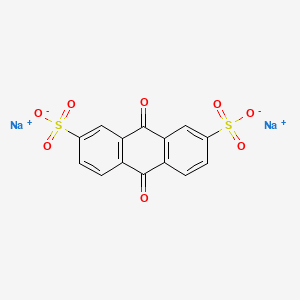

Sodium Anthraquinone-2,7-Disulfonate (CAS 853-67-8), also known as Anthraquinone-2,7-disulfonic acid disodium salt, is a high-performance redox-active organic compound. In Elemental Derivatives hierarchy (Sulfur/Oxygen/Aromatic path), it serves as a critical "Electron Shuttle." 2-7 AQDS's unique ability to undergo reversible oxidation-reduction (redox) cycles makes it indispensable for large-scale industrial gas purification and emerging energy storage technologies. In the Metallurgy and Energy sectors-a primary catalyst for the removal of hydrogen sulfide (HS) from gas streams, converting toxins into elemental sulphur. For CDMOs and scientists, this molecule is a foundational electrolyte for next-generation Aqueous Organic Flow Batteries (AOFBs), offering a sustainable, non-metal alternative to vanadium-based systems to buy CAS 853-67-8 bulk. We are a globally established speciality chemical, fine chemical & intermediates manufacturer and End to END formulator leadership giant through comprehensive regulatory documentation (CoA), traceability, and consistent global supply capabilities, ensuring reliable lead times and quality assurance across all grades.


Sodium Anthraquinone-2,7-Disulfonate (CAS 853-67-8), also known as Anthraquinone-2,7-disulfonic acid disodium salt, is a high-performance redox-active organic compound. In Elemental Derivatives hierarchy (Sulfur/Oxygen/Aromatic path), it serves as a critical "Electron Shuttle." 2-7 AQDS's unique ability to undergo reversible oxidation-reduction (redox) cycles makes it indispensable for large-scale industrial gas purification and emerging energy storage technologies. In the Metallurgy and Energy sectors-a primary catalyst for the removal of hydrogen sulfide (HS) from gas streams, converting toxins into elemental sulphur. For CDMOs and scientists, this molecule is a foundational electrolyte fo...
Industrial Chemicals, Dyes and Pigments
Polymers & Intermediates, Dye and Pigment Intermediates
Acrylic Monomers, Aromatic Sulfonic Acids
.7767eb0f.png)

Chemical Properties & Specifications
H315 (33.3%), H319 (88.9%), H335 (22.2%)
P261, P264, P264+P265, P271, P280, P302+P352, P304+P340, P305+P351+P338, P319, P321, P332+P317, P337+P317, P362+P364, P403+P233, P405, and P501
Primary oxygen carrier in the Stretford process and other desulfurization units. Facilitates the oxidation of sulfide ions to elemental sulfur, which is then recovered for industrial use
Essential for oil refineries and biogas plants to meet stringent air quality standards by scrubbing sour gas streams
(AOFB) as the negolyte (negative electrolyte). High stability, rapid redox kinetics, and water solubility allow for high-capacity, long-cycle-life energy storage for solar and wind farms
Utilisation for redox properties in light-driven organic transformations and as a mediator in electrochemical synthesis
Redox indicator and a standard in capillary electrophoresis
While both isomers are used in desulfurization, the 2,7-isomer (853-67-8) typically offers better solubility and specific redox kinetics preferred for high-efficiency Battery Grade applications. For procurement, ensure the isomer ratio is specified, as "mixed isomers" are cheaper but may not meet the performance specs of CMO or energy storage projects.
2,7-AQDS is exceptionally stable in acidic and neutral aqueous media. In highly alkaline environments, it remains active but may undergo slow hydroxylation over thousands of cycles. For researchers, it provides a "reversible two-electron, two-proton" redox mechanism (AQDS + 2e + 2Ht = AQDSH2).
Yes. Beauty of the AQDS system is that it is a catalyst. It is reduced by the H2S and subsequently re-oxidized by air (sparging), making it a cost-effective, circular solution for B2B gas treatment facilities.
Not classified as a hazardous substance for transport (Non-Regulated). However, it is a fine yellow powder that can cause staining. We recommend using dust-free loading systems and standard PPE (nitrile gloves/masks) to prevent inhalation and skin contact during bulk charging into reactors.