Search through


3-Pentanone (Diethyl Ketone) or Diethyl ketone (DEK), commonly known as Dek by suppliers, is a colorless liquid with an acetone-like odor. It is primarily used as a solvent in various industrial applications, including the pharmaceutical industry, where it serves as a solvent for drug formulations and as an intermediate in chemical synthesis.
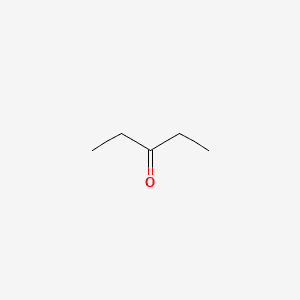
3-Pentanone (Diethyl Ketone) or Diethyl ketone (DEK), commonly known as Dek by suppliers, is a colorless liquid with an acetone-like odor. It is primarily used as a solvent in various industrial applications, including the pharmaceutical industry, where it serves as a solvent for drug formulations and as an intermediate in chemical synthesis.

.3d8f8f41.svg)
Elemental Derivatives
.3556d45a.svg)

Propionic Acid and Derivatives


Aliphatic and Aromatic Ketones
.7767eb0f.png)

Chemical Properties & Specifications
H225 - Highly flammable liquid and vapor H319 - Causes serious eye irritation H336 - May cause drowsiness or dizziness H373 - May cause damage to organs through prolonged or repeated exposure (if inhaled)
P210 - Keep away from heat/sparks/open flames/hot surfaces. No smoking. P280 - Wear protective gloves/protective clothing/eye protection/face protection. P303 + P361 + P353 - IF ON SKIN (or hair): Take off immediately all contaminated clothing. Rinse skin with water/shower. P304 + P340 - IF INHALED: Remove person to fresh air and keep comfortable for breathing.
Flammable liquids (Category 2) Eye irritation (Category 2A) Specific target organ toxicity - single exposure (Category 3)
3 - Flammable liquids
Health Hazards: Harmful if inhaled; causes skin and eye irritation; may cause drowsiness or dizziness; may cause damage to organs through prolonged or repeated exposure. Flash Point: 12.78°C WGK (Water Hazard Class): WGK 1 (Slightly hazardous to water)
Inhalation: If inhaled, move the person to fresh air. Seek medical attention if symptoms persist. Skin Contact: Wash affected area with soap and water. Seek medical advice if irritation persists. Eye Contact: Rinse immediately with water for at least 15 minutes. Seek medical advice if symptoms persist. Ingestion: Do not induce vomiting. Seek medical attention immediately.
Used as a solvent in drug formulations and as an intermediate in the synthesis of various pharmaceutical compounds.
Serves as a solvent in the production of paints, coatings, and adhesives.
Employed in chemical synthesis and analytical chemistry as a solvent and reagent.
Store at 20–25°C (68–77°F).
Keep in a cool, dry place away from heat and sources of ignition.
Use airtight containers to prevent contamination and degradation.
Available in 1L, 5L, and 25L containers.
DEK remains stable for 12–24 months.
Diethyl Ketone is generally offered in ≥99% purity for industrial and laboratory use, meeting technical grade or ACS reagent standards depending on the application.
It functions as a versatile solvent and a precursor in ketone-based transformations, particularly in the synthesis of agrochemical intermediates, pharmaceuticals, and dyes. Its structure supports aldol condensation, enolate chemistry, and Grignard reactions.
It is sparingly soluble in water but completely miscible with most organic solvents like ethanol, ether, chloroform, and acetone, making it highly effective in formulations and extraction processes.
Although primarily an industrial solvent, trace usage in flavor chemistry is documented for its sweet, fruity odor, but it's not FEMA GRAS-listed for food-grade usage and must comply with purity controls in such contexts.
DEK is flammable and volatile. Industrial use mandates proper ventilation, spark-proof equipment, flame-retardant storage, and PPE such as gloves and goggles. It can cause eye and skin irritation upon prolonged exposure.
When stored in tightly sealed containers at 15–25 °C, protected from heat and light, Avoid exposure to oxidizing agents or strong acids/bases to prevent degradation.
Yes, Diethyl Ketone is listed under TSCA (USA), REACH (EU), DSL (Canada), and IECSC (China). It’s not classified under restricted substances but must meet local transport and safety labeling requirements.
DEK is not subject to export controls in most jurisdictions. For pharma or agro intermediates, We provide documentation such as TDS, SDS, and CoA.