Search through


Cumene Hydroperoxide or Cumyl hydroperoxide is a clear to pale-yellow appearance characteristic, oily liquid classified as an organic peroxide, frequently used in chemical synthesis. Known as Percumyl H by supplier, primarily employed as an initiator for radical polymerisation and as an oxidising agent in industrial processes. With its ability to produce free radicals under mild thermal conditions, it plays deep critical role in the production of polymers, resins, and specialty intermediates. Cumene also acts as a Intermediate for plastics, and Oxidative Reactions for Commonly integrated into resin hardeners, composite materials, coatings, and epoxy formulations, and employed in oxidation-reduction setups for fine chemicals. Cumenyl hydroperoxide manufacturing has solvent compatibility, as it is soluble in ether, acetone, benzene, and aliphatic hydrocarbons.
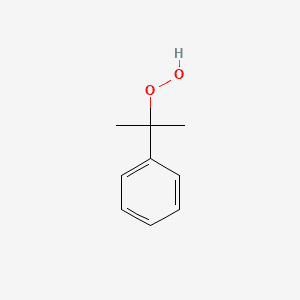
Cumene Hydroperoxide or Cumyl hydroperoxide is a clear to pale-yellow appearance characteristic, oily liquid classified as an organic peroxide, frequently used in chemical synthesis. Known as Percumyl H by supplier, primarily employed as an initiator for radical polymerisation and as an oxidising agent in industrial processes. With its ability to produce free radicals under mild thermal conditions, it plays deep critical role in the production of polymers, resins, and specialty intermediates. Cumene also acts as a Intermediate for plastics, and Oxidative Reactions for Commonly integrated into resin hardeners, composite materials, coatings, and epoxy formulations, and employed in oxidation-re...

.3d8f8f41.svg)
Elemental Derivatives
.3556d45a.svg)

Miscellaneous Functional Intermediates


General Functional Reagents
.7767eb0f.png)

Chemical Properties & Specifications
GHS02 (Flammable), GHS05 (Corrosive), GHS06 (Toxic), GHS03 (Oxidizing)
Organic Peroxide (Type D) Acute Toxicity – Oral (Category 4) Skin Corrosion/Irritation (Category 1B) Eye Damage (Category 1) Specific Target Organ Toxicity – Single Exposure (Category 3, Respiratory Irritation)
*H226: Flammable liquid and vapor *H242: Heating may cause a fire *H302: Harmful if swallowed *H314: Causes severe skin burns and eye damage *H335: May cause respiratory irritation
*P210: Keep away from heat/sparks/open flames *P280: Wear protective gloves/protective clothing/eye protection *P305+P351+P338: IF IN EYES: Rinse cautiously with water for several minutes
*Hazardous to aquatic life in concentrated form *Dispose as hazardous waste
Usage in the manufacturing of phenolic resins, styrene-butadiene rubber, and acrylics, as well as in oxidation of hydrocarbons like cumene to produce phenol and acetone.
Generates free radicals efficiently at ~60–120 °C
Remains fluid at sub-zero temperatures (~–30 °C)
Predictable half-life for safe thermal use
2–8 °C, away from sunlight and incompatible substances
6–12 months when kept in original, sealed containers
UN-approved HDPE drums, 20–200 kg; temperature-monitored containers for transport
Use non-metallic tools; avoid contamination with reducing agents or heavy metals
Packing Group: II
It is insoluble in water but fully soluble in most organic solvents - ideal for non-aqueous polymerization or oxidation reactions.
Used at 0.5%–3% w/w depending on the reactivity of the monomer and the thermal schedule.
Its high reactivity with a moderate decomposition temperature allows faster cure cycles in epoxy resin and acrylic systems.
Always store under refrigeration, away from light and heat. Avoid contact with metal catalysts, strong acids, and reducing agents to prevent exothermic decomposition.
UN Classification: Class 5.2 (Organic Peroxide Type D, Liquid).
It has REACH & OSHA: Registered and regulated as a hazardous chemical; subject to risk assessments under process safety.