Search through


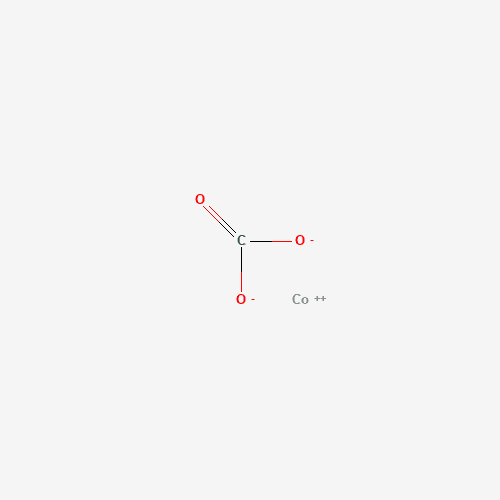
Our high-purity Cobalt Carbonate 12602-23-2 (Basic/Industrial Hydrate) / 513-79-1 (Pure Anhydrous) is a highly reactive, water-insoluble violet powder primarily engineered as a versatile chemical intermediate and catalyst precursor. Operating within a tightly integrated supply chain, this strategic compound addresses the demanding technical specifications of multiple high-value industries such as HDS, tyre adhesives, ceramics, etc. Our Catalyst Grade Cobaltous carbonate powder is engineered with an optimised low bulk density (0.4 - 0.6 g/cm³), which correlates to an exceptionally large specific surface area. When dissolved in organic acids (such as acetic or neodecanoic acid, this high surface availability allows the chemical transformation to reach completion at lower technical temperatures, protecting the delicate organic carrier from thermal degradation and optimises energy consumption. Aside this, trace contaminants like Sodium (Na) and Chlorine (CI) are systematically restricted to minimal parts-per-million thresholds, preventing catalyst active-site poisoning and ensuring an unadulterated final chemical compound. We are an established Cobalt Carbonate supplier for high purity Cobalt Carbonate with enterprise solutions, ensuring consistent melting points and precise assay values. We deliver a comprehensive selection of Cobalt Carbonate grades with full analytical documentation, including batch-specific Inductively Coupled Plasma (ICP) spectroscopy profiles and supporting quality assurance data (Cobalt Carbonate COA and TDS). We ensure secure supply chains from pilot-lot evaluations to multi-container commercial campaigns worldwide with reliable lead time and global supply capabilities and logistics coordination.
Our high-purity Cobalt Carbonate 12602-23-2 (Basic/Industrial Hydrate) / 513-79-1 (Pure Anhydrous) is a highly reactive, water-insoluble violet powder primarily engineered as a versatile chemical intermediate and catalyst precursor. Operating within a tightly integrated supply chain, this strategic compound addresses the demanding technical specifications of multiple high-value industries such as HDS, tyre adhesives, ceramics, etc. Our Catalyst Grade Cobaltous carbonate powder is engineered with an optimised low bulk density (0.4 - 0.6 g/cm³), which correlates to an exceptionally large specific surface area. When dissolved in organic acids (such as acetic or neodecanoic acid, this high surfa...

.3d8f8f41.svg)
Critical Metals
.3556d45a.svg)

Critical metals & Rare earth elements


Cobalt Compounds
.7767eb0f.png)

Chemical Properties & Specifications
Acute Tox. 4 (48.1%), Skin Sens. 1 (100%), Resp. Sens. 1 (99.9%), Muta. 2 (99.9%), Carc. 1B (70.5%), Carc. 1B (29.3%), Repr. 1B (73.8%), Repr. 1B (10.9%), Repr. 1B (15.2%), Aquatic Acute 1 (99.7%), Aquatic Chronic 1 (90.9%)
P203, P233, P260, P261, P271, P272, P273, P280, P284, P302+P352, P304+P340, P318, P321, P333+P317, P342+P316, P362+P364, P391, P403, P405, and P501
Serves as a high-surface-area starting material for manufacturing cobalt-molybdenum and cobalt-tungsten catalysts used in industrial gas and petroleum desulfurisation.
Universally incorporated into rubber compounding matrices to manufacture organic cobalt carboxylate salts (e.g., cobalt neodecanoate), which enhance the critical adhesion between rubber elastomers and brass-coated steel tyre cords
Clean, acid-soluble starting material to produce specialised cobalt carboxylates, naphthenates, and octoates used in industrial applications
Reliable source of cobalt ions for high-temperature colour stains, artificial marble, and glass batch formulations where exceptional particle uniformity prevents speckling
Blended into trace-mineral premixes, pasture blocks, and animal feed additives to prevent wasting diseases in ruminant livestock
Our Cobalt Carbonate formulations relies on a controlled precipitation chemical path, yielding a basic cobalt carbonate structure with high internal porosity. In chemical synthesis, the primary technical challenge when utilizing standard carbonates is the management of reaction kinetics and byproduct gas evolution. Coarse or poorly structured powders react slowly and generate sudden, massive carbon dioxide (C02) foaming inside industrial reactors, extending process cycle times and increasing the risk of batch boiling over.
Bulk density serves as a direct indicator of particle porosity. Coarser, denser cobalt compounds have packed crystalline structures that restrict acid penetration, forcing engineers to raise reactor temperatures and extend mixing cycles to achieve complete dissolution. Our Catalyst Grade features an ultra-low bulk density (0.4 - 0.6 g/cm3). This morphological configuration provides a vast contact surface area that facilitates rapid, smooth acid-base neutralization. The reaction reaches completion faster and at lower temperatures, which minimizes carbon dioxide gas pockets, prevents foam-over hazards, and increases throughput.
In heterogeneous desulfurisation catalysts, structural acidity is a primary driver of chemical performance. Alkali metal ions like sodium are highly basic; if carried forward into the catalyst matrix, they migrate to active Lewis and Brønsted acid sites, permanently neutralizing them. This catalytic poisoning shortens operational runs and forces refineries to increase temperatures to maintain desulfurization rates, degrading overall operating margins. We tightly manage our chemical precipitation loops to isolate trace sodium to ≤ 50 ppm, ensuring an exceptionally clean chemical baseline for downstream catalyst assembly.
Strategic procurement of cobalt derivatives is highly sensitive to fluctuating spot-market values, changing environmental regulations, and local export limits. Purchasing through unhedged commodity brokers leaves your production schedules exposed to unexpected logistics delays and irregular batch specs. Our integrated supply platform eliminates this vulnerability by pairing dedicated multi-ton manufacturing streams with strategically located regional distribution hubs. A long-term volume agreement protects your enterprise with stable pricing frameworks and dedicated inventory reserves, guaranteeing a reliable supply with comprehensive regulatory compliance documentation.