Search through


Boron trifluoride diethyl etherate (CAS No. 109-63-7) is a high-quality Lewis acid reagent and industrial chemical intermediate widely used across advanced organic synthesis, polymer chemistry, and fine chemical production in the United States. Also referred to as BF₃·OEt₂ or boron trifluoride etherate, this boron complex functions as a strong Lewis acid catalyst in key reactions such as Mukaiyama aldol additions, Friedel-Crafts alkylations and acylations, esterifications, isomerizations, dehydrations, condensations, and polymerization of olefins and epoxides, making it indispensable for producing high-performance polymers, specialty intermediates, and pharmaceutical building blocks. As a recognized Boron trifluoride diethyl etherate manufacturer and supplier in the USA, Scimplify provides industrial-grade BF₃·OEt₂ with defined specifications, controlled impurity profiles, and full batch traceability supported by comprehensive regulatory and technical documentation, including Certificates of Analysis (COA) and Safety Data Sheets (SDS).
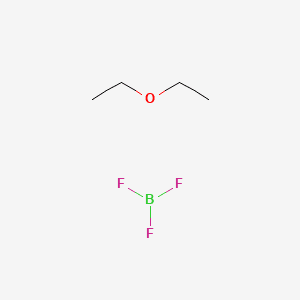
Boron trifluoride diethyl etherate (CAS No. 109-63-7) is a high-quality Lewis acid reagent and industrial chemical intermediate widely used across advanced organic synthesis, polymer chemistry, and fine chemical production in the United States. Also referred to as BF₃·OEt₂ or boron trifluoride etherate, this boron complex functions as a strong Lewis acid catalyst in key reactions such as Mukaiyama aldol additions, Friedel-Crafts alkylations and acylations, esterifications, isomerizations, dehydrations, condensations, and polymerization of olefins and epoxides, making it indispensable for producing high-performance polymers, specialty intermediates, and pharmaceutical building blocks. As a re...

.3d8f8f41.svg)
Elemental Derivatives
.3556d45a.svg)

Miscellaneous Functional Intermediates


General Functional Reagents
.7767eb0f.png)

Chemical Properties & Specifications
Highly Corrosive & Flammable. Use specialized PPE including acid-resistant suits, gloves, and full-face respirators. Avoid contact with glass (which it etches) and water
Used as a strong Lewis acid catalyst in alkylation, acylation, and condensation reactions for synthesizing APIs, intermediates, and complex heterocycles. Supports controlled, moisture-sensitive transformations required in regulated pharmaceutical manufacturing and process chemistry labs.
Applied in the synthesis of herbicide, insecticide, and fungicide intermediates through electrophilic activation and carbon–carbon bond formation. Enables scalable catalytic reactions critical for U.S. crop protection production facilities.
Functions as a catalyst in the polymerization of olefins, epoxides, and specialty resins. Used in producing high-performance polymers, elastomers, and engineered materials for automotive, aerospace, and industrial applications.
In the US specialty chemical industry, Boron Trifluoride Etherate is a preferred catalyst for esterification and isomerization processes. It enables the production of high-purity aroma chemicals and flavor compounds used in consumer staples, ensuring consistent sensory profiles and stable chemical structures in premium formulations.
US energy and petrochemical refineries utilize BF3 etherate for the alkylation of hydrocarbons and the production of specialized fuel additives. Its ability to facilitate complex condensations and dehydrations helps in creating high-octane components and performance-enhancing additives that meet modern US fuel efficiency and emission standards.
Highly moisture-sensitive and corrosive
Fumes in contact with moist air, releasing hydrogen fluoride (HF) and boron-containing acids
Store in a cool, dry, dark area in tightly sealed, corrosion-resistant containers (e.g., steel drums with specialized liners)
Keep under an Inert Nitrogen Blanket
Recommended storage is 2°C to 8°C for long-term stability
Classified as Hazardous (Class 8, 3). Regulated for international sea and air freight under UN 2604.Shipping: Classified as Hazardous (Class 8, 3). Regulated for international sea and air freight under UN 2604.Shipping: Classified as Hazardous (Class 8, 3). Regulated for international sea and air freight under UN 2604.
Stability is our priority. We ship BF3 Etherate in specialized UN-certified containers under a pressurized nitrogen seal. For long-distance global logistics, we recommend climate-controlled shipping to prevent color darkening and pressure buildup, ensuring the material arrives with its active BF3 content fully intact.
Our standard grade contains 47.5% ‡ 0.5% Boron Trifluoride. We verify this concentration using titration methods validated against international standards. A comprehensive (COA) is provided with every batch, detailing the BF3 titer, density, and moisture limits.
Upon contact with moisture, BF3 Etherate releases toxic and corrosive Hydrogen Fluoride (HF) fumes. Facilities must have specialized spill kits (calcium-based neutralizers) and HF-specific first aid (calcium gluconate gel) available. Our SDS provides detailed instructions on containment and neutralization for industrial environments.
In many cases, yes. BF3 Etherate (liquid) is significantly safer and easier to meter into a reactor than gas. However, the presence of diethyl ether as the carrier must be accounted for in your process safety and solvent recovery systems. It typically acts as a "tamed" version of the gas, providing the same catalytic power with much higher operational control.
The moq to Buy Buy BF3 Etherate Bulk shared with procurement managers.
Boron Trifluoride Diethyl Etherate Price 2026 shared upon sourcing.