Search through


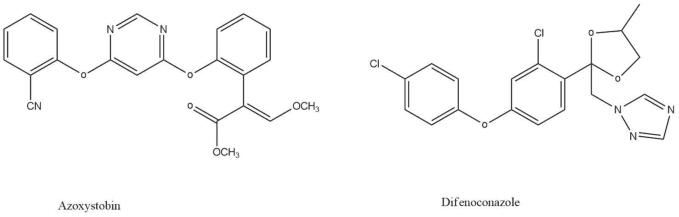
Azoxystrobin 18.2% + Difenoconazole 11.4% SC is a broad-spectrum systemic fungicide formulation, combining two complementary modes of action: Azoxystrobin (CAS: 131860-33-8), A strobilurin class fungicide, inhibits mitochondrial respiration (QoI activity), providing translaminar and systemic protection. Difenoconazole (CAS: 119446-68-3): A triazole fungicide (DMI), inhibits sterol biosynthesis, offering curative, eradicant, and protective control. This synergy provides preventive and curative control of a wide range of fungal pathogens across crops like potatoes, tomatoes, peppers, cucurbits, citrus fruits, tree nuts (almonds, pistachios), stone fruits, grapes, strawberries, wheat, barley, corn, soybeans, peanuts, and a wide range of other vegetables and specialty crops. It is widely used in integrated pest management (IPM) strategies due to its multi-site resistance management profile. This formulation provides effective control of early blight (Alternaria solani), late blight (Phytophthora infestans), powdery mildew, downy mildew, anthracnose, gray mold (Botrytis cinerea), Septoria leaf blotch, Fusarium head blight, rusts, leaf spots, and other key fungal pathogens affecting US commercial crop systems. This formulation contains two CAS numbers: 131860-33-8 & 119446-68-3. Together, the dual FRAC Group 11 + Group 3 combination delivers broad-spectrum disease control, built-in resistance management through multi-site activity, and enhanced crop health outcomes, including improved photosynthetic efficiency and yield potential.
Azoxystrobin 18.2% + Difenoconazole 11.4% SC is a broad-spectrum systemic fungicide formulation, combining two complementary modes of action: Azoxystrobin (CAS: 131860-33-8), A strobilurin class fungicide, inhibits mitochondrial respiration (QoI activity), providing translaminar and systemic protection. Difenoconazole (CAS: 119446-68-3): A triazole fungicide (DMI), inhibits sterol biosynthesis, offering curative, eradicant, and protective control. This synergy provides preventive and curative control of a wide range of fungal pathogens across crops like potatoes, tomatoes, peppers, cucurbits, citrus fruits, tree nuts (almonds, pistachios), stone fruits, grapes, strawberries, wheat, barley, c...

.3d8f8f41.svg)
Agrochemicals
.3556d45a.svg)

Crop Protection & Pest Control


Fungicides
.7767eb0f.png)

Chemical Properties & Specifications
Acute Toxicity: Category 4 Eye Irritation: Category 2A Hazardous to Aquatic Environment: Category 1 (chronic)
H302: Harmful if swallowed H319: Causes serious eye irritation H410: Very toxic to aquatic life with long-lasting effects
P280: Wear protective gloves/eye protection P305+P351+P338: IF IN EYES: Rinse cautiously P391: Collect spillage
Provides preventive and curative control of early blight, late blight, and anthracnose across potatoes, tomatoes, peppers, and cucurbits. Those are key crops in US commercial production across California, Florida, and the Pacific Northwest.
Controls melanose, brown rot, and Alternaria brown spot in citrus, and hull rot and Botryosphaeria in almonds and pistachios across California and Arizona growing regions.
Delivers effective control of Septoria leaf blotch, Fusarium head blight, and rusts in wheat and barley, recommended by FRAC for use as a dual-mode mixture on US cereal crops for resistance management.
Controls powdery mildew, downy mildew, botrytis, and anthracnose in wine and table grapes, strawberries, and caneberries across California, the Pacific Northwest, and New York growing regions.
Compatible with US IPM programs due to its dual FRAC Group 11 + Group 3 mode of action, low use rates of 6–10 fl oz per acre, and low risk to beneficial organisms — supporting sustainable, rotation-based disease management across diverse US cropping systems.
Store in a cool, well-ventilated area, away from sources of ignition
100 mL, 200 mL, 500 mL, 1 L bottles Bulk packaging on OEM basis
Palletized, stretch-wrapped cartons 2 drums/cases high
2 years from manufacturing under sealed conditions
Controls a wide spectrum including sheath blight, early blight, rust, anthracnose, and downy mildew.
Residual control extends 10–14 days, depending on weather and crop canopy.
No, it's a conventional synthetic fungicide not allowed in certified organic systems.
COA, TDS, MSDS, and CIB/RC license details for formulation batch.
Yes, it combines two different modes of action (QoI and DMI), delaying resistance build-up.
Generally 300–500 mL/ha, adjusted per crop type and fungal pressure.