Search through


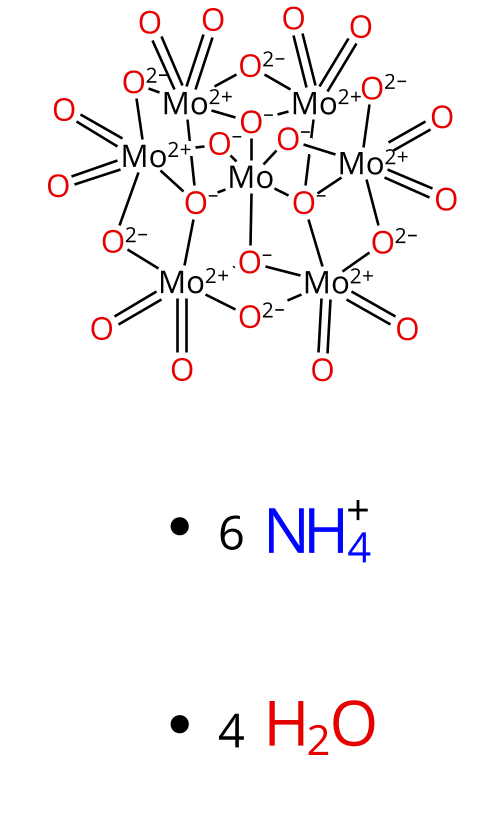
Our high-purity Ammonium Heptamolybdate (AHM), 12054-85-2 (Tetrahydrate) / 12027-67-7 (Anhydrous), also known as Ammonium Paramolybdate, is a highly refined water-soluble crystalline transition metal salt. It serves as a vital precursor for generating highly active, finely dispersed molybdenum phases across advanced chemical and metallurgical industries. Engineered with strict stoichiometry and clean decomposition profiles, this material is critical across several industrial sectors. Operational excellence of our Ammonium Heptamolybdate portfolio is defined by its exceptional structural homogeneity and low-residue thermal decomposition. Supplied typically as a tetrahydrate crystalline mass, it dissolves rapidly in water to yield a predictable distribution of heptamolybdate polyanions ([Mo₇O₂₄]⁶⁻). We are a premier producer of advanced molybdate salts, providing exceptional lot-to-lot reliability for global refining, chemical processing, and microelectronics sectors. We established ourselves as Ammonium Heptamolybdate supplier deliver a comprehensive range of Ammonium Heptamolybdate grades with complete technical transparency including batch-specific ICP-MS elemental sweeps and laser diffraction particle size mapping, supported by complete quality documentation (Ammonium Heptamolybdate COA & SDS) across all application specific grades. We maintain absolute supply chain security from raw material to large-scale commercial distribution, supporting your high-efficiency production standards, reliable lead time, global supply capability and logistics co-ordination.
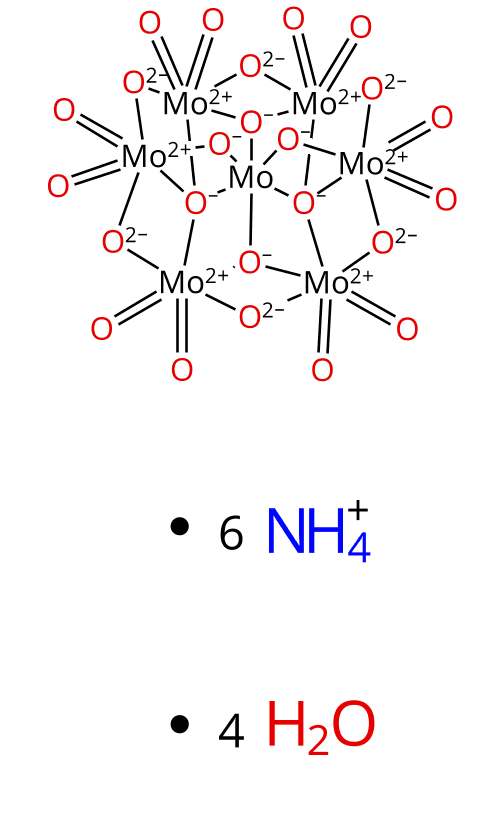
Our high-purity Ammonium Heptamolybdate (AHM), 12054-85-2 (Tetrahydrate) / 12027-67-7 (Anhydrous), also known as Ammonium Paramolybdate, is a highly refined water-soluble crystalline transition metal salt. It serves as a vital precursor for generating highly active, finely dispersed molybdenum phases across advanced chemical and metallurgical industries. Engineered with strict stoichiometry and clean decomposition profiles, this material is critical across several industrial sectors. Operational excellence of our Ammonium Heptamolybdate portfolio is defined by its exceptional structural homogeneity and low-residue thermal decomposition. Supplied typically as a tetrahydrate crystalline mass, ...

.3d8f8f41.svg)
Critical Metals
.3556d45a.svg)

Critical metals & Rare earth elements


Molybdenum Compounds
.7767eb0f.png)

Chemical Properties & Specifications
Premier precursor for manufacturing hydrodesulfurisation (HDS), hydrodenitrogenation (HDN), and hydrocracking catalysts used globally in petroleum refineries to produce clean-burning fuels
Selective oxidation of olefins and the production of acrylonitrile and formaldehyde catalysts
Raw material for reduction into ultra-high-purity molybdenum metal powders, wire, and sputtering targets used in thin-film transistor (TFT) liquid crystal displays
Highly valued in liquid fertilisers and seed treatments, delivering rapidly bioavailable molybdenum to optimise nitrogen fixation in legumes and commercial crops
Industry standard for the colorimetric determination of phosphates, silicates, and arsenates in environmental water testing and clinical biochemistry
Impregnated into technical textiles, polyurethanes, and PVC to promote solid-phase charring and reduce heat release rates during combustion
Our chemical purification processes are tightly regulated to govern the presence of heavy metals and detrimental anions such as Silicon (Si), Phosphate (PO3-4 ), and heavy transition metals. Controlling these impurities is critical; during the preparation of petroleum catalysts, trace silicon or phosphorus can prematurely alter the structural pore distribution of the alumina support, leading to reduced catalytic activity and accelerated fouling. Upon thermal calcination (> 450°C), our AHM decomposes smoothly, driving off volatile ammonia and water while leaving behind a highly reactive, pure molybdenum trioxide (MoO3) layer with zero carbonaceous residue. This guarantees predictable solid-state cross-linking, optimized surface area properties, and zero processing interruptions.
Unlike sodium-based salts which leave behind permanent alkali metal residues, AHM is chosen because its counter-ions are entirely volatile. During the calcination step of catalyst manufacturing, AHM undergoes clean thermal decomposition, releasing gaseous ammonia (NH3) and water vapor (H2O). This leaves a pure, highly porous phase of molybdenum trioxide (MoO3) actively bound to the catalyst substrate. Our AHM- Catalyst Pure grade is produced under strict crystallization conditions to ensure an optimal crystal structure that releases these gases uniformly, preventing structural stress or fracturing within the catalyst carrier pores.
Trace elements alter the active surface energy of transition metal salts. In hydrotreating catalysts, minute silicon or phosphate impurities lead to structural defects or block active metal-sulfide site formations during sulfidation. In electronic targets, trace silicon results in phase boundaries that increase thin-film electrical resistance. Our advanced chemical precipitation controls keep silicon to ≤ 0.001% and phosphates to < 0.0005% in our premium grades. This rigorous impurity management provides a clean technical baseline, securing maximum performance in refinery and electronics settings.