
2,4-D Amine Salt 58% SL

2,4-D Amine Salt 58% SL

CAS Number
2008-39-1
Molecular Formula
C10H13Cl2NO3
Weed Control in Agricultural CropsNon-Crop Weed ManagementTurf & Lawn CareTargets broadleaf weedsRainfast: EfficacyAlternate CAS 25168-26-7EPA Registered

About 2,4-D Amine Salt 58% SL

2,4-D Amine Salt 58% SL is a selective herbicide commonly used in agriculture to control a wide range of broadleaf weeds. It is a systemic herbicide that is absorbed by the plant and translocated throughout, disrupting growth and ultimately leading to the death of the target weed. 2,4-Dichlorophenoxyacetic acid dimeth...

Synonyms

  • 2,4 D amine
  • 2,4-D amine
  • 2,4-D-amine, sodium salt
  • 2,4-dichlorophenoxyacetic acid dimethylamine
  • dikamin D

2,4-D Amine Salt 58% SL Specifications

CAS Number
2008-39-1
Molecular Formula
C10H13Cl2NO3
IUPAC Name
2-(2,4-dichlorophenoxy)acetic acid;N-methylmethanamine
Canonical SMILES
CNC.C1=CC(=C(C=C1Cl)Cl)OCC(=O)O
InChI Key
IUQJDHJVPLLKFL-UHFFFAOYSA-N
InChI
1S/C8H6Cl2O3.C2H7N/c9-5-1-2-7(6(10)3-5)13-4-8(11)12;1-3-2/h1-3H,4H2,(H,11,12);3H,1-2H3
EINECS Number
217-735-7 , 217-915-8
MDL Number
MFCD00001802
UNSPSC Code
10191500
eClass
32039000
NACRES
NA.22
HSN No
2933.39.90
Appearance
yellowish colored liquid
2,4-D Acid Content % by m/m
58.05%
Alkalinity (as NaOH) % by mass
0.0238%
Melting Point of Extracted acid
137°C
Sp.Gr.@27°C
1.2407
Solubility
Soluble in water
Shelf life
2 years
(H) Identification-Acute Exposure
o Eye Contact: Severe irritation, potential corneal injury, blindness. o Skin Contact: Possible irritation, prolonged exposure may cause absorption. o Inhalation: Minimal risk, but prolonged exposure may cause nausea and dizziness. o Ingestion: May cause gastrointestinal irritation, nausea, vomiting.
(H) Identification-Chronic Exposure
o May lead to liver, kidney, gastrointestinal, and muscular issues. o Prolonged exposure does not show clear cancer association. o Birth defects are unlikely unless toxicity affects the mother.
Exposure Limits
o 2,4-D acid TLV - TWA: 10 mg/m3 o Dimethylamine TLV - TWA: 18 mg/m3

Agriculture

2,4-D Amine Salt is extensively used to manage broadleaf weeds in various crops, including wheat, corn, soybeans, barley, cotton, rice, and sugarcane. It can be applied pre-emergence or post-emergence, depending on the crop and the timing of the weed growth. This herbicide is especially effective in grassy crops, where it targets broadleaf weeds without harming the grass.

Pastures and Grasslands

It is used to control weeds in pastures and grasslands by selectively targeting broadleaf species like dandelion, thistle, and clover.

Turf Management

2,4-D Amine Salt is also widely applied in turf management for maintaining healthy lawns and sports fields, where it targets weeds such as crabgrass, dandelions, and plantain without damaging the grass.

Non-Crop Areas

It is used in non-crop areas like roadsides, railways, and industrial areas to manage unwanted vegetation and prevent weed growth that may obstruct infrastructure or natural habitats.

Forestry and Woodland

Used in forest management and woodland areas to control invasive broadleaf species that threaten forest regeneration.

Fertilizers

Acts as a natural fertilizer booster, enhancing nutrient absorption and promoting plant health.

Horticulture

Boosts growth and yield in vegetables, fruits, and flowers.

Soil Amendment

Used to improve soil structure, moisture retention, and microbial activity in soil.

Storage Conditions

Keep in a tightly closed original container. Store in a locked, well-ventilated area, away from children, unauthorized personnel, food, and feed.

Handling Precautions

Avoid inhalation, skin and eye contact. Do NOT eat, drink, or smoke while handling.

Packaging Options

Available in 1-liter, 5-liter, and bulk quantities for industrial use.

  1. 2,4 D amine
  2. 2,4-D amine
  3. 2,4-D-amine, sodium salt
  4. 2,4-dichlorophenoxyacetic acid dimethylamine
  5. dikamin D

2,4-D Amine Salt 58% SL FAQs

Minimum Order Quantity

25 kg (evaluation) · 1 MT (commercial)

Lead Time

3 – 5 weeks estimated

Delivery Terms

FOB*

Packaging

20 L pails, 200 L HDPE drums, 1000 L IBC

US Availability

US Facility Inventory

Documentation

US SDS · COA · TDS · Specification sheet

US Regulatory & Quality Information

TSCA status*

US SDS / HazCom*

GHS classification*

ISO 9001:2015 site*

DOT shipping classification*

FDA status*

EPA status*

California Prop 65*

Reliable US supply chain

Regulatory compliance

On-time delivery

Technical expert support

Rounded Top

Explore Agrochemicals Portfolio

Humic Based Liquid

CAS No 1415-93-6

Humic Based Liquid

Category

Plant Health, Nutrients & Soil Management

Sub-Category

Fertilizers & Nutrients

Description : Humic Based Liquid serves as a sophisticated biostimulant in the global agrochemicals market, where it is increasingly utilized to enhance nutrient uptake efficiency and soil structure in high-value specialty crops. Liquid humic acid formulations are currently driving growth within the custom synthesis services sector as manufacturers seek optimized, chelated delivery systems to meet the rising demand for sustainable agricultural inputs and high purity fine chemicals. Soil organic matter concentrates are witnessing a significant global sourcing shift as bulk chemical supplier networks prioritize regulatory compliance and standardized bioactivity to support large-scale industrial farming and regenerative agriculture initiatives (Agrochemical purity 98%). As globally established Humic Based Liquid supplier, we ensure dependable supply, consistent quality, and complete regulatory documentation, including CoA and TDS across all grades. Beyond supply, we support partners across the entire product lifecycle, delivering expert contract manufacturing services from initial pilot plant testing through to full-scale commercial manufacturing. Our teams also assist with GMP-compliant quality assurance, regulatory documentation, and global supply chain and logistics coordination

View Product
2-Isopropoxyethylamine (IPAE)

CAS No 83495-51-6

2-Isopropoxyethylamine (IPAE)

Category

Agrochemical Intermediates

Sub-Category

Specialty & Advanced Intermediates

Description : 2-Isopropoxyethylamine (CAS 81731-43-3), often used interchangeably with CAS 83495-51-6, is a specialized oxygenated primary amine. Within the Industrial Chemicals, Agrochemical, and Pharmaceutical sectors, it is classified as a high-value bifunctional intermediate. IPAE's unique structure combining a reactive amino group with a stable isopropoxy ether—makes it an essential building block for synthesising complex molecules with specific solubility and metabolic profiles. Source High-Purity 2-Isopropoxyethylamine (CAS 83495-51-6) from Scimplify, a leading global manufacturer and supplier of IPAE. Our product is a premium oxygenated amine intermediate specifically designed for the synthesis of high-performance agrochemical actives and pharmaceutical precursors. As an authoritative IPAE supplier, we provide a material characterised by its exceptional reactive consistency and low impurity profile, making it ideal for CDMOs and large-scale industrial chemical manufacturing. Whether you are developing next-generation selective herbicides or advanced API scaffolds, our bulk 2-Isopropoxyethylamine offers the metabolic stability and reliable lead times required for global supply chain excellence. Our facility ensures global regulatory compliance, providing comprehensive COA/SDS and technical support for seamless process integration.

View Product
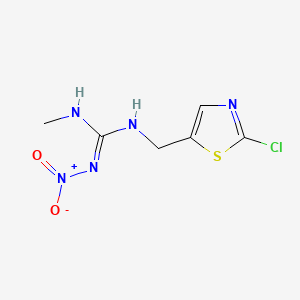
Clothianidin Technical

CAS No 210880-92-5

Clothianidin Technical

Category

Crop Protection & Pest Control

Sub-Category

Insecticides

Description : Clothianidin is a systemic broad-spectrum, neonicotinoid insecticide used to control sap-sucking insects such as aphids, whiteflies, thrips, and leafhoppers in crops like corn, cotton, and vegetables. Poncho 600 works by acting on the nicotinic acetylcholine receptors of target insects, providing rapid knockdown and long-lasting residual activity. Clothianidin is commonly formulated as technical material, wettable granules, or liquid concentrates for foliar or seed treatments. Translocation studies have shown that clothianidin moves in both acropetal and basipetal directions, ensuring efficient distribution within the plant. We are among the trusted Clothianidin manufacturers and suppliers in worldwide, with reliable lead times and global supply capability.

View Product