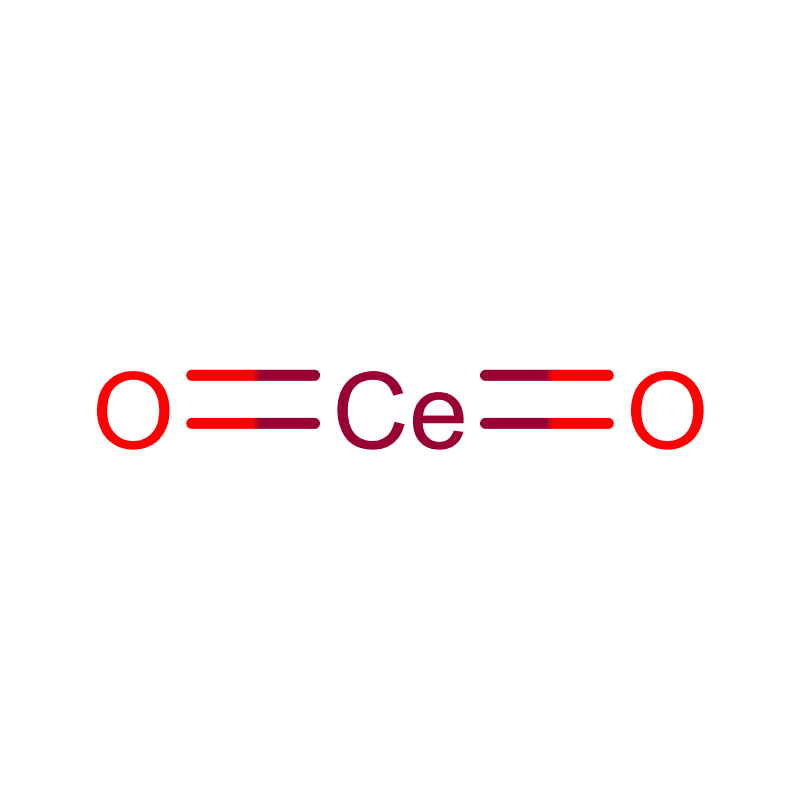

Cerium Oxide (CeO₂) is the most economically significant of all Rare Earth Oxides. Extremely stable, hard, off-white to pale yellow powder characteristic of RRe compound. Cerium is unique among the REEs for its ability to easily switch between the +3 (Ce₂O₃) & +4 (CeO₂) oxidation states. This redox capacity is the basis for its major applications in catalysis and polishing. We are leading & trusted Cerium Oxide suppliers in the United States and worldwide, offering high-purity Cerium Oxide that meets quality and safety standards, with reliable lead times and global supply capability.

Cerium Oxide (CeO₂) is the most economically significant of all Rare Earth Oxides. Extremely stable, hard, off-white to pale yellow powder characteristic of RRe compound. Cerium is unique among the REEs for its ability to easily switch between the +3 (Ce₂O₃) & +4 (CeO₂) oxidation states. This redox capacity is the basis for its major applications in catalysis and polishing. We are leading & trusted Cerium Oxide suppliers in the United States and worldwide, offering high-purity Cerium Oxide that meets quality and safety standards, with reliable lead times and global supply capability.

Chemical Properties & Specifications
S24/25
3
R36
Xi
Not Classified
Not Classified
Vital component in Three-Way Catalytic Converters (TWC). Acts as an Oxygen Storage Capacity (OSC) agent, absorbing and releasing oxygen to maintain optimal stoichiometry for converting CO, NOx, and unburnt hydrocarbons
Powerful UV-absorber and de-colorizer in glass and as a stabilizer/pigment in ceramics and dental materials
Superior abrasive for polishing precision optics, flat panel displays (FPDs), automotive glass, and semiconductors due to its unique combination of mechanical abrasion and chemical activity
High-purity CeO₂ is used as an electrolyte material in Solid Oxide Fuel Cells SOFCs) due to its ionic conductivity. ®
a catalyst or catalyst support in automobile exhaust treatment, water-gas shift reactions, and organic synthesis
a UV absorber in sunscreens, cosmetics, and protective coatings
an electrolyte or electrode component in solid oxide fuel cells
a decolorizer or additive to enhance the optical clarity and durability of glass
a self-regenerating antioxidant or nanozyme in biomedical applications to reduce oxidative stress
Market is dominated by Polishing Grade CeO2. as a producer and consumer, driven by the massive domestic demand for polishing display screens, optical lenses, and architectural glass.Purity levels for this use are typically 3N (99.9%) to 4N (99.99%).The market is dominated by Polishing Grade CeO2. China is the world's largest producer and consumer, driven by the massive domestic demand for polishing display screens, optical lenses, and architectural glass. Purity levels for this use are typically 3N (99.9%) to 4N (99.99%)
For catalysis, purity is critical because presence of other REE impurities (especially Pr and Nd) can dramatically reduce OSC capacity & thermal stability. Catalyst Grade CeO₂ mostly requires ultra-high purity (4N or 5N) to guarantee peak TWC performance and longevity under high temperatures.
Thermal Stability and Consistency of Particle Size Distribution (D50). Consistency is vital for catalyst manufacturers. Furthermore, american buyers prioritise suppliers who can demonstrate secure, diversified supply chains independent of single-region geopolitical risks.
A larger particle size (D50 ~ 0.5-1.5um) for polishing is needed for optimal material removal. For Catalysis, ultra-fine nanoparticles (D50 < 10nm) are required to maximise the surface area and, thus, the number of active sites available for the oxygen storage and redox cycle.
In most industrial applications, CeO2 is used as a Functional Additive. In $\text{FCC}$ catalysts, it's mixed with zeolites; in polishing, it's added to a slurry; in glass, it's a trace de-colorizer. Its role is almost always to enhance the performance of the bulk material.
Due to the relatively low energy required to remove or add an electron to the 4f orbital, a common feature of f-block elements. This ability to easily cycle between Cet and Celt is the basis of its Oxygen Storage Capacity (OSC), which is essential for TWC functionality.
Cerium Oxide, also known as ceria or cerium(IV) oxide, is a pale yellow-white powder derived from the rare earth element cerium, it is primarily used as a high-efficiency polishing agent for glass and optics, a catalyst in automotive emission control systems, and a UV absorber in various materials
This compound is universally utilized in the glass and optics, automotive, electronics and semiconductor, ceramics, and biomedical industries
It is commonly used in polishing slurries, catalytic converter coatings, ceramic glazes, sunscreens, and as an additive in diesel fuels or electrode materials
Standard specifications include CAS number 1306-38-3, molecular weight of 172.12 g/mol, various purity grades (typically ≥99%), and documentation such as COA, TDS, impurity reports, and regulatory compliance documents
Scimplify has capabilities for global distribution and custom synthesis through an integrated network of manufacturers and logistics partners with reliable lead time
The product is export ready with a standard MOQ starting from 100 kgs, with lead times for international customers depending on the shipping destination and specific grade.
Category : Metal Compounds & Salts
Sub-Category : Nickel Compounds
Description : Nickel Sulfate Monohydrate (CAS No: 14104-80-4) is a high-value inorganic compound that occupies a s...
Category : Metal Compounds & Salts
Sub-Category : Specialty Organometallic Compounds
Description : Molybdenum hexacarbonyl is an essential high-performance zero-valent coordination complex that occup...
Category : Electronic & Specialty Grade Materials
Sub-Category : High Purity Metals, Compounds & Powders