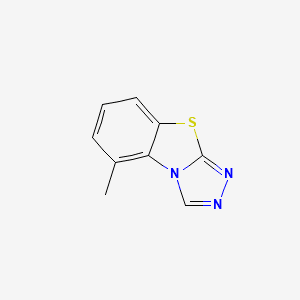

Tricyclazole 75% WP is formulated as a methodical fungicide in wettable powder formulation for Crop protection requirement. Melanin biosynthesis in fungal pathogens is inhibited by Tricyclazole or Tricyclazone, making it very potent against rice blast (Magnaporthe oryzae). Enhanced dispersibility is offered by the 75% WP formulation, supported by suppliers for plant surfaces, and ease of use in foliar spray programs is provided. A durable formulation and low environmental mobility of Tricyclazole 75% WP make it suitable for IPM programs.

Tricyclazole 75% WP is formulated as a methodical fungicide in wettable powder formulation for Crop protection requirement. Melanin biosynthesis in fungal pathogens is inhibited by Tricyclazole or Tricyclazone, making it very potent against rice blast (Magnaporthe oryzae). Enhanced dispersibility is offered by the 75% WP formulation, supported by suppliers for plant surfaces, and ease of use in foliar spray programs is provided. A durable formulation and low environmental mobility of Tricyclazole 75% WP make it suitable for IPM programs.

Chemical Properties & Specifications
Acute Toxicity (Oral): Category 4 Eye Irritation: Category 2A Aquatic Toxicity (Chronic): Category 2
H302: Harmful if swallowed H319: Causes serious eye irritation H411: Toxic to aquatic life with long-lasting effects
P280: Wear protective gloves/eye protection P301+P312: IF SWALLOWED: Call a poison center P273: Avoid release to environment P305+P351+P338: IF IN EYES: Rinse cautiously with water
P260, P264, P270, P271, P273, P280, P284, P301+P312, P302+P352, P304+P340, P313, and P316
Acute Tox. 4 (100%)
Acute Tox. 2 (100%)
Paddy / Rice
Magnaporthe oryzae (Rice Blast)
Preventive and early curative stages of infection
Typically 2–3 applications per season depending on disease pressure
~300–600 g/acre (varies with formulation and infestation)
Often tank-mixed with contact fungicides or systemic protectants
Melanin biosynthesis inhibition (MOA Group 22)
WP formulation ensures even dispersion and long field persistence
Low toxicity to mammals; adheres well to foliage
Often alternated with strobilurin or triazole-class fungicides
A specialized triazole fungicide and melanin biosynthesis inhibitor (MBI) used for the prevention and control of rice blast disease (Magnaporthe oryzae) in paddy crops, functioning by disrupting fungal penetration of plant tissues
A functionalized benzothiazole derivative utilized as an active ingredient in the formulation of wettable powders (WP), granules, and suspension concentrates for industrial crop protection
A chemical agent used in scientific studies to investigate melanin biosynthesis pathways and fungal appressorium formation in phytopathogenic fungi.
Store at <30°C in a cool, dry location
Away from direct sunlight and moisture
1 kg, 5 kg, 25 kg HDPE-laminated pouches 50 kg fiber drums with inner liner
Tamper-proof, moisture-proof packaging with label compliance
2 years under sealed conditions
It inhibits melanin biosynthesis, which is essential for fungal spore survival and penetration into the host plant.
Primarily used in rice for management of blast disease (Magnaporthe oryzae).
Systemic-translocated within plant tissues for internal protection.
Pre-harvest interval (PHI) is typically 30 days (check local residue regulations).
Yes, generally compatible with many insecticides and fungicides. Jar test recommended before tank mixing.
Yes, offered in FAO-compliant packaging with full COA, MSDS, CIBRC certificate, and hazard label.
FAO Specification: Conforms to international formulation quality standards
DG Shipping: UN Number 3077 (Environmentally hazardous solid)
Packaging Guidelines: UN packaging for toxic agrochemicals
Tricyclazole 75% WP is a systemic triazolobenzothiazole fungicide used primarily as a protectant to control rice blast (Magnaporthe oryzae) by inhibiting melanin biosynthesis
This product is predominantly used in the agricultural industry for crop protection, specifically for paddy and other cereal crops
It is a wettable powder formulation that is compatible with commonly used pesticides and is typically applied as a foliar spray or through root soaking and drenching
Standard specifications include CAS number 41814-78-2, a purity of 75%, and available documentation such as COA, TDS, impurity reports, and regulatory compliance documents
Scimplify has capabilities for global distribution and custom synthesis through an integrated network of manufacturers and logistics partners with reliable lead time
This product is export ready with a standard MOQ starting from 100 kgs, with lead times for international customers depending on the shipping destination and specific grade.
Category : Plant Health, Nutrients & Soil Management
Sub-Category : Fertilizers & Nutrients
Category : Agrochemical Intermediates
Sub-Category : Specialty & Advanced Intermediates
Description : 2-Isopropoxyethylamine (CAS 81731-43-3), often used interchangeably with CAS 83495-51-6, is a specia...
Category : Crop Protection & Pest Control
Sub-Category : Insecticides
Description : Clothianidin is a systemic broad-spectrum, neonicotinoid insecticide used to control sap-sucking ins...
Category : Plant Health, Nutrients & Soil Management
Sub-Category : Plant Growth Regulators & Harvest Aids
Description : Phosphorous acid (CAS 13598-36-2) serves as a vital reducing agent and intermediate in the API inter...