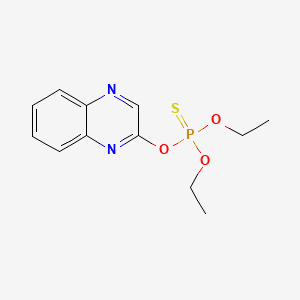

Quinalphos Technical (CAS 13593-03-8) is a highly effective, WHO Class II (notified) organophosphate insecticide supplied in its technical grade (70 - 92% assay) for use in broad-spectrum pest control formulations across major crops like cotton, rice, and fruits. As a powerful neurotoxin functioning as a contact and stomach poison, its mechanism of action is rooted in the irreversible inhibition of the enzyme Acetylcholinesterase (AChE) in the target insect's nervous system. By blocking AChE, Quinalphos prevents the breakdown of the neurotransmitter Acetylcholine (ACh), leading to the severe and continuous overstimulation of nerve impulses, ultimately resulting in paralysis, respiratory failure, and death of the pest, which is why CDMO handling must strictly adhere to safety and chemical stability protocols, especially avoiding alkaline media that can rapidly hydrolyze the molecule. Also known by Diethquinalphion by Quinalphos manufacturers. We are the leading Quinalphos Technical supplier worldwide & multiple combination formulation producer ensuring comprehensive regulatory support & CoA traceability for various grades with global supply capability with reliable lead time.

Quinalphos Technical (CAS 13593-03-8) is a highly effective, WHO Class II (notified) organophosphate insecticide supplied in its technical grade (70 - 92% assay) for use in broad-spectrum pest control formulations across major crops like cotton, rice, and fruits. As a powerful neurotoxin functioning as a contact and stomach poison, its mechanism of action is rooted in the irreversible inhibition of the enzyme Acetylcholinesterase (AChE) in the target insect's nervous system. By blocking AChE, Quinalphos prevents the breakdown of the neurotransmitter Acetylcholine (ACh), leading to the severe and continuous overstimulation of nerve impulses, ultimately resulting in paralysis, respiratory failure, and death of the pest, which is why CDMO handling must strictly adhere to safety and chemical stability protocols, especially avoiding alkaline media that can rapidly hydrolyze the molecule. Also known by Diethquinalphion by Quinalphos manufacturers. We are the leading Quinalphos Technical supplier worldwide & multiple combination formulation producer ensuring comprehensive regulatory support & CoA traceability for various grades with global supply capability with reliable lead time.
Agrochemicals
Crop Protection & Pest Control, Agrochemical Intermediates
Insecticides, Halogenated Heterocycles

Chemical Properties & Specifications
II Moderately Hazardous
H301: Toxic if swallowed
H311: Toxic in contact with skin
H400: Very toxic to aquatic life.
P264, P270, P273, P280, P301+P316, P302+P352, P317, P321, P330, P362+P364, P391, P405, and P501
Atropine sulfate (primary) and Pralidoxime Chloride (2-PAM) (secondary) are the standard medical antidotes for organophosphate poisoning
Highly effective against a wide range of pests, including Caterpillars (Lepidoptera), Aphids (Homoptera), Jassids, Mites, Thrips, and various Borers
Used extensively on major cash crops such as Cotton, Rice, Groundnuts, Fruits (Citrus, Grapes), and various Vegetables
Applicable via both foliar spray and granular application for controlling soil-borne insects and foliar pests
Cool Storage is Mandatory: Keep below 30°C (86°F) in a controlled environment. High temperatures can lead to product degradation and potentially volatilisation
Dark and Inert Atmosphere or Sealed. Protect from direct sunlight and strong artificial light, as UV exposure promotes degradation. The material should be protected from moisture and high humidity
Store in a locked, secure, and dedicated pesticide storage room/cage. Must be isolated from all foodstuffs, feed, fertilizers, and particularly from alkaline materials (Caustic Soda, Lime products) to prevent spontaneous and rapid hydrolysis
Storage facility must be well-ventilated to prevent the accumulation of toxic vapors and fumes
Quinalphos Technical requires high-level GMP controls and secure segregation
Containers must feature hermetic, tamper-evident seals and Vented Caps (if necessary for liquid formulations) to manage internal pressure while preventing leakage
All packaging must carry durable, regulatory-compliant GHS/DOT/UN labeling, including the Skull and Crossbones pictogram, UN Number (UN 2783 or UN 3018 for liquids), and a clear statement of the WHO Toxicity Class II. HDPE Drums or Lined Steel Drums ( Epoxy or Phenolic Resin Lining)
230 kgs HDPE Drums or Lined Steel Drums ( Epoxy or Phenolic Resin Lining)