Search through
Pyraclostrobin Technical

Pyraclostrobin Technical

CAS Number: 175013-18-0

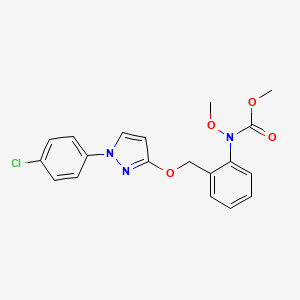
Molecular Formula: C19H18ClN3O4

About Pyraclostrobin Technical

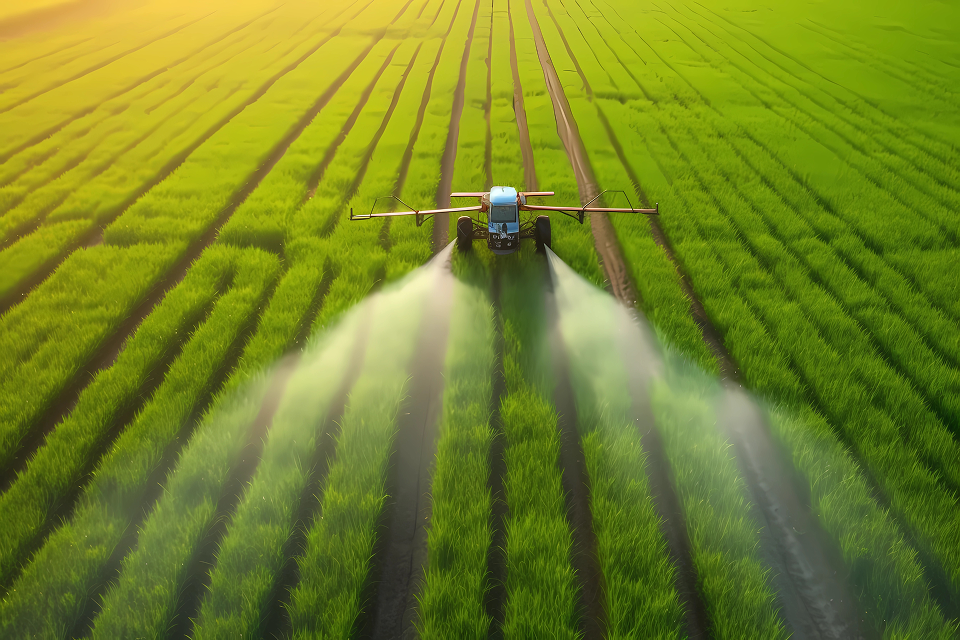
Pyraclostrobin is a broad-spectrum fungicide belonging to the strobilurin class, known for its preventive and curative properties. It inhibits mitochondrial respiration in fungi, effectively controlling a wide range of plant pathogens. Pyraclostrobin is widely used in agriculture to protect high-value crops, ensuring e...

Pyraclostrobin Technical Specifications

CAS Number
175013-18-0
Molecular Formula
C19H18ClN3O4
Molecular Weight
387.82 g/mol
IUPAC Name
methyl N-[2-[[1-(4-chlorophenyl)pyrazol-3-yl]oxymethyl]phenyl]-N-methoxycarbamate
Canonical SMILES
COC(=O)N(C1=CC=CC=C1COC2=NN(C=C2)C3=CC=C(C=C3)Cl)OC
InChI Key
HZRSNVGNWUDEFX-UHFFFAOYSA-N
InChI
InChI=1S/C19H18ClN3O4/c1-25-19(24)23(26-2)17-6-4-3-5-14(17)13-27-18-11-12-22(21-18)16-9-7-15(20)8-10-16/h3-12H,13H2,1-2H3
PubChem CID
6422843
EINECS Number
605-747-1
UNSPSC Code
12141504
eClass
39021701
NACRES
NA.24
Appearance
White to light yellow crystalline solid
Melting Point
63.7–65.2°C
Boiling Point
Decomposes before boiling
Density
1.27±0.1 g/cm³ (Depends)
Solubility
Slightly soluble in water (1.425 mg/L at 25°C); soluble in organic solvents like DMSO
Stability
Stable under recommended storage conditions; sensitive to light and moisture
Molecular Weight
387.82 g/mol
GHS Classification
Acute Toxicity (Inhalation): Category 3 Skin Irritation: Category 2 Reproductive Toxicity: Category 2 Specific Target Organ Toxicity (Repeated Exposure): Category 2 Hazardous to the Aquatic Environment (Acute and Chronic): Category 1
Hazard Statements
H331: Toxic if inhaled. H315: Causes skin irritation. H361: Suspected of damaging fertility or the unborn child. H373: May cause damage to organs through prolonged or repeated exposure. H410: Very toxic to aquatic life with long-lasting effects.
Precautionary Statements
P261: Avoid breathing dust/fume/gas/mist/vapors/spray. P264: Wash hands thoroughly after handling. P280: Wear protective gloves/protective clothing/eye protection/face protection. P273: Avoid release to the environment. P304+P340: IF INHALED: Remove person to fresh air and keep comfortable for breathing. P302+P352: IF ON SKIN: Wash with plenty of water. P308+P313: IF exposed or concerned: Get medical advice/attention. P391: Collect spillage

Crop Protection

Effective against a variety of fungal pathogens, including Botrytis cinerea and Alternaria alternata, protecting fruits, vegetables, and ornamental plants

Seed Treatment

Used to treat seeds, ensuring healthy germination and early development by preventing seed-borne diseases

Turf Management

Applied in managing turf diseases in golf courses and sports fields, maintaining healthy and disease-free grass

Temperature

Store at room temperature (typically 15–30°C or 59–86°F).

Environment

Store in a cool, dry place, away from direct sunlight and incompatible materials.

Protection

Keep in original, tightly sealed containers to prevent contamination and degradation.

Packaging Options

Available in 1 kg, 5 kg, 10 kg, and 25 kg containers.

Pyraclostrobin Technical FAQs

Minimum Order Quantity

25 kg (pilot) · 1 MT (commercial)

Lead Time

3 – 5 weeks ex-works

Incoterms

FOB · CIF

Packaging

20 L pails, 200 L HDPE drums, 1000 L IBC

Regional Availability

India · EU · Middle East · Southeast Asia

Documentation

SDS · COA · TDS available on request

Compliance & Quality

REACH registered*

GHS/SDS available

ISO 9001:2015 site*

RoHS compliant*

Global sourcing network

Consistent quality & reliability

End-to-end technical support

Rounded Top

Explore Agrochemicals Portfolio

No products found