Search through


Soy-derived proteins, ranging from the high-volume commodity Soya De Oiled Cake (Soya DOC) to highly refined ingredients like Soy Protein Isolate (SPI) & Soy Protein Hydrolysate (SPH) are a universally significant, plant-based protein source originating from the Glycine max soybean. These products represent a processing value chain starting with solvent extraction of defatted meal (DOC, an animal feed staple at 44-48% protein), which is further processed through aqueous extraction, precipitation, and purification to yield human-grade SPI (minimum 90% protein). Advanced enzymatic hydrolysis converts SPI into SPH (CAS 68607-88-5), a form with improved digestibility suitable for medical and infant nutrition. While Soya DOC is traded globally as an agricultural commodity (HS 2304.00), SPI (CAS 9010-10-0) is a versatile functional ingredient highly valued in the functional food sectors for its emulsification properties, excellent amino acid profile, and role as the foundation for modern plant-based meat alternatives and nutritional supplements. The versatility of these soy fractions provides a sustainable protein solution across the food, feed, and nutraceutical industries globally. We are the leading various Soy-derived proteins supplier worldwide, ensuring comprehensive regulatory support & CoA traceability for various grades with global supply capability with reliable lead time.
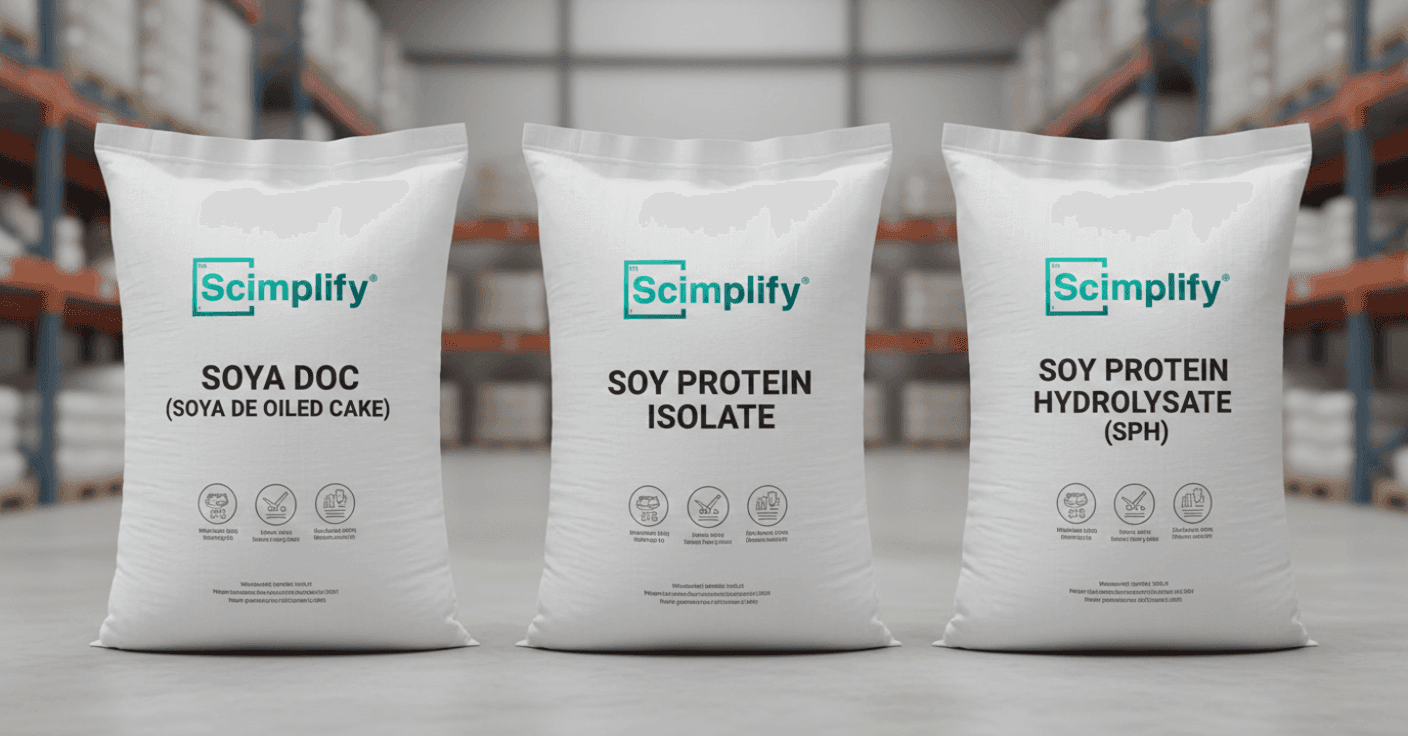
Soy-derived proteins, ranging from the high-volume commodity Soya De Oiled Cake (Soya DOC) to highly refined ingredients like Soy Protein Isolate (SPI) & Soy Protein Hydrolysate (SPH) are a universally significant, plant-based protein source originating from the Glycine max soybean. These products represent a processing value chain starting with solvent extraction of defatted meal (DOC, an animal feed staple at 44-48% protein), which is further processed through aqueous extraction, precipitation, and purification to yield human-grade SPI (minimum 90% protein). Advanced enzymatic hydrolysis converts SPI into SPH (CAS 68607-88-5), a form with improved digestibility suitable for medical and inf...

.3d8f8f41.svg)
Food & Nutrition
.3556d45a.svg)

Nutraceutical Ingredients


Vitamins & Derivatives
.7767eb0f.png)

Chemical Properties & Specifications
Major food allergen. Strict GMP cross-contamination prevention (HACCP/GMP) and mandated labeling are required in all human food/supplement applications
Fine, dry powder requires proper ventilation to prevent inhalation, which may cause respiratory irritation
Superior functional properties
Stabilizes fat/water emulsions in processed meats and dressings
Forms heat-set gels for creating meat analogues (Tofu/TVP) and providing texture
Nutritional beverages and supplements to control mouthfeel and suspension
Store in a sealed, airtight container/bag in a cool, dry place (ideally < 25°C and < 60% Relative Humidity)
Exposure to moisture causes clumping (caking), can irreversibly reduce the Protein Dispersibility Index (PDI), compromising solubility and functional performance
(Emulsification Functionality) High purity and the ratio of hydrophobic to hydrophilic amino acid residues enable SPI to rapidly stabilize the oil-water interface, reducing surface tension. This results in highly stable fat-water emulsions in applications like processed meats, minimizing fat capping and improving product yield/juiciness.
(PDI and Solubility) For high-solubility systems (e.g., protein waters or functional drinks), a Protein Dispersibility Index (PDI) of 90 - 95% is typically specified. A lower PDI indicates denaturation (often from excessive heat processing) and will result in precipitation and undesirable sedimentation.
(Meat Substitute Texture) Protein's ability to undergo thermoplastic extrusion allows it to denature and re-align, forming anisotropic fibrous structures that closely mimic the texture of muscle tissue. This gelation property is maximized in high-purity isolates.
(Allergen Labeling) SPI must be declared as a major food allergen (Soy) on the ingredient statement. Strict cGMP procedures are required to prevent cross-contamination in facilities handling other allergens.