Search through


The Polysorbates (comprising 20, 40, 60, and 80) are a series of non-ionic surfactants and emulsifiers derived from ethoxylated sorbitan esterified with fatty acids. Within the Food & Nutrition, Pharmaceutical, and BPC hierarchies, peg- the industry standard for stabilising O/W emulsions. While they share a common polyoxyethylene sorbitan core, their specific fatty acid chains (Lauric, Palmitic, Stearic, or Oleic) dictate their HLB (Hydrophile-Lipophile Balance) values and specific industrial applications. Source High-Purity Polysorbates (20, 40, 60, 80) from Scimplify, your authoritative global manufacturer and wholesale supplier of non-ionic surfactants. Polysorbate 20 has the shortest fatty acid chain (C12) and the highest HLB value (16.7). Polysorbate 40 uses a C16 chain. It is less common than 20 or 80 but is a vital "bridge" emulsifier in high-performance coatings and specialised medicine. Our Polysorbate range, including Polysorbate 80 (E-433) and Polysorbate 20 (E-432), is engineered to provide superior emulsification and solubilisation across the food, pharma, and cosmetic sectors. Our Food-Grade Polysorbates are essential for preventing fat separation in ice creams and dressings, while our Pharma-Grade (Tween type) excipients are critical for the solubilisation of hydrophobic active ingredients in parenteral and oral drug delivery. As a leading emulsifier supplier, Scimplify ensures each grade from the “lauric-based Polysorbate 20 to oleic-based Polysorbate 80” meets strict global FDA and Pharmacopoeia (EP/USP) standards. Whether you are formulating stable agrochemical emulsions or high-clarity personal care products, Scimplify delivers the precise HLB balance, COA/SDS transparency, and reliable bulk lead times required for global manufacturing
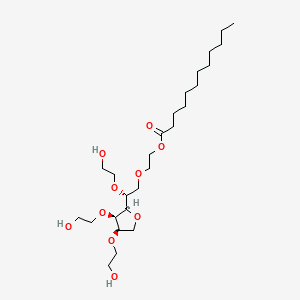
The Polysorbates (comprising 20, 40, 60, and 80) are a series of non-ionic surfactants and emulsifiers derived from ethoxylated sorbitan esterified with fatty acids. Within the Food & Nutrition, Pharmaceutical, and BPC hierarchies, peg- the industry standard for stabilising O/W emulsions. While they share a common polyoxyethylene sorbitan core, their specific fatty acid chains (Lauric, Palmitic, Stearic, or Oleic) dictate their HLB (Hydrophile-Lipophile Balance) values and specific industrial applications. Source High-Purity Polysorbates (20, 40, 60, 80) from Scimplify, your authoritative global manufacturer and wholesale supplier of non-ionic surfactants. Polysorbate 20 has the shortest fat...

.3d8f8f41.svg)
Oleochemicals
.3556d45a.svg)

Surfactants


Non-ionic Ethoxylates
.7767eb0f.png)

Chemical Properties & Specifications
Wetting agent and dispersant for pigments in water-borne paints. It helps the paint spread evenly on surfaces and prevents pigment clumping (flocculation)
Concentrated herbicide and pesticide formulations to improve the "spreading" of the chemical on waxy leaf surfaces, ensuring better absorption of the active ingredient
Pharmaceutical creams where a specific "mid-range" HLB is needed to balance oil-heavy medicated ointments with water-washable bases.
Stable under normal conditions. May undergo autoxidation if exposed to light or air for extended periods, leading to peroxide formation.
Store in a cool, dry place (15°C to 25°C). Keep containers tightly closed. Use amber glass or opaque HDPE to protect from light.
Non-hazardous for transport. Available in 200kg drums, and 1000kg IBCs.
Polysorbate 20 is significantly milder than the others. Its short C12 chain allows it to emulsify oils without stripping the natural lipids from the skin or irritating the ocular mucosa (the eyes). It is the preferred non-ionic surfactant for "baby-safe" and "sensitive-skin" cleansing products.
Generally, no. Because Polysorbate 20 has a higher HLB (16.7), it is "too hydrophilic" for many heavy fat emulsions like ice cream (where Polysorbate 80, HLB 15.0, is king). However, for beverage emulsions (flavor oils in water), Polysorbate 20 can often perform as a high-quality alternative.
Polysorbate 20 is more prone to producing trace amounts of peroxides over time if stored improperly. For sensitive pharmaceutical use, we provide "Ultra-Pure" low-peroxide grades of Polysorbate 20 to ensure your active ingredients (APIs) don't degrade during their 2-year shelf life.
Yes, like all ethoxylated surfactants, its solubility decreases as temperature rises. However, the Palmitic chain in Polysorbate 40 offers a very stable emulsion in the 25°C to 40°C range, making it ideal for products that need to remain stable in tropical climates.
Sorbitan, monopalmitate, polyoxyethylene derivs. (8CI), Crill 7, Crillet 2, Durfax 60, E 434, Emsorb 6910, Emulgen TWP 120, Ethoxylated sorbitan monopalmitate, Glycosperse P 20, Kolliphor PS 40, Kotilen P 1, Lonzest SMP 20, Montanox 40, MP 55F, Nikkol TP 10, Nikkol TP 10EX, Nikkol TP 10V, Nissan Nonion PT 221, Polyethylene glycol sorbitan monohexadecanoate, Polyethylene glycol sorbitan monopalmitate, Polyethylene glycol-sorbitan monopalmitate adduct, Polyethylene sorbitan monopalmitate, Polyoxyethylene sorbitan monohexadecanoate, Polyoxyethylene sorbitan monopalmitate, Polyoxyethylene sorbitol monopalmitate, Polysorbate 40, Rheodol Super TW-P 120, Rheodol TW-P 120, Rheodol TW-P 120V, Sorbimacrogol palmitate 300, Sorbitan monopalmitate polyethylene glycol ether, Sorbitan polyethoxy monopalmitate, Sorbon T 40, TP 10EX, Tween 16:0, Tween 40