Search through


Pivaloyl Chloride, also known as Trimethylacetyl Chloride and 2,2-Dimethylpropanoyl Chloride (CAS No. 3282-30-2), is a high-purity acyl chloride intermediate widely used in pharmaceutical, agrochemical, and specialty chemical synthesis across the United States. It serves as a critical acylating reagent in the production of active pharmaceutical ingredients, drug intermediates, peptides, and functional materials, enabling selective protection and chemical modification in regulated manufacturing environments. As one of the established pivaloyl chloride manufacturers and suppliers in the USA, we supply pivaloyl chloride with defined purity specifications, controlled impurity profiles, and consistent performance from batch to batch. Our Pivaloyl Chloride is supported by comprehensive technical and regulatory documentation, including Certificates of Analysis (CoA), Safety Data Sheets (SDS), specification sheets, and full batch traceability, aligned with U.S. standards and certifications. We support API manufacturers, fine chemical producers, and research organizations with reliable lead times and competitively structured USD pricing.
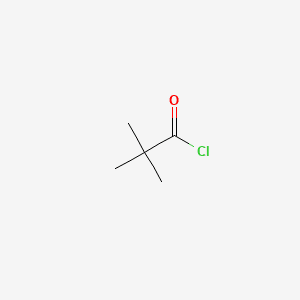
Pivaloyl Chloride, also known as Trimethylacetyl Chloride and 2,2-Dimethylpropanoyl Chloride (CAS No. 3282-30-2), is a high-purity acyl chloride intermediate widely used in pharmaceutical, agrochemical, and specialty chemical synthesis across the United States. It serves as a critical acylating reagent in the production of active pharmaceutical ingredients, drug intermediates, peptides, and functional materials, enabling selective protection and chemical modification in regulated manufacturing environments. As one of the established pivaloyl chloride manufacturers and suppliers in the USA, we supply pivaloyl chloride with defined purity specifications, controlled impurity profiles, and consi...

.3d8f8f41.svg)
Flavors & Fragrances
.3556d45a.svg)

Fragrance Ingredients


Aromatic Esters
.7767eb0f.png)

Chemical Properties & Specifications
Flam. Liq. 2 (81.8%), Met. Corr. 1 (58.6%), Acute Tox. 4 (81.8%), Skin Corr. 1B (82.2%), Eye Dam. 1 (59.9%), Acute Tox. 2 (75.7%)
P210, P233, P234, P240, P241, P242, P243, P260, P264, P264+P265, P270, P271, P280, P284, P301+P317, P301+P330+P331, P302+P361+P354, P303+P361+P353, P304+P340, P305+P354+P338, P316, P317, P320, P321, P330, P363, P370+P378, P390, P403+P233, P403+P235, P405, P406, and P501
Flammable Liquid (Cat 2); Corrosive to Metals (Cat 1).
Pivaloyl Chloride is a vital reagent in the US pharmaceutical industry. Primarily used as a selective protecting group in complex organic synthesis. It is essential for producing prodrugs, such as pivaloyloxymethyl (POM) esters, which significantly enhance the oral absorption and effectiveness of antibiotics like Ampicillin and various antiviral medications.
In the agrochemical sector, this compound serves as a key building block for high-efficiency herbicides and insecticides. It is used to synthesize active ingredients that require specific metabolic stability to remain effective in diverse environmental conditions. By utilizing Pivaloyl Chloride, manufacturers can produce advanced crop protection products that meet stringent US performance and environmental safety standards.
A major industrial application for Pivaloyl Chloride is the production of organic peroxide initiators, such as tert-butyl peroxypivalate. These initiators are critical for the polymerization of vinyl monomers, supporting the large-scale manufacturing of essential plastics like Polyvinyl Chloride (PVC) and Low-Density Polyethylene (LDPE). These materials are foundational to the US industrial supply chain, from construction to packaging.
For medicinal chemistry and research organizations, Pivaloyl Chloride is a preferred reagent for selective acylation. Its bulky chemical profile provides high predictability and control during chemical reactions, making it an invaluable tool for lead optimization and the development of new chemical entities (NCEs). It supports the US biotech and research ecosystem in accelerating the transition from lab-scale discovery to pilot production.
Storage under a Dry Nitrogen or Argon Blanket is mandatory to prevent hydrolysis
Store in a cool, dry, fireproof area (+2°C' to +30°C)
Original glass-lined or high-density fluorinated polyethylene (HDPE) containers. Avoid metal containers due to HCI corrosion risk
Keep strictly away from water, alcohols, strong bases, amines, and oxidizing agents