Search through


Phenylhydrazine Hydrochloride (CAS No. 59-88-1), also known as phenylhydrazinium chloride, is a high-purity aromatic hydrazine salt widely used as a critical intermediate in pharmaceutical synthesis, dye manufacturing, and specialty organic chemical production. It plays an essential role in forming hydrazone derivatives through selective reactions with aldehydes and ketones, enabling the synthesis of active pharmaceutical ingredients, analytical reagents, and functional organic molecules. This compound is supplied as a stable crystalline powder with excellent solubility and controlled impurity profile, ensuring reliable performance in regulated manufacturing environments. Its consistent physicochemical properties and high reactivity make it suitable for GMP intermediates, laboratory research, and industrial chemical synthesis. As an established Phenylhydrazine Hydrochloride manufacturer and supplier in the USA, Scimplify delivers high-purity Phenylhydrazine Hydrochloride (98.76%) with batch-level traceability, COA, SDS, and technical documentation aligned with U.S. regulatory standards. We also ensure consistent supply with reliable lead time and competitive prices (USD).
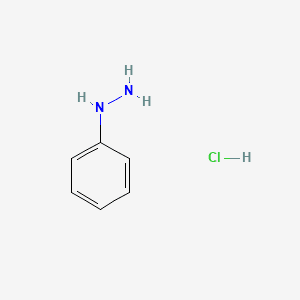
Phenylhydrazine Hydrochloride (CAS No. 59-88-1), also known as phenylhydrazinium chloride, is a high-purity aromatic hydrazine salt widely used as a critical intermediate in pharmaceutical synthesis, dye manufacturing, and specialty organic chemical production. It plays an essential role in forming hydrazone derivatives through selective reactions with aldehydes and ketones, enabling the synthesis of active pharmaceutical ingredients, analytical reagents, and functional organic molecules. This compound is supplied as a stable crystalline powder with excellent solubility and controlled impurity profile, ensuring reliable performance in regulated manufacturing environments. Its consistent phys...

.3d8f8f41.svg)
Pharmaceutical
.3556d45a.svg)

Pharmaceutical Actives & Precursors


Intermediates & Precursors
.7767eb0f.png)

Chemical Properties & Specifications
Acute Tox. 3 (96.1%), Acute Tox. 3 (100%), Skin Irrit. 2 (100%), Skin Sens. 1 (100%), Eye Irrit. 2 (100%), Acute Tox. 3 (95.1%), Muta. 2 (100%), Carc. 1A (100%), STOT RE 1 (99%), Aquatic Acute 1 (100%), Aquatic Chronic 1 (37.3%)
P203, P260, P261, P262, P264, P264+P265, P270, P271, P272, P273, P280, P301+P316, P302+P352, P304+P340, P305+P351+P338, P316, P318, P319, P321, P330, P332+P317, P333+P317, P337+P317, P361+P364, P362+P364, P391, P403+P233, P405, and P501
Reagent for the Fischer Indole Synthesis, a fundamental reaction in medicinal chemistry used to create the indole core found in triptans (migraine medication) and anti-inflammatory drugs. Used to synthesize Pyrazolones, which serve as the base for various non-steroidal anti-inflammatory drugs (NSAIDs)
Specialty intermediate in the synthesis of Pyrazolate and Phenylpyrazole insecticides and herbicides. High selectivity and low application rates in global cereal and rice farming
Precursor for various organic pigments and solvent dyes. Manufacture of yellow and orange pyrazolone-based pigments for plastics, inks, and coatings
Stable under normal conditions, but can darken (turn pink/red) upon exposure to light and air due to trace oxidation
Store in a cool, dry, dark area. Keep containers tightly closed. It is highly sensitive to moisture; store under an Inert Nitrogen Blanket for extended shelf life
Classified as Hazardous (Class 6.1, Toxic). Available in 25kg fiber drums with double PE liners, compliant with international maritime and air transport regulations